Anklam
Bad Muskau
Bad Salzelmen
Bad Wilsnack
Bautzen
Beeskow
Extending Rights, Living Out Rights – Medieval Beeskow and its Municipal Privileges:
Now located in the state of Brandenburg, medieval Beeskow belonged to the Margraviate of Lower Lusatia, which, after various changes of rulership between the Wettins and the Ascanians, remained connected to the Kingdom of Bohemia for centuries since 1368. The urban development of Beeskow began much earlier, in the first half of the 13th century, when a servant of the Wettins, Reinhard von Strehle, acquired a larger estate around the later towns of Beeskow and Storkow. Around 1250, the von Strehle dynasty was already divided into two lines. While one of them resided in Storkow, the other one was granted the Castle of Beeskow as its seigniorial seat (fig. 1).
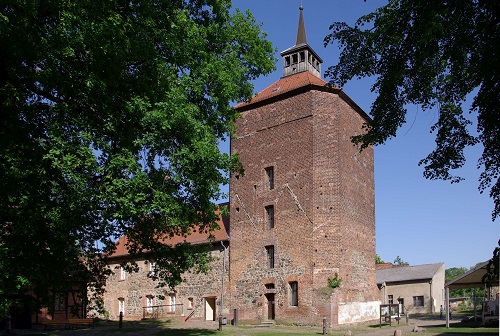
Fig. 1: Beeskow Castle, for centuries the seat of the lords of Beeskow, with its keep dating from the first half of the 14th century. The present appearance of the castle is largely the result of alterations undertaken in 1518 under Bishop Dietrich of Lebus.
Under the protection of this castle, a market settlement was established, initially sheltered by ditches and planks, the first documented mention of which dates back to 1272. At that time, it was presided over by a supervising warden (praefectus) named Heinrich, who was a feudatory vassal of the lords of von Strehle. Together with the marketplace, the Beeskow town hall is mentioned for the first time in 1283, whereby the latter was not exclusively a political meeting place but also served as a department store, which was typical of the time. Around the Beeskow market, several trades settled in the 13th century, which were gradually endowed with rights. All trades were given specific rights to sell on the market. When writing the individual regulations and their exact wording, the Beeskow council sought help from the aldermen of the town of Luckau, who shared their knowledge in several exchanges of letters in the 1280s. Based on this correspondence, it has been concluded that Beeskow adopted Luckau law, which is closely related to Magdeburg law. The Beeskow market and the rights associated with it form the origin of the civitas Beeskow and its municipal rights, which underwent a strong expansion in the course of the 14th century.
With the approval of Duke Rudolph of Saxony-Wittenberg, the citizens of Beeskow succeeded in achieving a high level of autonomy and self-government. Thus, in 1321, the sovereign confirmed extensive rights to his town, such as high court jurisdiction, the separation of the citizens from the jurisdiction of the lord of the castle, the construction of a town wall, the collection of customs duties for wood rafted on the Spree, and the equivalence of municipal coins with those in Luckau and Guben. This bundle of rights corresponded to important municipal privileges. With the high court jurisdiction, the Beeskow council was allowed to decide about life and limb. In addition, it was permitted to regulate municipal affairs as it saw fit without interference from the lord of the castle. Thus, if the lord of the castle, who was the liegeman of the sovereign, had to fight out legal disputes concerning the affairs of the town of Beeskow, he was not entitled to bring them before the castle court for a decision but had to appeal to the town court. The construction of the town wall was not only aimed at aspects of urban security. The merlons, gates, towers and Wiekhäuser (guard houses) also emphasized the special defense capabilities of the townspeople and were representative signs for anyone approaching the town. In addition, they were an expression of municipal law and the council’s jurisdiction within the town walls (fig. 2).
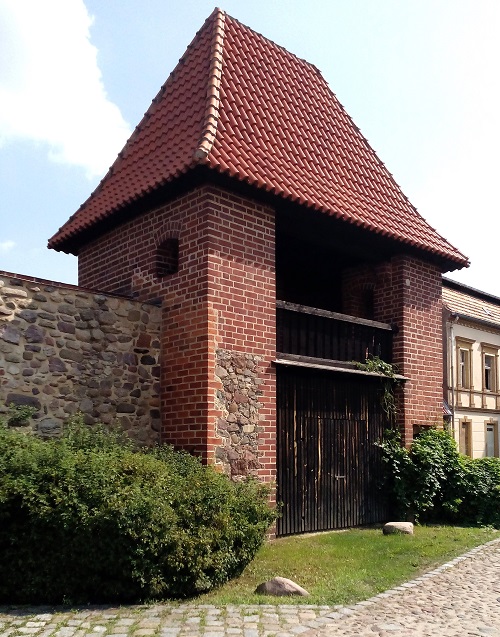
Fig. 2: The Wiekhaus incorporated into the town wall of Beeskow (photo: Steffen Kurtze).
Without a doubt, due to these and other privileges, a high self-confidence developed amongst the citizens of Beeskow, so that in August 1321, the town took part in a confederation of towns from the Mark Brandenburg and Lower Lusatia. This alliance took measures to secure peace and preserved the urban freedoms of the individual members, who supported each other in times of uncertain power relations.
The attention of the Beeskow council was also directed to communal cooperation. It always had the well-being of the entire population in mind. In the Beeskow town book, which the council had created in order to collect and document the rights and statutes, rules for a wedding celebration, for example, have been handed down. For example, the number of wedding guests was not allowed to exceed 20 “par volkes” (“per people”). The regulatory power of the council was extended to the extent of prohibiting all guild members from walking barefoot in the streets or participating in gambling. The Beeskow marksmen’s guild was also affected by council regulations. Among other things, it was stipulated that if the marksmen “roufften jn vneinigheit” (“scuffled in discord”) or “schlugen, das nicht blutrunst were” (“fought in beatings that were not bloodthirsty”), they were to settle these conflicts among themselves and “not negotiate them before the judge”. A paragraph formulated specifically for this purpose testifies to the fact that it was not uncommon for fisticuffs to occur in the marksmen’s guild.
The councilors of Beeskow also regulated the social coexistence of Slavs and Germans. They stipulated for the Beeskow crafts that the masters had to pay attention to the German descent of their apprentices. No person of Slavic origin was allowed to be trained, according to a statute for the shoemakers drafted in 1353. Such rules, however, did not pursue measures in today’s xenophobic and nationalistic sense. With the foundation of Beeskow in the middle of the Slavic settlement area, in contrast to this, manifold connections arose between the colonists of German origin and the Slavic old settlers, which not infrequently resulted in marriages. Therefore, the demand for German birth was rather directed against persons from the surrounding countryside who wanted to learn a trade and settle in Beeskow. The movement of the rural population into the town is a typical phenomenon of the 14th century, which was caused by changing living conditions such as climatic changes, population decline, robber gangs, agrarian depression, exacerbated serfdom and so on. In order to keep the number of their members as constant as possible, the guilds in Beeskow tried to protect themselves with their statutes from the “newcomers”, who – due to the settlement area – were mostly of Slavic origin.
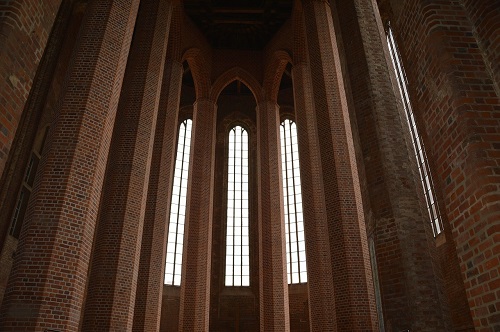
Fig. 3: St. Mary’s Church on the market square in Beeskow, once a source of pride for the town’s citizens. Severely damaged during the Second World War, the church remained in ruins until its reconstruction following the political transition of 1989–90.
The town council also exercised police power. On market days, it sent officials to the market to check the weights and measures of the merchants (fig. 3). When a weight was discovered at the market in 1427, which was “nicht vulkomelichin gross genugk” (“not entirely big enough”), the council wanted to penalize the merchant. But the town lord Friedrich von Bieberstein had the culprit seized “vff der gassen” (“in the alley”) and led to his castle. Thereupon the representatives of the council declared that the merchant had to be brought before the municipal court and not before the lord of the castle. Friedrich von Bieberstein replied that this right was not contained in the letters shown by the council, so he decided the matter rightly: “Habit irs denn ouch in euwern brieffe nicht […], hoffe ichs ouch bilche vnde von recht zcu behalden” (“If it is also not in your letters […], I also hope to keep it honest and of right”). With this, he overrode the municipal autonomy and self-administered jurisdiction that Duke Rudolph of Saxony had once granted Beeskow. Since it was not possible for the town to prove its privileges, the councilors sought legal advice from the Magdeburg aldermen. Even though the magistrates agreed with the town of Beeskow and condemned the actions of Friedrich von Bieberstein, it could not change the fact that the town lord overrode the Magdeburg judgment and had the dispute with the merchant heard by his court. In the course of the 15th century, Beeskow increasingly had to protect its rights and freedoms against the town lord and was less and less often able to defend itself. Nevertheless, the town continued to revolt. When the Biberstein family ceded Beeskow to the Pomeranian dukes without further ado due to a lack of money and reclaimed it a short time later, the Beeskow councilors invoked their homage paid to the Pomeranian duke shortly before and refused to obey Johann von Bieberstein. Enraged, he attacked the town of Beeskow in 1425 in order to forcibly compel the citizens to pay homage to him. Once again, the magistrates of Magdeburg condemned such violent action as an unlawful intervention against the town, but this did not help. Since the Beeskow council was still unable to prove its rights, the only option was a settlement with the town lord, which the magistrates in Magdeburg also advised. The Lords of Bieberstein remained the town lords of Beeskow until 1518 when Bishop Dietrich of Lebus took possession of the town and the castle. Unlike him, later town lords again intervened in municipal politics. Thus, Margravine Katharina, wife of Margrave Johann von Brandenburg-Küstrin, who died in 1571, and owner of Beeskow, instructed her bailiff Clemens Ludwig, who worked at Beeskow Castle, to closely monitor the annual elections of the Beeskow council. The Margravine asked for information about the appointed persons and reserved the right to reject candidates that seemed unsuitable to her. Land and town lords often intervened in the constitution of the municipal communities subordinate to them, with the argument usual for the 16th century to provide for the “preservation and improvement” of the urban municipalities. Thus, the Beeskow council had to submit to the slowly growing Brandenburg sovereignty and more and more often renounce medieval privileges, which had determined the municipal autonomy and legal security for several centuries.
Author: Sascha Bütow
Citation:
Sascha Bütow: Beeskow. Extending Rights, Living Out Rights – Medieval Beeskow and its Municipal Privileges, 11.08.2026, https://magdeburg-law.com/historic-city/beeskow/
Further Reading:
Bütow, Sascha, “Uff deme Markte by dem Rathuz”. Beeskows Zentrum neu entdecken (= Beeskower Heimathefte 18), Beeskow 2011.
Engel, Evamaria; Koldrack, Klaus, Beeskow, in Deutsches Städtebuch. Vol. 2. Berlin and Brandenburg, edited by Evamaria Engel et al. Stuttgart 2000, pp. 30–36.
Neumann, Johann Wilhelm (ed.), Das Stadtbuch der Stadt Beeskow in der Niederlausitz, in Neue Mittheilungen aus dem Gebiet historisch-antiquarischer Forschungen, edited by Karl Eduard Förstemann, vol. 4/2 (1839), pp. 1–21.
Schich, Winfried, Zur Diskriminierung der wendischen Minderheiten im späten Mittelalter. Die Ausbildung des “Wendenparagraphen” in den Zunftstatuten nordostdeutscher Städte, in Europa Regional, number 2 (2002), pp. 57–61.
Scholz, Michael, Beeskow in den herrschaftlichen und kirchlichen Strukturen des späten Mittelalters, in Bürgerstolz und Seelenheil. Geschichte, Architektur und Ausstattung der Beeskower Marienkirche, edited by Dirk Schumann and Ekkehard Krüger, Berlin 2012, pp. 9-40.
Berlin
Berlin-Cölln. Two medieval market towns on the banks of the Spree: how they evolved into a dual city assured of its place in the world:
It is difficult to imagine the Berlin of today without its emblem, the bear, that graces its coat of arms. On pretty much any walk through the city, we will encounter it innumerable times, as a part of monuments, pointing out the sights, or in the logos of companies or organisations, transporting a sense of connection with their base. We know that Berlin took the bear as its seal in medieval times, with the first example being its presence at the centre of a councillor’s seal dating from 1338. An older seal yet, made in 1280, depicts two bears supporting an eagle – Brandenburg’s emblem – which stands proudly in the seal’s centre. These and other examples point to the evolution of Berlin’s seal over centuries, with the bear only gradually becoming indivisibly emblematic of its citizenry. There are significant indications that the bear’s association with the city has its roots in its name, which presumably originated in the Slavic word brlo, meaning a dry area surrounded by marshland – a likely apt description of the area’s topography at the time of Berlin’s foundation. Towards the end of the twelfth century, the lowlands around the river Spree at this place played host to the emergence of two settlements, Berlin and Cölln, on opposite sides of the river, each characterised, as they grew, by the interaction of new with older settlers bolstered primarily by travellers passing through and trade from which local craftspeople, including furriers, tailors and shoemakers, benefited. Berlin/Cölln lay at a crossroads of two important contemporary routes, one linking Magdeburg with Poznań, Wrocław and further settlements in present-day Poland, the other running between Meissen, the Lausitz regions and the centres of trade emerging on the Baltic Sea coast. The Spree itself was, as in the Slavic period, of barely lesser importance to transport, providing a means of passage between Berlin and Hamburg, the Brandenburg town of Fürstenwalde, the Spreewald forest to the south-east of Berlin, and the region around the river Dahme.
The heart of Berlin’s early urban development lay in the Old Market area, known today as Molkenmarkt and close to the church of St Nicholas (Nikolaikirche) whose architectural roots reach as far back as circa 1232. The town’s northward expansion in the thirteenth century’s second half saw the New Market come into being alongside the church of St Mary (Marienkirche), first mentioned in a document in 1292. Cölln’s development bore close ties to that of its church of St Peter, whose architectural remnants date back to the first half of the thirteenth century. A document detailing a legal act concluded on 28 October 1237, to which a local priest named Symeon witnessed, is the earliest written evidence we possess of Berlin/Cölln as a dual city, and the anniversaries celebrated to this day take it as their point of reference. This notwithstanding, archaeological research has succeeded in recent years in discovering graves in Berlin and Cölln from the period shortly subsequent to 1150, and hopes in the future to advance our knowledge of Berlin/Cölln’s early days and of its first residents’ lives and times by achieving similar finds; the paucity of written records surviving from this period means the benefit would be all the greater.
We face similar struggles in illuminating the evolution of Berlin/Cölln into towns endowed with municipal law, as any such charters or privileges that may have been issued then have sadly not survived the centuries. What we do have is a hint in a chronicle called the Sächsische Fürstenchronik, composed around the year 1280, of events alleged to have taken place circa 1240. The narrative is that the jointly reigning Brandenburg margraves John I (ruled 1220–1266) and Otto III (ruled 1220–1267) had built Berlin and further towns; our plausible present-day assumption is that the chronicler, rather than meaning to suggest they had established Berlin from scratch, had described its expansion with the support of the two regional rulers – an interpretation consistent with the findings from archaeology and architectural history we discussed above. The impression that emerges is that of two communities rapidly amassing economic power in the mid-thirteenth century, with Berlin gaining an advantage in the long term.
This developmental process encompassed, inter alia, infrastructural expansion, including, for instance, the construction of a mill dam through the Spree between Berlin and Cölln, filled with limestone to a height of six metres. As well as enabling conveyances to cross the Spree, this structure dammed the river to power watermills. While we do not have written records of the ruling margraves’ assent to such projects, it was impossible, at that time, to carry out any such measures to the public good without it. The margraves themselves benefited from the city’s economic success, through their ownership of the ‘mill court’ (Mühlenhof) on the Berlin side of the dam and their concomitant enjoyment of the dividends from the associated, highly significant trading income. It was close by this locale that the practice termed Berliner Niederlage, ratified by Margrave Otto V (ruled 1267–1298) in 1298, played out; this stricture compelled merchants and wagoners to ‘lay down’ their wares and sell them in Berlin for a period of three days, or to pay a charge for release from this obligation. These developments gave momentum to substantial upturns in construction and the economy which would fit with the chronicler’s observations in the Sächsische Fürstenchronik. It is, in this context, highly probable that the margraves John and Otto were the ones to confer Brandenburg municipal law, which at its core had a Saxon/Magdeburg origin, upon Berlin and Cölln. We remain unable to determine with certainty when this conferment took place. It must, however, have been prior to 1253, the year, recorded in reliable sources, in which the law governing Berlin passed also to the town of Frankfurt on the Oder.
Both Berlin and Cölln continued expanding their network of trade and travel connections until the end of the thirteenth century, making links that extended as far as the domains of the Hanseatic League, where numerous merchants from Berlin/Cölln hoped to do lucrative deals in the trading metropolises of Hamburg and Szczecin. The ‘Hamburg Debt Ledger’ (Hamburgisches Schuldbuch) of 1288 records business relationships as far afield as Flanders. One sought-after export commodity was ‘Berlin rye’, grown in the fields of nearby Teltow and Barnim, where around 40 wealthy families from the Berlin/Cölln citizenry held titles to land in approximately 90 villages.
The doubtless impressive wealth that had sprung up in the dual city on the Spree is likewise evident in the arrival there, in the thirteenth century’s second half, of two mendicant religious orders, the Franciscans establishing a monastery in Berlin’s Klosterstrasse and the Dominicans raising their cloister at the end of Brüderstrasse on the Cölln side. In accordance with the tradition of their order, the Franciscans held a provincial chapter in Berlin in 1252, underlining the centrality and prosperity that had come to characterise the city. Berlin and Cölln had separate Councils and lay judges, and also separate town halls, with a third, to facilitate joint endeavours, built on the Lange Brücke, a bridge over the Spree, and first mentioned in written records from the year 1324. The various attempts made to unite Berlin and Cölln, commencing in the fourteenth century, failed due to the two Councils’ divergent interests, and it was not until 1709, in the reign (1701-1713) of King Frederick I of Prussia, that a merger took place. Nevertheless, and in spite of frequent differences of opinion, the two Councils largely maintained outward unity in policy matters relating to external affairs.
The demise of the Brandenburg line of the Ascania/Anhalt dynasty in 1319/20 was a key factor in the advancement of Berlin/Cölln’s civic autonomy. Its citizenry forged partnerships with other cities for purposes which included enforcing the peace on the roads and in the municipalities and maintaining an undivided Brandenburg. The dual city’s Councils were additionally successful in attaining control over the higher courts, giving them jurisdiction in matters of ‘life and limb’. We know that this great power did not remain merely theoretical from the ‘Book of Transgressions’ kept within the collection of civic laws and ordinances known as the Berliner Stadtbuch. This compendium of over 130 cases that came before the Berlin courts in the course of the fourteenth century included many instances in which the miscreant was condemned to death by hanging, beheading or being buried alive. Those put on trial included members of the nobility who had, for example, committed robbery or theft. One notorious case of 1424 ended in the public burning at the stake of one Nikolaus von Ileburg, who had attacked the alms- and hostel-house in Mühlberg on the Elbe – this case in particular marked the Council’s openly held view of its authority and co-responsibility beyond the city boundaries in matters of securing the peace and the common good.
From this time onward, Berlin emerged more emphatically as the principal city of the March of Brandenburg – as its ‘head’, as the chronicler Engelbert Wusterwitz (c. 1385–1433) put it. One justification of his view included the fact that representatives of other Brandenburg towns often met in Berlin/Cölln to reciprocally confirm each one’s rights. Berlin was also the venue for the first meeting of Brandenburg’s estates for which written evidence exists, held in 1280. The region’s rulers made frequent visits to Berlin, staying in what was known as the High House in Klosterstrasse. Elector Frederick II, whose reign lasted from 1440 to 1470, increasingly desired to establish Berlin/Cölln as the electoral seat. Between 1442 and 1448, his intentions drew resistance which history records under the name of the ‘Berlin Indignation’ (Berliner Unwille) and which ultimately failed to prevent the construction of a palace, the later Stadtschloss, on the river island at Cölln. Earlier interpretations of the Berlin seal that came into use subsequent to these events held that its depiction of an eagle standing on the back of the Berlin bear represented the Elector’s humiliation of the city, but we have no sources in support of this notion. What remains is the bear in its central position in the city’s coat of arms and the influence, enduring well into the twentieth century, of the intense intertwinement of Berlin/Cölln and its regnal residence that ensued from then on.
By Sascha Bütow
Further reading
Clemens Bergstedt et al. (eds), Im Dialog mit Raubrittern und Schönen Madonnen. Die Mark Brandenburg im späten Mittelalter. Begleitband zum Ausstellungsverbund ‘Raubritter und Schöne Madonnen‘ (= Studien zur brandenburgischen und vergleichenden Landesgeschichte 6), Berlin 2011.
Wolfgang Hermann Fritze and Winfried Schich (eds), Gründungsstadt Berlin. Die Anfänge von Berlin-Cölln als Forschungsproblem (= Kleine Schriftenreihe der Historischen Kommission zu Berlin 5), Potsdam 2000.
Historische Kommission zu Berlin e.V. et al. (eds), Alte Mitte – neue Mitte? Positionen zum historischen Zentrum von Berlin (= Kleine Schriftenreihe der Historischen Kommission zu Berlin 10), Berlin 2012.
Claudia Maria Melisch, Der Petriplatz, in Berlin. Ausflüge im Spree-Havel-Gebiet (= Ausflüge zu Archäologie, Geschichte und Kultur in Deutschland 58), ed. Uwe Michas, Darmstadt 2014.
Eckhard Müller-Mertens, Die Entstehung der Stadt Berlin, in Eckhard Müller-Mertens: Ausgewählte Schriften in fünf Bänden. Bd. 2: Studien zur Berliner und Brandenburgischen Geschichte, Leipzig 2017.
Cite as:
Sascha Bütow, Berlin-Cölln. Two medieval market towns on the banks of the Spree: how they evolved into a dual city assured of its place in the world, in Magdeburg Law. A building block of modern Europe, 15/09/2020, https://magdeburg-law.com/historic-city/berlin/
A version of the original German text previously appeared in Gabriele Köster and Christina Link (eds), Faszination Stadt. Die Urbanisierung Europas im Mittelalter und das Magdeburger Recht (catalogue of the eponymous exhibition, 1 September 2019 – 2 February 2020), Dresden 2019, pp. 202–206.