Extending Rights, Living Out Rights – Medieval Beeskow and its Municipal Privileges:
Now located in the state of Brandenburg, medieval Beeskow belonged to the Margraviate of Lower Lusatia, which, after various changes of rulership between the Wettins and the Ascanians, remained connected to the Kingdom of Bohemia for centuries since 1368. The urban development of Beeskow began much earlier, in the first half of the 13th century, when a servant of the Wettins, Reinhard von Strehle, acquired a larger estate around the later towns of Beeskow and Storkow. Around 1250, the von Strehle dynasty was already divided into two lines. While one of them resided in Storkow, the other one was granted the Castle of Beeskow as its seigniorial seat (fig. 1).
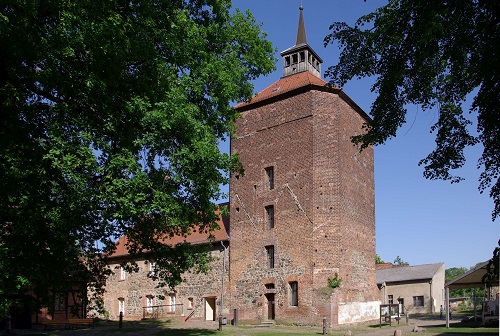
Fig. 1: Beeskow Castle, for centuries the seat of the lords of Beeskow, with its keep dating from the first half of the 14th century. The present appearance of the castle is largely the result of alterations undertaken in 1518 under Bishop Dietrich of Lebus.
Under the protection of this castle, a market settlement was established, initially sheltered by ditches and planks, the first documented mention of which dates back to 1272. At that time, it was presided over by a supervising warden (praefectus) named Heinrich, who was a feudatory vassal of the lords of von Strehle. Together with the marketplace, the Beeskow town hall is mentioned for the first time in 1283, whereby the latter was not exclusively a political meeting place but also served as a department store, which was typical of the time. Around the Beeskow market, several trades settled in the 13th century, which were gradually endowed with rights. All trades were given specific rights to sell on the market. When writing the individual regulations and their exact wording, the Beeskow council sought help from the aldermen of the town of Luckau, who shared their knowledge in several exchanges of letters in the 1280s. Based on this correspondence, it has been concluded that Beeskow adopted Luckau law, which is closely related to Magdeburg law. The Beeskow market and the rights associated with it form the origin of the civitas Beeskow and its municipal rights, which underwent a strong expansion in the course of the 14th century.
With the approval of Duke Rudolph of Saxony-Wittenberg, the citizens of Beeskow succeeded in achieving a high level of autonomy and self-government. Thus, in 1321, the sovereign confirmed extensive rights to his town, such as high court jurisdiction, the separation of the citizens from the jurisdiction of the lord of the castle, the construction of a town wall, the collection of customs duties for wood rafted on the Spree, and the equivalence of municipal coins with those in Luckau and Guben. This bundle of rights corresponded to important municipal privileges. With the high court jurisdiction, the Beeskow council was allowed to decide about life and limb. In addition, it was permitted to regulate municipal affairs as it saw fit without interference from the lord of the castle. Thus, if the lord of the castle, who was the liegeman of the sovereign, had to fight out legal disputes concerning the affairs of the town of Beeskow, he was not entitled to bring them before the castle court for a decision but had to appeal to the town court. The construction of the town wall was not only aimed at aspects of urban security. The merlons, gates, towers and Wiekhäuser (guard houses) also emphasized the special defense capabilities of the townspeople and were representative signs for anyone approaching the town. In addition, they were an expression of municipal law and the council’s jurisdiction within the town walls (fig. 2).
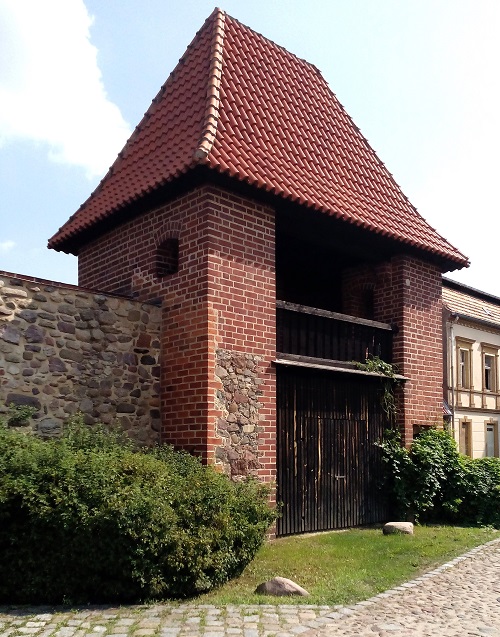
Fig. 2: The Wiekhaus incorporated into the town wall of Beeskow (photo: Steffen Kurtze).
Without a doubt, due to these and other privileges, a high self-confidence developed amongst the citizens of Beeskow, so that in August 1321, the town took part in a confederation of towns from the Mark Brandenburg and Lower Lusatia. This alliance took measures to secure peace and preserved the urban freedoms of the individual members, who supported each other in times of uncertain power relations.
The attention of the Beeskow council was also directed to communal cooperation. It always had the well-being of the entire population in mind. In the Beeskow town book, which the council had created in order to collect and document the rights and statutes, rules for a wedding celebration, for example, have been handed down. For example, the number of wedding guests was not allowed to exceed 20 “par volkes” (“per people”). The regulatory power of the council was extended to the extent of prohibiting all guild members from walking barefoot in the streets or participating in gambling. The Beeskow marksmen’s guild was also affected by council regulations. Among other things, it was stipulated that if the marksmen “roufften jn vneinigheit” (“scuffled in discord”) or “schlugen, das nicht blutrunst were” (“fought in beatings that were not bloodthirsty”), they were to settle these conflicts among themselves and “not negotiate them before the judge”. A paragraph formulated specifically for this purpose testifies to the fact that it was not uncommon for fisticuffs to occur in the marksmen’s guild.
The councilors of Beeskow also regulated the social coexistence of Slavs and Germans. They stipulated for the Beeskow crafts that the masters had to pay attention to the German descent of their apprentices. No person of Slavic origin was allowed to be trained, according to a statute for the shoemakers drafted in 1353. Such rules, however, did not pursue measures in today’s xenophobic and nationalistic sense. With the foundation of Beeskow in the middle of the Slavic settlement area, in contrast to this, manifold connections arose between the colonists of German origin and the Slavic old settlers, which not infrequently resulted in marriages. Therefore, the demand for German birth was rather directed against persons from the surrounding countryside who wanted to learn a trade and settle in Beeskow. The movement of the rural population into the town is a typical phenomenon of the 14th century, which was caused by changing living conditions such as climatic changes, population decline, robber gangs, agrarian depression, exacerbated serfdom and so on. In order to keep the number of their members as constant as possible, the guilds in Beeskow tried to protect themselves with their statutes from the “newcomers”, who – due to the settlement area – were mostly of Slavic origin.
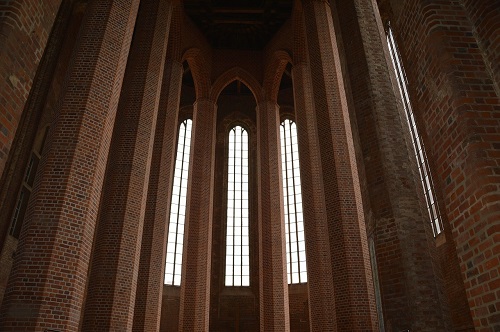
Fig. 3: St. Mary’s Church on the market square in Beeskow, once a source of pride for the town’s citizens. Severely damaged during the Second World War, the church remained in ruins until its reconstruction following the political transition of 1989–90.
The town council also exercised police power. On market days, it sent officials to the market to check the weights and measures of the merchants (fig. 3). When a weight was discovered at the market in 1427, which was “nicht vulkomelichin gross genugk” (“not entirely big enough”), the council wanted to penalize the merchant. But the town lord Friedrich von Bieberstein had the culprit seized “vff der gassen” (“in the alley”) and led to his castle. Thereupon the representatives of the council declared that the merchant had to be brought before the municipal court and not before the lord of the castle. Friedrich von Bieberstein replied that this right was not contained in the letters shown by the council, so he decided the matter rightly: “Habit irs denn ouch in euwern brieffe nicht […], hoffe ichs ouch bilche vnde von recht zcu behalden” (“If it is also not in your letters […], I also hope to keep it honest and of right”). With this, he overrode the municipal autonomy and self-administered jurisdiction that Duke Rudolph of Saxony had once granted Beeskow. Since it was not possible for the town to prove its privileges, the councilors sought legal advice from the Magdeburg aldermen. Even though the magistrates agreed with the town of Beeskow and condemned the actions of Friedrich von Bieberstein, it could not change the fact that the town lord overrode the Magdeburg judgment and had the dispute with the merchant heard by his court. In the course of the 15th century, Beeskow increasingly had to protect its rights and freedoms against the town lord and was less and less often able to defend itself. Nevertheless, the town continued to revolt. When the Biberstein family ceded Beeskow to the Pomeranian dukes without further ado due to a lack of money and reclaimed it a short time later, the Beeskow councilors invoked their homage paid to the Pomeranian duke shortly before and refused to obey Johann von Bieberstein. Enraged, he attacked the town of Beeskow in 1425 in order to forcibly compel the citizens to pay homage to him. Once again, the magistrates of Magdeburg condemned such violent action as an unlawful intervention against the town, but this did not help. Since the Beeskow council was still unable to prove its rights, the only option was a settlement with the town lord, which the magistrates in Magdeburg also advised. The Lords of Bieberstein remained the town lords of Beeskow until 1518 when Bishop Dietrich of Lebus took possession of the town and the castle. Unlike him, later town lords again intervened in municipal politics. Thus, Margravine Katharina, wife of Margrave Johann von Brandenburg-Küstrin, who died in 1571, and owner of Beeskow, instructed her bailiff Clemens Ludwig, who worked at Beeskow Castle, to closely monitor the annual elections of the Beeskow council. The Margravine asked for information about the appointed persons and reserved the right to reject candidates that seemed unsuitable to her. Land and town lords often intervened in the constitution of the municipal communities subordinate to them, with the argument usual for the 16th century to provide for the “preservation and improvement” of the urban municipalities. Thus, the Beeskow council had to submit to the slowly growing Brandenburg sovereignty and more and more often renounce medieval privileges, which had determined the municipal autonomy and legal security for several centuries.
Author: Sascha Bütow
Citation:
Sascha Bütow: Beeskow. Extending Rights, Living Out Rights – Medieval Beeskow and its Municipal Privileges, 11.08.2026, https://magdeburg-law.com/historic-city/beeskow/
Further Reading:
Bütow, Sascha, “Uff deme Markte by dem Rathuz”. Beeskows Zentrum neu entdecken (= Beeskower Heimathefte 18), Beeskow 2011.
Engel, Evamaria; Koldrack, Klaus, Beeskow, in Deutsches Städtebuch. Vol. 2. Berlin and Brandenburg, edited by Evamaria Engel et al. Stuttgart 2000, pp. 30–36.
Neumann, Johann Wilhelm (ed.), Das Stadtbuch der Stadt Beeskow in der Niederlausitz, in Neue Mittheilungen aus dem Gebiet historisch-antiquarischer Forschungen, edited by Karl Eduard Förstemann, vol. 4/2 (1839), pp. 1–21.
Schich, Winfried, Zur Diskriminierung der wendischen Minderheiten im späten Mittelalter. Die Ausbildung des “Wendenparagraphen” in den Zunftstatuten nordostdeutscher Städte, in Europa Regional, number 2 (2002), pp. 57–61.
Scholz, Michael, Beeskow in den herrschaftlichen und kirchlichen Strukturen des späten Mittelalters, in Bürgerstolz und Seelenheil. Geschichte, Architektur und Ausstattung der Beeskower Marienkirche, edited by Dirk Schumann and Ekkehard Krüger, Berlin 2012, pp. 9-40.