A Brandenburg Oppidum with a Vivid Legal History
The history of Werneuchen, located about 30 km northeast of Berlin, is characterized by a typical development within the late medieval small-town period. In 1300, the settlement was named oppidum when the altar of St. Mary and St. John in the parish church of Eberswalde was assigned income from Werneuchen’s farm rent.[1] At that time, the small town was owned by Margrave Albrecht of Brandenburg, who called it oppdi nostri Warnow. As has been assumed within Brandenburg town history research, the founding of Werneuchen was connected with the intention of its development into a complete town in the legal sense.[2] In fact, Werneuchen remained limited to a small-town character, and it repeatedly appears in various 14th-century sources as an oppidum.
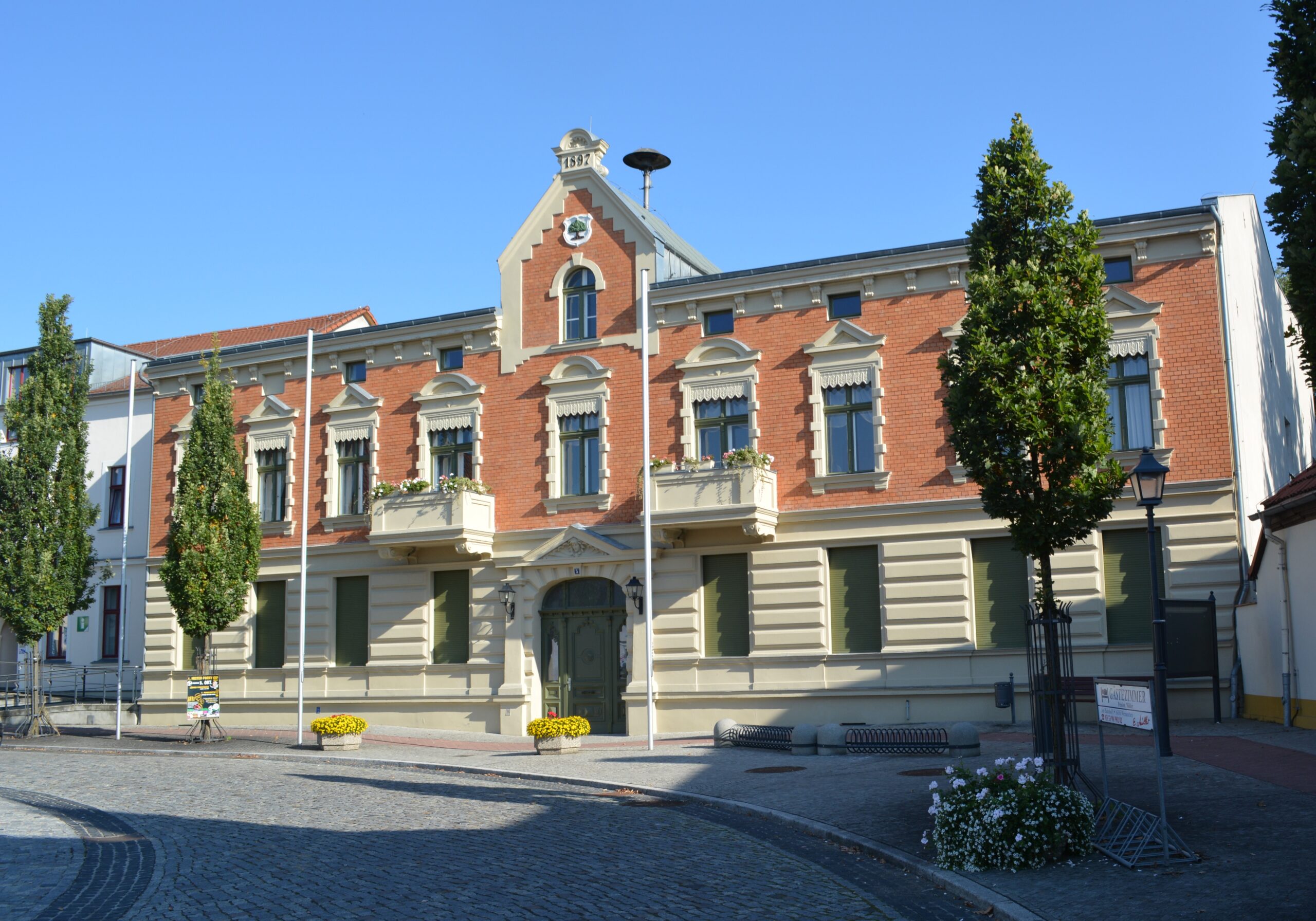
Fig. 1: Town Hall of Werneuchen. In 1865, Werneuchen was once again elevated to the status of a town, after urban development had been severely repressed in the early modern period.
Economically, Werneuchen profited from its favorable location on intersecting roads leading to Pomerania, Silesia and Mecklenburg. A documented customs office testifies to considerable traffic.[3] Here, an agreement concluded between Werneuchen and neighboring Strausberg in 1315 deserves attention. In it, both towns agreed on a joint collection of customs duties.[4] In this context, eight councilors from Werneuchen are mentioned by name, in addition to those from Strausberg, which provides evidence of a council constitution for the town. Presumably, Werneuchen was guided by the customs of the Brandenburg town law or the closely related Strausberg town law, whose origins lie in Magdeburg law. Nevertheless, the councilors of the larger town of Strausberg may have been important supporters of Werneuchen and helped in civic as well as legal matters. In the aforementioned customs agreement, Werneuchen is referred to as civitas, i.e. town, on an equal footing with Strausberg. Although there were great differences between the two locations in terms of urban development, this terminology testifies to Werneuchen’s claim to want to be a town.
The legal development of Werneuchen, however, led in a different direction. The Landbuch (state book) of the Mark Brandenburg from 1375 indicates that Werneuchen had, in the meantime, been given by the margrave as a fief to the Schenken von Sydow. The latter had sub-loaned Werneuchen to the civil family Trebus, who now also possessed the lower and higher jurisdiction as a fief.[5] On this basis, further development into a town was not possible. Therefore, Werneuchen remained a small town or a hamlet until the early modern period, although its constitution as a town council remained intact. Thus, as late as 1646, two mayors and six councilors are mentioned.[6]
Judicial decisions within the town of Werneuchen, however, remained dependent on the lordship, as an interesting case from the 16th century proves. Thus, in 1557, an innkeeper named Curt Mönchehoff appeared before the town court of Werneuchen. In the meantime, the town court belonged to the powerful von Krummensee family living in the Barnim region. There Mönchehoff complained that numerous horses and other livestock had perished for him for inexplicable reasons. However, he was unable to accuse anyone of anything, and so the only option left to him was to claim that he had bought the animals from evil people.
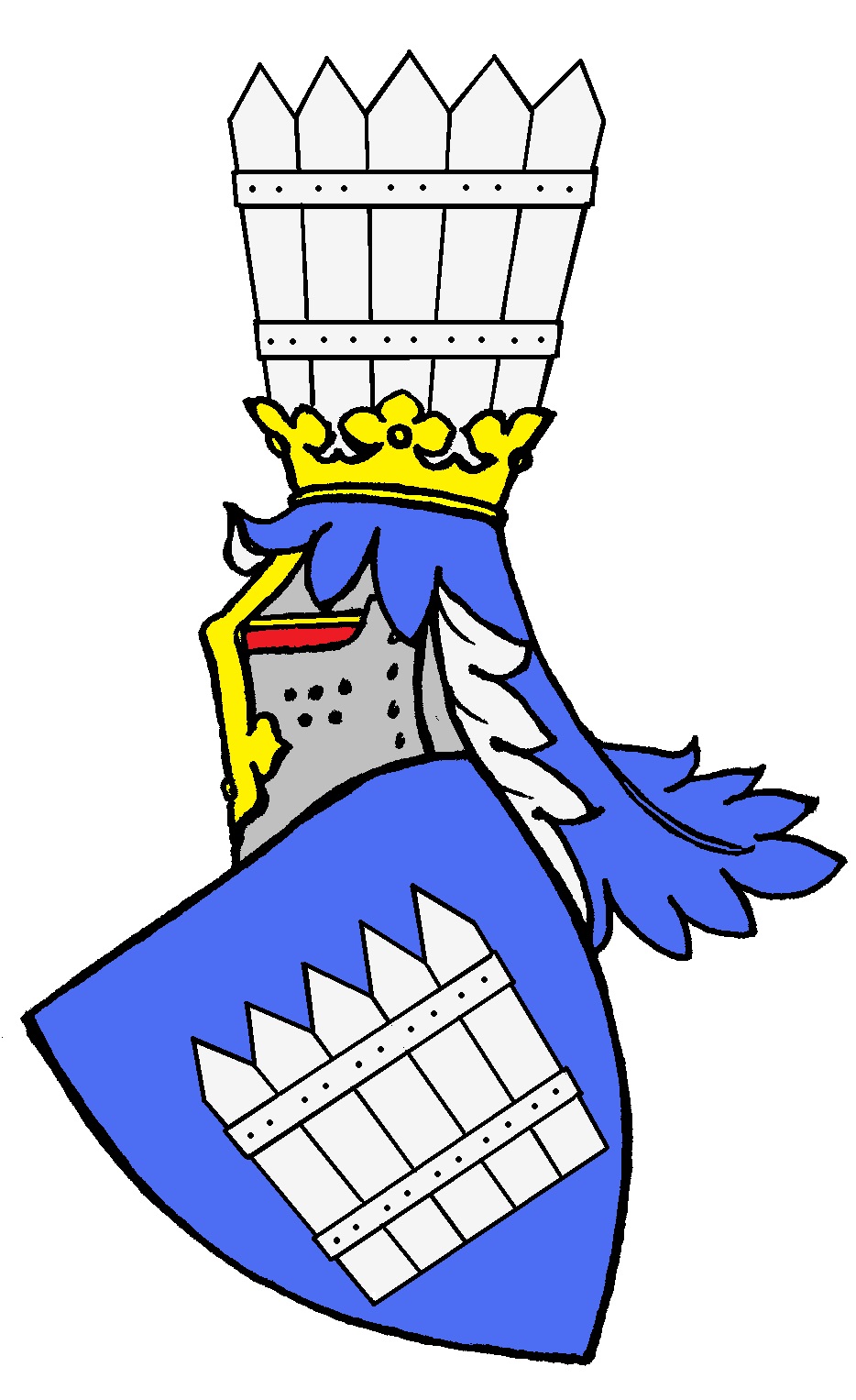
Fig. 2: Redrawn coat of arms of the von Krummensee family. In the 16th and 17th centuries, the family, which was very affluent in the Barnim region, owned the town court of Werneuchen.
Shortly afterwards, something outrageous happened: a stranger, “an henden und fussen lam” (“lame at the hands and feet”), came crawling into town and publicly accused the innkeeper’s neighbor, named Brederekin. She, together with her daughters and other women, had poisoned the animals. In court, the “cripple” claimed that he could use his crystal and a magic spell to make Mrs. Brederekin and the other accused women, on a day determined by him, rush to court dressed only in a shirt and carrying the said poison in eggshells. The lords of the court, Albrecht and Wilhelm von Krummensee on Altlandsberg, complied with his suggestion and asked the old man to practice his magic art before the court. However, when they “waited long enough for it, nothing came of it” and the accused women did not appear in court. The “crippled” man, however, declared that the crystal had been stolen from him by the accused Mrs. Brederekin, and that, as a result, he could not practice his art. The Brederekin family, for their part, pleaded before the judges to have the man captured and interrogated.
Driven into doubt by the mysterious incidents, the two Krummensee brothers refrained from interrogation for the time being and first asked the aldermen of the city of Brandenburg for advice on the matter. The latter left no doubt that the events that had occurred in Werneuchen were a matter of sorcery. Their answer was: because “he [the man] had gone around with the crystal […], he should be executed with the fire from life to death because of his devilish art […]”. The denounced neighbor of the Werneuchen innkeeper was acquitted for the time being.[7]
The case heard in court in Werneuchen reveals very vivid insights into the views of the people of the 16th century. For a Werneuchen town citizen who knew about the events surrounding the dead animals of Curt Mönchehoff or even attended the public announcement of the “crippled man”, the events must have been extremely significant. From the church service, from the Christian history of salvation, and not least from the colorful pictures in the churches, he knew about miracles, magic, and the evil, ever-shrewd devil who tempts people. Numerous folk legends also told of the deeds of mysterious sorcerers and nefarious magicians.
Especially in emergency situations and times of crisis, explanations had to be found that not infrequently ended up in the numinous. How else, if not by the devil, could it had happened when suddenly a number of animals died out of the blue? Such explanations played an important role within the legal life. This is proven by the reply letter of the Brandenburg board of aldermen, which speaks of devilish art and whose content was probably made known to every citizen of Werneuchen by an exclamation.
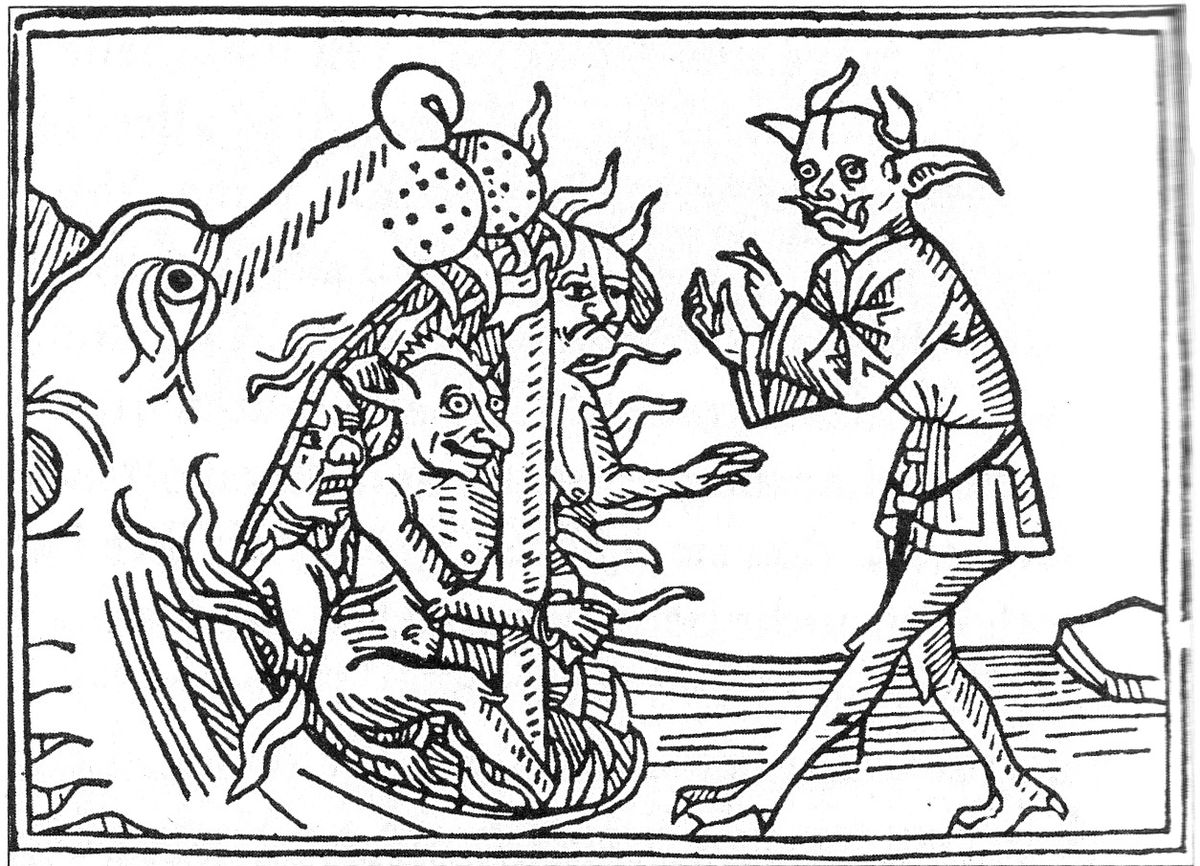
Fig. 3: Depiction of the devil with the hell-mouth, woodcut, Augsburg 1473. The devil tempting people was a pattern of explanation often also used in court in criminal trials.
The actual background of the incidents in Werneuchen can hardly be reconstructed. What motives the “crippled man” pursued, whether and to what extent he cooperated with the innkeeper Curt Mönchehoff, must be left to speculation.
From the descriptions, as it were, the special judicial conditions in Werneuchen become evident, which were not determined by the council of the small town but by noble lords of the court. The legal customs of the Brandenburg board of aldermen provided an important guideline that lent legitimacy to the decisions made locally.
Author: Sascha Bütow
Citation:
Sascha Bütow: Werneuchen. A Brandenburg Oppidum with a Vivid Legal History, 08.12.2021, https://magdeburg-law.com/de/magdeburger-recht/historische-staedte/werneuchen/
Footnotes:
[1] Adolf Friedrich Riedel (ed.), Codex Diplomaticus Brandenburgensis, series A, vol. 12, Berlin 1857, no. 3, pp. 284-285.
[2] Cf. Felix Escher and Wolfgang Ribbe, Städtische Siedlungen im Mittelalter (= Historischer Handatlas von Berlin und Brandenburg, Nachträge 3), Berlin/New York 1980, pp. 9-10.
[3] Werner Vogel, Werneuchen, in Handbuch der historischen Stätten Deutschlands, vol. 10: Berlin und Brandenburg, edited by Gerd Heinrich, Stuttgart 19953, p. 388.
[4] Same as note 1, no. 3, pp. 68-69.
[5] Ernst Fidicin, Die Territorien der Mark Brandenburg, part 2, Berlin 1885, p. 258.
[6] Same as note 3, p. 388.
[7] Adolf Stölzel, Urkundliches Material aus den Brandenburger Schöppenstuhlsakten, vol. 1, Berlin 1901, p. 332.
Images:
Fig. 1: Wikimedia Commons, photo: Kvikk
Fig. 2: Wikimedia Commons, drawing: LeoDavid
Fig. 3: Wikimedia Commons