When the Town Right Includes a River
With the extinction of the Counts von Lindow-Ruppin in 1525, Wolfgang Redorf, a councilor of the Electorate of Brandenburg with a doctorate, prepared a register of the county, which had reverted to Brandenburg, on behalf of his sovereign Joachim I. With regard to Wusterhausen (Dosse), the register states the following: “die von Wusterhausen sind Zoll frey allerley Zoll zu Wasser vndt Lande, gleichmessig den anderen merkischen Städten” (“the people of Wusterhausen are free to pay all kinds of customs on water and land, equal to the other mercantile towns”).[1] This testifies that Wusterhausen was not an insignificant town within Brandenburg. On the contrary, the local citizenry received the Magdeburg law around 1232, which was possessed by many other municipalities in the Mark Brandenburg, Berlin, Cölln and Frankfurt an der Oder. This significant law was primarily associated with communal self-government, meaning that a municipal community was allowed to decide its own affairs. However, it also granted the town economic freedoms, including, in particular, market trading and customs exemptions.
Wusterhausen had not received its town law directly from Magdeburg but through the mediation of Stendal. This is important insofar as it is the reason for the transfer of a number of important trade and market rights, which thus also applied in Wusterhausen. The relations to the Altmark remained beyond the time of the assumption of the town rights. This concerned trade and shipping, which also led from Wusterhausen to the area left of the Elbe, as will be shown.
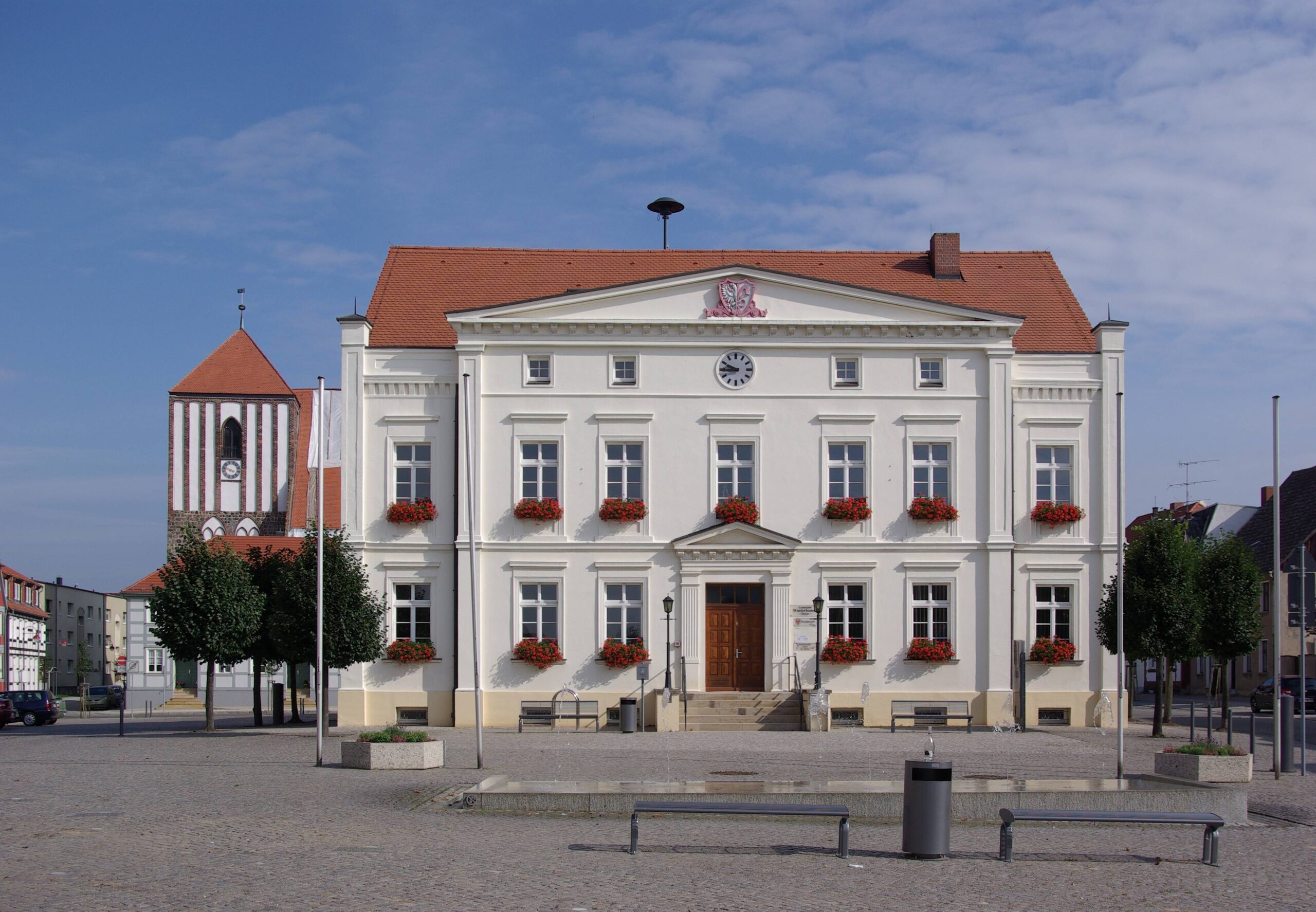
Fig. 1: View of the Town Hall in Wusterhausen (Dosse).
First, however, another look at Redorf’s register, which continues with regard to the citizens of Wusterhausen: “sie haben frey den Fluss an der Dosse, Das man den flus nit Verpauen muess mit fischwehren, auch Kein Kain darauff haben magk, allein die von wusterhausen muegen einen Kain daruf haben vndt fischen: es mues auch kain steg darueber gemacht werden umb befestigung willen des Landes, Auch von wegen des freyen flusses zu den mollen, die des orths allendthalben gelegen sein.“ (“they have free the river at the Dosse, that the river must not be blocked with fish weirs, nor may any boat be placed on it, only the citizens of Wusterhausen may have a boat on it and fish: there must also be no bridge made over it for the sake of fortification of the land, also because of the free flow to the piers, which are located at the site everywhere).
On the basis of these explanations, various rights can be identified that Wusterhausen owned with regard to the river. By far the most important regulation was that the Dosse was to remain free, i.e. it was not to be obstructed or blocked with hydraulic engineering structures. Explicitly mentioned are fish weirs, which were often built into waters by mooring them in the bottom or on the bank. This often made it impossible for boats and barges to proceed. For this reason, in many other cases, so-called half-weirs were erected, which did not block the whole river. Another way of reconciling fishing and navigation was to keep channels clear for ships to pass through. This worked at best on larger rivers and lakes. For the small Dosse, such measures were out of the question, which is why it is not surprising that this river should be completely free of fish weirs. Consequently, fishing here was probably mainly done from the shore or from a barge.
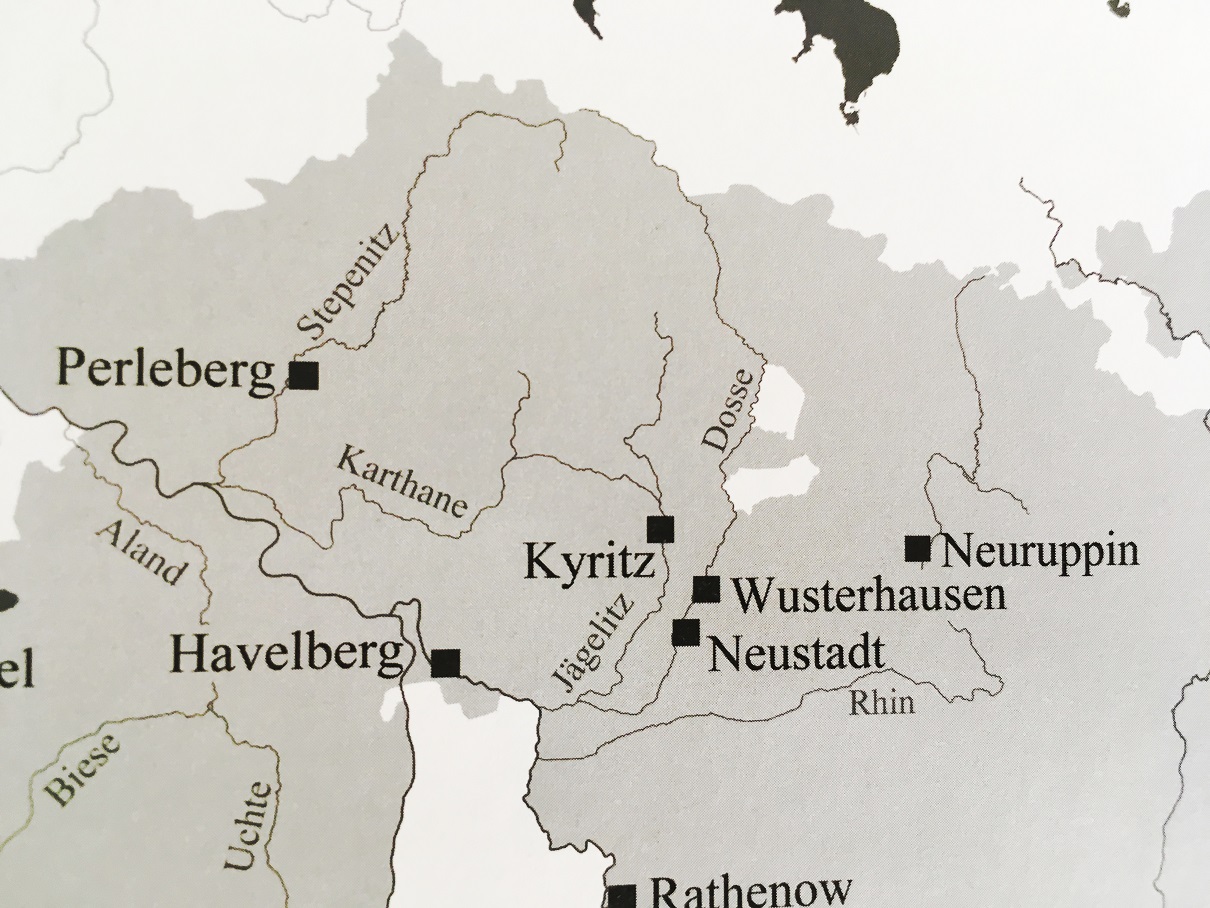
Fig. 2: Wusterhausen’s position in the river-based network of paths between the Elbe and Havel rivers.
Wusterhausen had also succeeded in acquiring the sole exercise of fishing from a barge. However, it is doubtful that this regulation applied to the entire Dosse, as the register states. Too much evidence suggests that other parties also fished on the river. What the register of Wolfgang Redorf probably wants to say is that in the urban area of Wusterhausen, i.e. within its Weichbild (municipal area) and the borders of its Feldmark (parish land), no other party was allowed to fish. Another important privilege stated that no footbridges and bridges were allowed to be built over the Dosse, which, of course, again served the navigation but also the free run of the water for the mills. Thus, in Redorf’s register, the extensive rights of Wusterhausen regarding the Dosse were recorded in a compressed form. The impression emerges of a lively use of the river, which included shipping, fishing as well as milling economy.
From the register, it can also be inferred that there was “ein saltz Kisten” (“a salt box”) in Wusterhausen. The term refers to the salt deposit in the town, as already noted by the well-known town historian Karl Altrichter in 1888.[2] It is possible that this salt came from the area around Lüneburg, but Halle and the Magdeburg area around today’s Bad Salzelmen also come into question as suppliers. Around the salt trade, again some legal forms of organization developed. Not least the Dosse may have been used for the transport of the salt. Gerd Heinrich assumes that it may have been stapled directly at the river in Wusterhausen.[3]
In Redorf’s register, there is another important remark concerning the salt deposit, according to which no foreign salt carrier – meaning carriers not living in Wusterhausen – was allowed to bring the salt as far as the river Temnitz. This directive, inconspicuous at first glance, only gains relevance through the knowledge that this small river formed the border of the so-called land of Wusterhausen. In this encoded formulation, the obligation to bring the salt to Wusterhausen and not to pass it is hidden behind the wording. An additional regulation deserves attention here. It stated that the bypass was “auch nicht vmbher vfs Landt” (“also not permitted around on the countryside”). This allows the supposition that the Dosse was later used as a so-called salt road, and thus, Gerd Heinrich must be agreed with. The course of this waterway led directly into the town of Wusterhausen, which is still commemorated today with the street name “Schifffahrt” (“Shipping”).
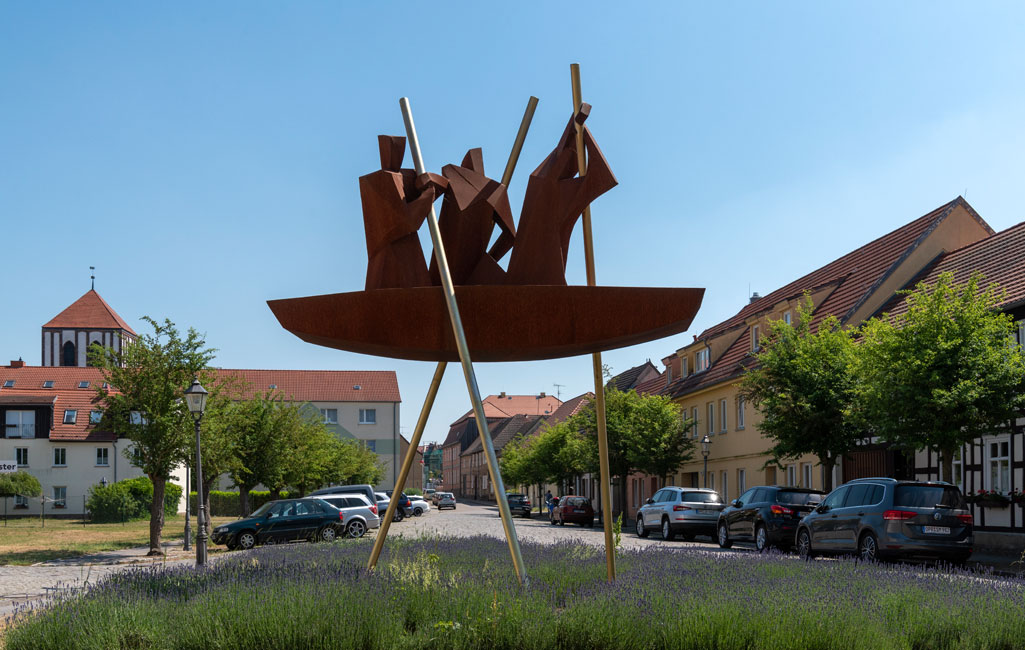
Fig. 3: The “Schifffahrt” (“Shipping”) in the historic town center of Wusterhausen; this is where the shipping traffic that entered the town ended in the Middle Ages
It is not possible to say with certainty how long Wusterhausen’s legally secured shipping ventures lasted. Traffic on smaller rivers, such as the Dosse, often came to a standstill as early as the transition to the 16th century. In addition, at about the same time, the Brandenburg sovereign intensified his efforts against connections to the Hanseatic League, from which the Brandenburg towns had profited since the Middle Ages. However, the fact that the waterway still played an important role for Wusterhausen in the 15th century is evidenced by a customs regulation that was established around 1440. Specifically, it concerned the town of Werben on the Elbe, which was very important for shipping and shipbuilding. The mentioned customs regulation applied to Arneburg, more precisely to the altar of St. John in the chapel there, into which financial resources from land and water traffic were to flow. Numerous Brandenburg towns are mentioned in this context. It illustrates that these passed through the municipality of Werben mainly by water. In addition to Kyritz, Pritzwalk, Perleberg, Lenzen, Wittenberge, Havelberg, Brandenburg, Spandau, Rathenow and Nauen, Wusterhausen is also referred to and considered obligated to pay the “scheptolles und bodemtolles” (currencies). Among other things, leather, cloth, herring, oil, salt, wool, beer from Zerbst and millstones are mentioned as goods to be cleared. Consequently, the Elbe and its tributaries were actively used in the mid-15th century, and towns located on small rivers, such as Wusterhausen, were also involved.
In summary, the example of Wusterhausen highlights the extensive legal, logistical and infrastructural aspects associated with the town law, which included the Dosse River in particular. It was an essential subject of legal agreements and regulations beyond the Weichbild (municipal area). Wusterhausen had such an impact on its surrounding region as was typical for medieval towns, provided they had privileges and power that allowed such encroachments.
Author: Sascha Bütow
Citation:
Sascha Bütow, Wusterhausen (Dosse). When the Town Right Includes a River, 08.12.2021, https://magdeburg-law.com/historic-city/wusterhausen-dosse/
Footnotes:
[1] Adolf Friedrich Riedel (ed.), Codex Diplomaticus Brandenburgensis, series A, vol. 4, Berlin 1844, no. 107, pp. 151–184.
[2] Cf. Karl Altrichter, Geschichte der Stadt Wusterhausen an der Dosse, Wusterhausen 1888, pp. 17-18.
[3] Cf. Gerd Heinrich, Wusterhausen, in id., Handbuch der historischen Stätten Deutschlands, vol. 10: Berlin und Brandenburg, edited by Gerd Heinrich, Stuttgart 19953, pp. 399–400, here p. 400.
Images:
Fig. 1: Wikimedia Commons (CC BY-SA 4.0), photo: Clemensfranz
Fig. 2: cartography: Ellen Franke, Berlin
Fig. 3: photo: Erik-Jan Ouwerkerk