Guben
A Market Town of Magdeburg Character on the Neisse River
In the Middle Ages, Guben/Gubin belonged to the most important towns in Lower Lusatia. From the point of view of legal history, a privilege for the town dating back to 1235, which was granted to the town by Margrave Heinrich of Meißen, is particularly noteworthy. In it, the prince conceded to his citizens of Guben the application of Magdeburg law, among other things: Jus enim tale, quale Magdeburgenses habent.[1] At that time, the town was already an important transshipment point for salt, which came mainly from the central German region around Halle an der Saale and was frequently reloaded in Guben from carts onto ships that traveled on the Neisse and Oder Rivers. In this context, according to the mentioned document, Margrave Heinrich allowed the people of Guben to levy a duty at the place where the salt wagons (currus salis) stopped. Lucrative market and traffic relations had developed for the town of Guben around this important trading center. An early example dates back as early as 1211, when the Silesian Duke Henry I granted the monastery of Leubus (Lubiąż), located on the Oder River, the right to pass through his dominion free of customs duties with two ships annually in order to reach Guben, Leubus and Pomerania. From this, it can be concluded that the Leubus monks satisfied part of their salt requirements in Guben. It is also interesting that 40 wagons were allowed to be used for its transport instead of ships.[2]
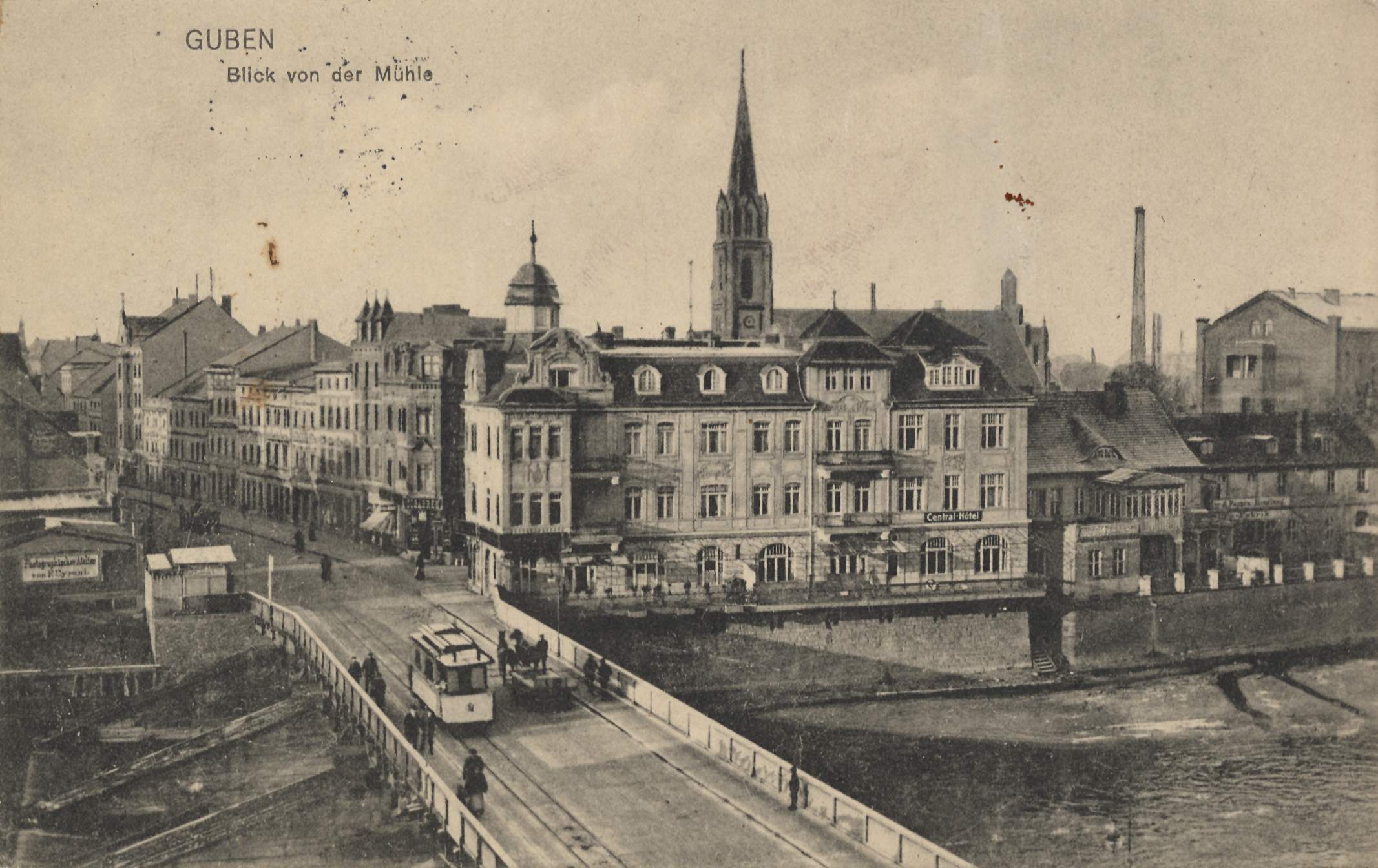
Fig. 1: View of the town of Guben (postcard from the 1910s). The former old town of Guben/Gubin now belongs to the Republic of Poland. The Brandenburg Guben developed from the old monastery suburb on the German side.
Guben was not only a port of call for foreign shippers and carriers. The local citizens themselves conducted a lively trade, in which shipping played an essential role. This required a targeted appropriation of rights by the Guben council regarding the rivers Neisse and Oder. Against this background, it is worth mentioning a town law confirmation document of Duke Bolko II of Schweidnitz-Jauer from 1367, to which a document of the Thuringian landgrave Dietrich IV is inserted. The latter, in turn, contained even older regulations of a document issued before 1288 by Margrave Heinrich von Meißen. According to the text of the document, he had granted Guben the right to sail “mit eigen schiffen off. der Odir”[3] (“with its own ships off the Oder”). Hereby the Gubeners were expressly exempted from the customs in Fürstenberg, which lies about halfway in the direction of Frankfurt directly on the Oder and which, like Guben, is presumably a foundation of Margrave Heinrich.[4] If the Gubeners sailed down the Oder with foreign ships, they had, however, to pay half of the usual customs duty. The Guben city council had these customs rights confirmed by Margrave Johann von Brandenburg and Duchess Anna von Breslau in 1316. Both issued a corresponding mandate to the Fürstenberg customs officer Henymanno Messow, according to which he was not allowed to burden the Gubeners with demands est ab antiquo, i.e. from time immemorial.[5]
Via these rights, the citizens of Guben participated extensively in the trade on the Oder, which led in the direction of Stettin. On this way, another important customs post had to be passed, where Guben also received privileges. This concerned the place Oderberg, where the citizens of Guben were supposed to pay the same customs duties as the citizens of Frankfurt by a privilege of Margrave Jost of Moravia in 1401, in which there were obviously advantages. In addition to grain, the Guben shippers exported wine via Stettin, which was widely distributed within the Hanseatic area. This is evidenced by a legal regulation of the Hanseatic League, which was passed after the Lübeck Hanseatic Convention of 1383. Various cities had complained about the small size of the “pipen” of “Gobin’s wine”, i.e. the drain petcocks on the wine casks.[6] The representatives of the Hanseatic cities present in Lübeck then agreed to send letters to Frankfurt (Oder), Guben and Crossen (Krosno Odrzańskie) requesting that the petcocks be left at their conventional size. How this dispute was resolved cannot be identified.
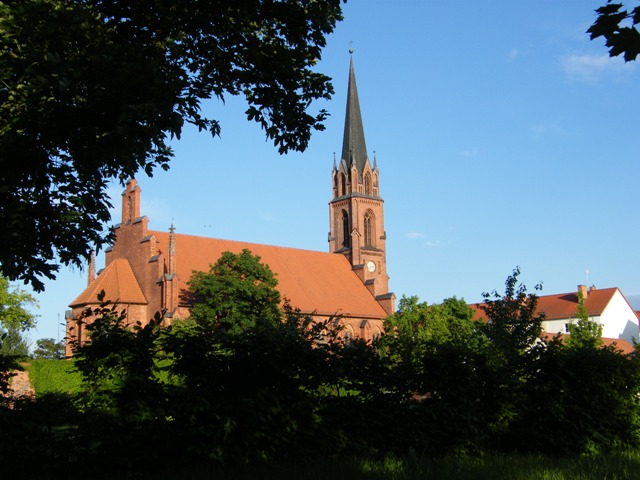
Fig. 2: The church of the former Benedictine monastery of Guben. By means of a protective alliance with the lords of Cottbus, the citizens of Guben also supported the monastery in front of the old town of Guben, in addition to the monastery of Neuzelle.
Despite constantly changing rulers in the margravial office of late medieval Lower Lusatia[7], the Guben council strove to preserve the city rights granted to it. One of the primary demands was that the town should not be separated from the margraviate, and Margrave Dietrich the Younger issued a decree to this effect in 1298.[8] Just a little later, however, Lower Lusatia was sold to the Archbishopric of Magdeburg in 1301, so that in 1304 Guben appealed to Archbishop Burchard for confirmation of all rights.[9] However, the archbishop was not able to keep possession of Lower Lusatia. Instead, it went to the Margraves of Brandenburg. The Guben council had to seek confirmation of its rights again, which Margrave Hermann of Brandenburg finally provided in 1306. He added to his privilege the remark that all those rights of Guben that were in written form should never be infringed by him or his successors.[10] At the same time, his persistent efforts to preserve rights secured the status of the Guben council as a sovereign town. This deserves special attention since during the 14th century, Lower Lusatia fell to various dynasties in short periods of time, which meant that the Guben citizenry was certainly faced with the threat of a gradual loss of rights.
For this reason, the Guben council did not rely solely on the confirmation of its rights by sovereigns but also sought alliances with other towns, even beyond the borders of Lower Lusatia. In 1321, for example, Guben joined a coalition of margravian towns for mutual legal protection, which had been concluded after the extinction of the Brandenburg Ascanians.[11] The Guben council also sought alliance partners in the immediate vicinity, such as the lords Johann and Richard von Cottbus, who promised to protect the town of Guben in all its rights in 1319. This also included the deployment of armed “Mannen” (“men”) who, in the event of danger, were also to provide assistance to the monasteries of Guben and Neuzelle. In addition, it was mutually agreed to coordinate the allegiance to a new lord of Lower Lusatia. This was to be discussed by an eight-member committee, in which the Guben Schultheiss (sheriff or town mayor) Johan took part, among others.[12] In this way, Guben’s urban autonomy gained in the 14th century becomes evident, which led to a self-confident appropriation of rights that were usually exercised by the margraves.
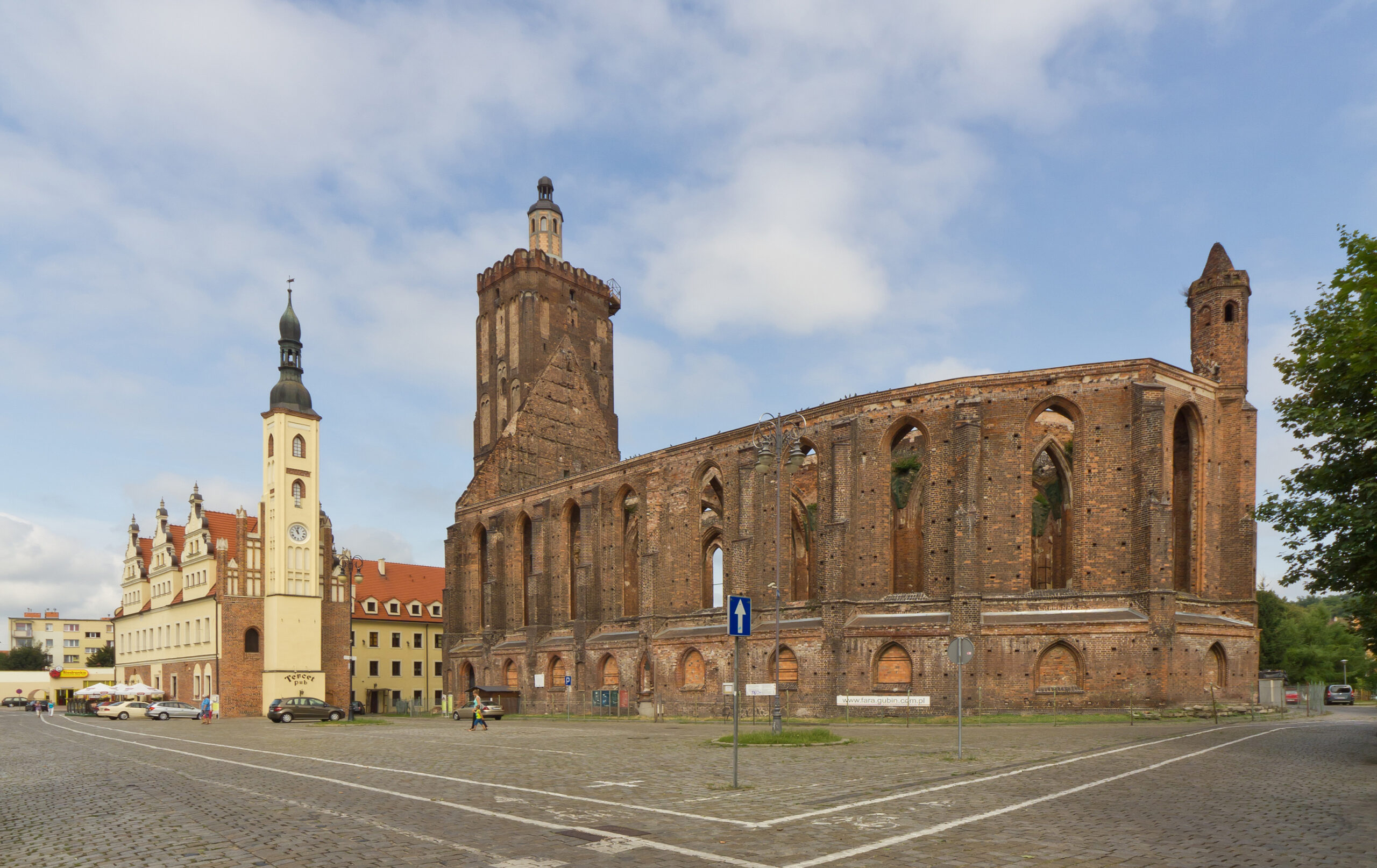
Fig. 3: Town hall and town church in Gubin/Guben. A German-Polish support association has dedicated itself to the reconstruction of the late Gothic town church, which was severely damaged in the Second World War.
Within this temporal period, the Guben council had also consolidated its position vis-à-vis its own townspeople, as is illustrated by a privilege granted by Duke Johann von Görlitz in 1384. Referring to a legal act of his father Karl IV, and at the request of the Guben councilors, Johann confirmed the city’s free election of councilors. According to this, the people of Guben should “jn yrre stat kysen vnd welen” (“choose and elect”) “ebare vnd och wiczczige” (“honorable and also knowledgeable”) persons. The citizens were requested by the duke to submit to the instructions of this elected council without “all wedirrede” (“any contradiction”) and under threat of severe princely disgrace in case of violations. The council thus received confirmation of its arbitrary right, which was to be exercised in the interest of the common good (“der stat czu eren vnd czu nuccze”, “in honor and benefit of the town”).[13] With this formulation, the duke made recourse to a topos that was widespread in the Middle Ages and that immanently determined the self-image of municipal government.
Author: Sascha Bütow
Citation:
Sascha Bütow: Gubin / Guben. A Market Town of Magdeburg Character on the Neisse River, 21.12.2021, https://magdeburg-law.com/historic-city/guben/
Footnotes:
[1] Johann Wilhelm Neumann (reviser), Die Urkunden des Gubener Rathsarchives, in Neues Lausitzisches Archiv, vol. 36 (1860), pp. 35-71, here p. 36.
[2] Konrad Wutke (ed.), Die schlesische Oderschiffahrt in vorpreußischer Zeit. Urkunden und Aktenstücke (= Codex Diplomaticus Silesiae 17), Breslau 1896, p. 1.
[3] Johann Georg Lebrecht Wilke (ed.), Ticemannus sive vita illustris Principis Theodoric, Leipzig 1754, Diploma no. CXXI, pp. 151–155, here p. 154.
[4] Cf. Rudolf Lehmann, Fürstenberg, in: Handbuch der historischen Stätten Deutschlands, vol. 10: Berlin und Brandenburg, edited by Gerd Heinrich, Stuttgart 19953, pp. 192-193, here p. 192. On Guben ibid., pp. 210–214, p. 201.
[5] Adolph Friedrich Riedel (ed.), Codex Diplomaticus Brandenburgensis. Sammlung der Urkunden, Chroniken und sonstigen Quellenschriften für die Geschichte der Mark Brandenburg und ihre Regenten, 41 volumes, Berlin 1838–1869, here vol. 2, 1, no. CCCCLXVIII, p. 382.
[6] Georg Waitz and Karl Koppmann (revisers): Hansetage von 1256-1370, Leipzig 1870, pp. 321-326, here p. 323, no. 266.
[7] In general on this Marek Wejwoda, Spielball mächtiger Nachbarn? »Die Lausitzen« im 14. Jahrhundert, in Die Nieder- und Oberlausitz – Konturen einer Integrationslandschaft, vol. 1: Mittelalter (= Studie zur brandenburgischen und vergleichenden Landesgeschichte 11), edited by Heinz-Dieter Heimann, Klaus Neitmann and Uwe Tresp, Berlin 2013, pp. 191–203.
[8] Same as note 1, p. 39.
[9] Ibid., p. 41.
[10] Ibid., pp. 41-42.
[11] Same as note 5, series B, vol. 1, Berlin 1843, no. 561, p. 467.
[12] Same as note 1, pp. 48–50.
[13] Urkunden zur Geschichte des Herzogs Johann von Görlitz, in Neues Lausitzisches Archiv, vol. 35 (1860), pp. 403–432, here pp. 410-411.
Images:
Fig. 1: zeno.org [public domain]
Fig. 2: wikimedia commons [public domain]
Fig. 3: Wikimedia Commons [Creative Commons 1.0], photo: A. Sawin
Merseburg
Prenzlau
Colditz
Halle (Saale)
Mittweida
Pritzwalk
Cottbus
Jerichow
A Market Hamlet with an Impressive Legal History
At the beginning of the 12th century, Jerichow and the land surrounding the town belonged to the property of the Counts of Stade. A few years apart, the two brothers Udo and Rudolf were murdered, leaving only their brother Hartwig as the youngest scion of the family and male heir alongside his mother Richardis. Hartwig, however, was destined for a clerical career and held the office of canon in Magdeburg. In a comprehensive endowment act in 1144, he and his mother decided to dedicate part of the family property to the foundation of the Premonstratensian monastery of Jerichow, which would henceforth belong to the diocese of Havelberg. The by far larger part of the property, including Jerichow Castle and the extensive area to the right and left of the Elbe, however, was assigned to the Archbishopric of Magdeburg. [Fig. 1]
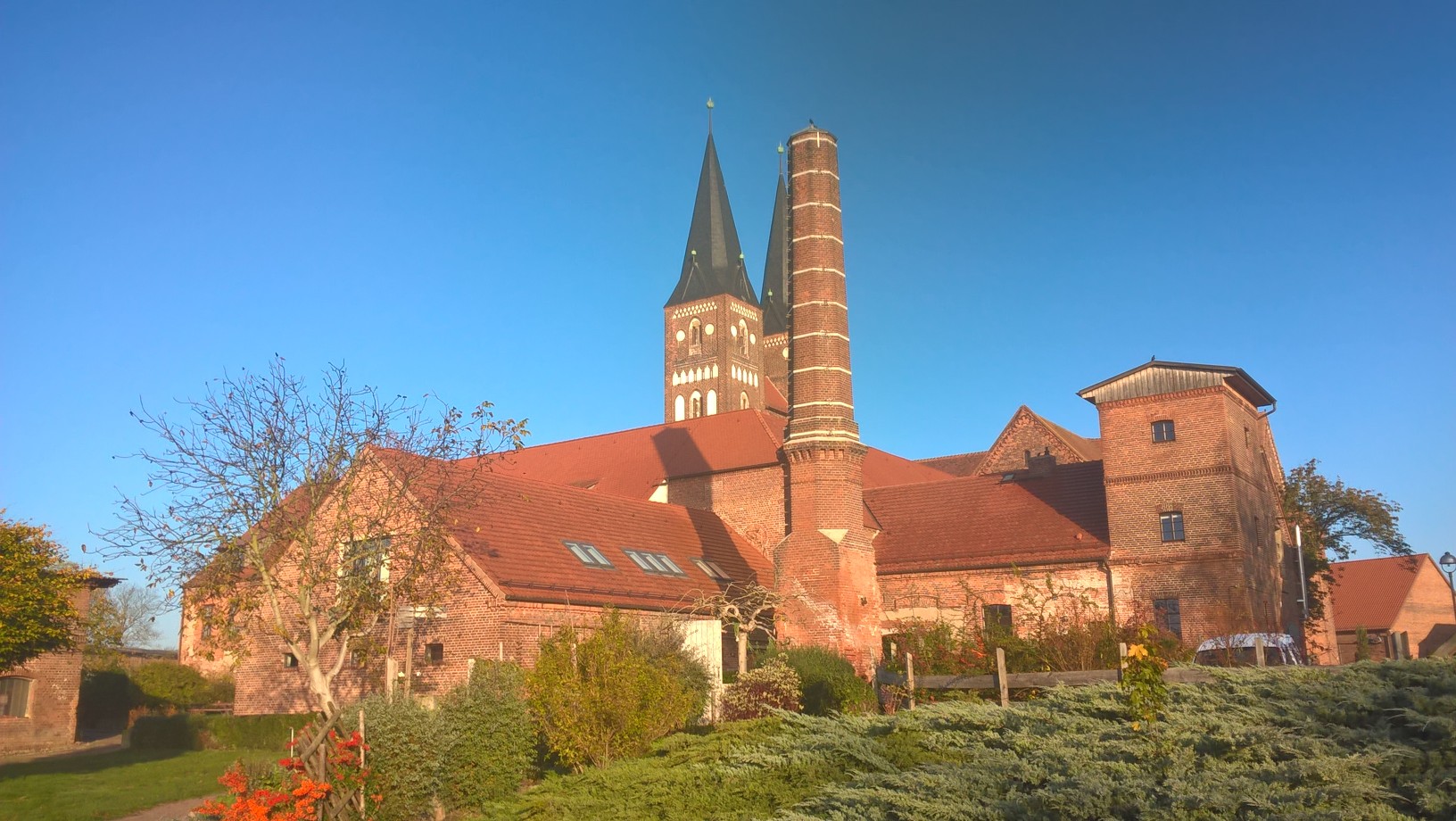
Fig. 1: Jerichow Monastery was moved to its present location in 1148 because of the disturbance of the peace in the nearby settlement.
The manorial center of this land was Jerichow Castle, which was the seat of the noble family of the same name and in the vicinity of which a settlement with lively market traffic developed in the 12th century. Jerichow was located on a Hanseatic trade route frequented in the Middle Ages, which connected Stralsund with Magdeburg and was called the “rechte herstraße” (“right military road”).[1] The hustle and bustle and noise that developed from the market traffic apparently affected the Premonstratensians to such an extent that they rebuilt their monastery at some distance from the settlement in a quieter location in 1148.[2] The settlement of Jerichow developed into what was first called an “oppidum” (market hamlet) in 1259, which in that year, together with the castle and the Jerichow land, became the property of Margrave Otto III of Brandenburg.[3] The economic prosperity of the town is indicated by the fact that in connection with this transfer of ownership between Magdeburg and Brandenburg, a customs office and mint are also mentioned in Jerichow.
Jerichow’s close vicinity to the Elbe always held dangers, such as in 1336 when the river overflowed its banks and the flood destroyed large parts of the town.[4] This was followed by a reconstruction of the town, in the wake of which the longitudinal market[5] probably came into being, which can still be seen in the townscape today. During this period of urban reconstruction, a significant change in the ownership of the town took place. In 1334, the well-known glossator of the Sachsenspiegel newspaper and later captain of the Mark of Brandenburg, Johann von Buch, came into possession of the House (castle), Weichbild (market settlement) and the Land of Jerichow, which he redeemed from Duke Otto of Brunswick for 2,000 Marks of Brandenburg silver.[6] Against the background of the flood disaster, Johann von Buch, together with the inhabitants of Jerichow, also placed the town on a new legal foundation. Thus, on the instructions of the Brandenburg Margrave Ludwig, in the case of disputed and unresolvable legal cases within the Jerichow citizenry, the town of Burg was not to be asked for legal decisions but only the citizens of the new town of Brandenburg (“civibus ciuitatis nostre Noue Brandenburg”)[7]. This order, formulated with princely insistence, was intended to support the position of the Brandenburg Schöffenstuhl (Aldermen’s Court), which intended to assert its role as Supreme Court in the territory of the Margraves of Brandenburg. [Fig. 2]
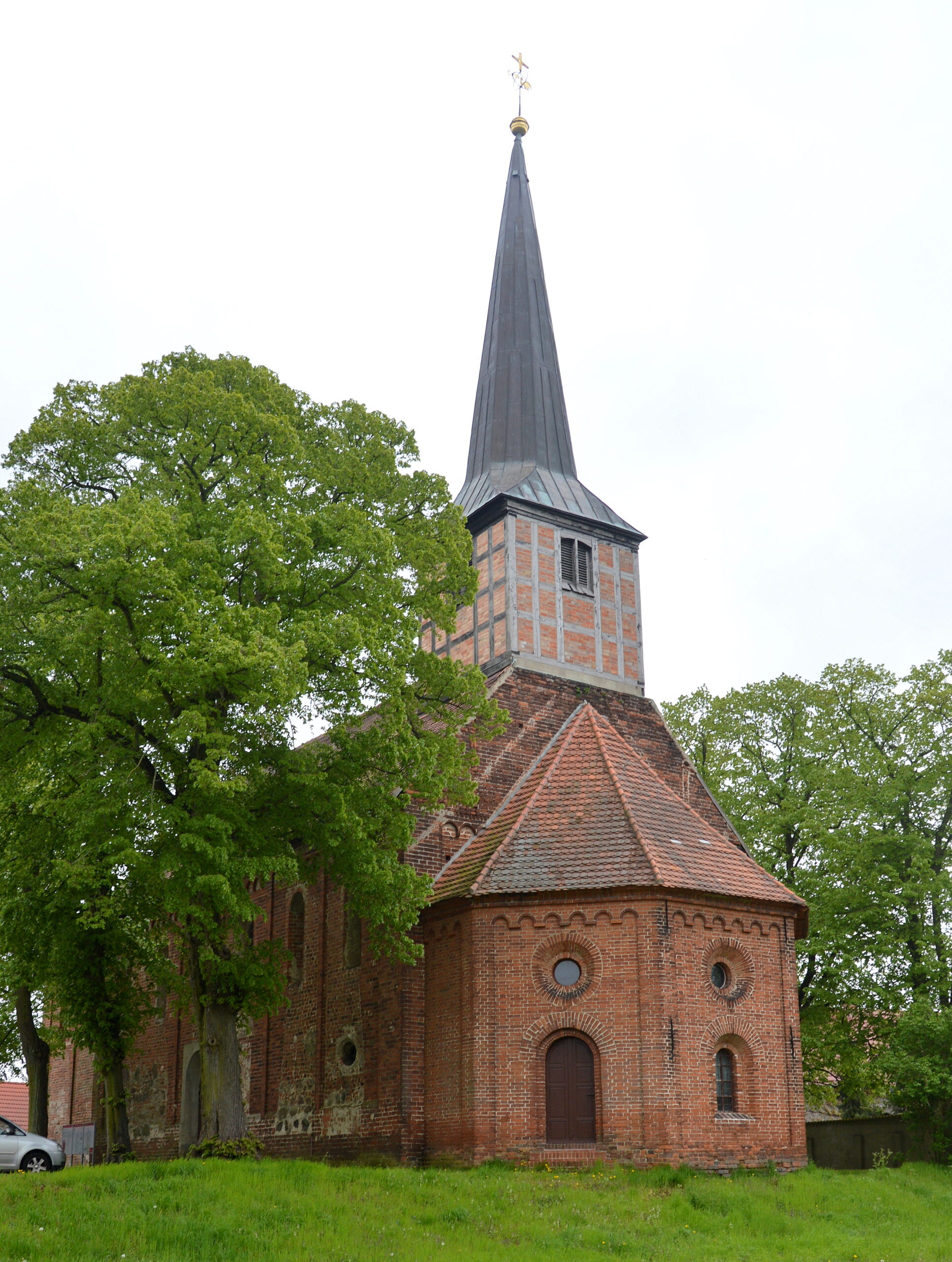
Fig. 2: Town Church in Jerichow
In addition to the municipal court, Jerichow also had a Land court, which met under the presidency of the Lord of Jerichow and was responsible for the nobility and peasants of the Jerichow region. As the owner of Jerichow, Johann von Buch himself, therefore, presided over this court and helped to implement some important formal regulations with regard to the jurisdiction applied here. Consequently, Margrave Ludwig ordered that old legal customs of the land that were considered forbidden (“antiquam et reprobatam terre conswetudinem”) should be abolished and not practiced in the Jerichow Land Court.[8] Instead, Imperial law (“ius imperial”) and Saxon law, mainly expressed in the Sachsenspiegel (“privilegium Saxonicum”), had to be observed. According to Bernd Kannowski, the Jerichow document of the year 1336 is thus a vivid proof of Johann von Buch’s effort to harmonize both rights, as he tried to do with his gloss on the Sachsenspiegel.[9] This principle was to be put into practice in the Jerichow Land court. Whether this developed into a continuity is not known and, in view of the further history of the possession of Jerichow, rather unlikely.
In 1351, after a war lasting several years against the Margrave of Brandenburg, Jerichow was transferred as a pledge to the Archbishopric of Magdeburg. With the reconciliation of both parties three years later, Archbishop Otto subsequently took full possession of Jerichow.[10] However, the often high monetary debts of the Magdeburg archbishops meant that Jerichow Castle, an archbishop’s office since 1367, together with the town, was repeatedly lent or mortgaged to various servants and lords.[11] [Fig. 3]
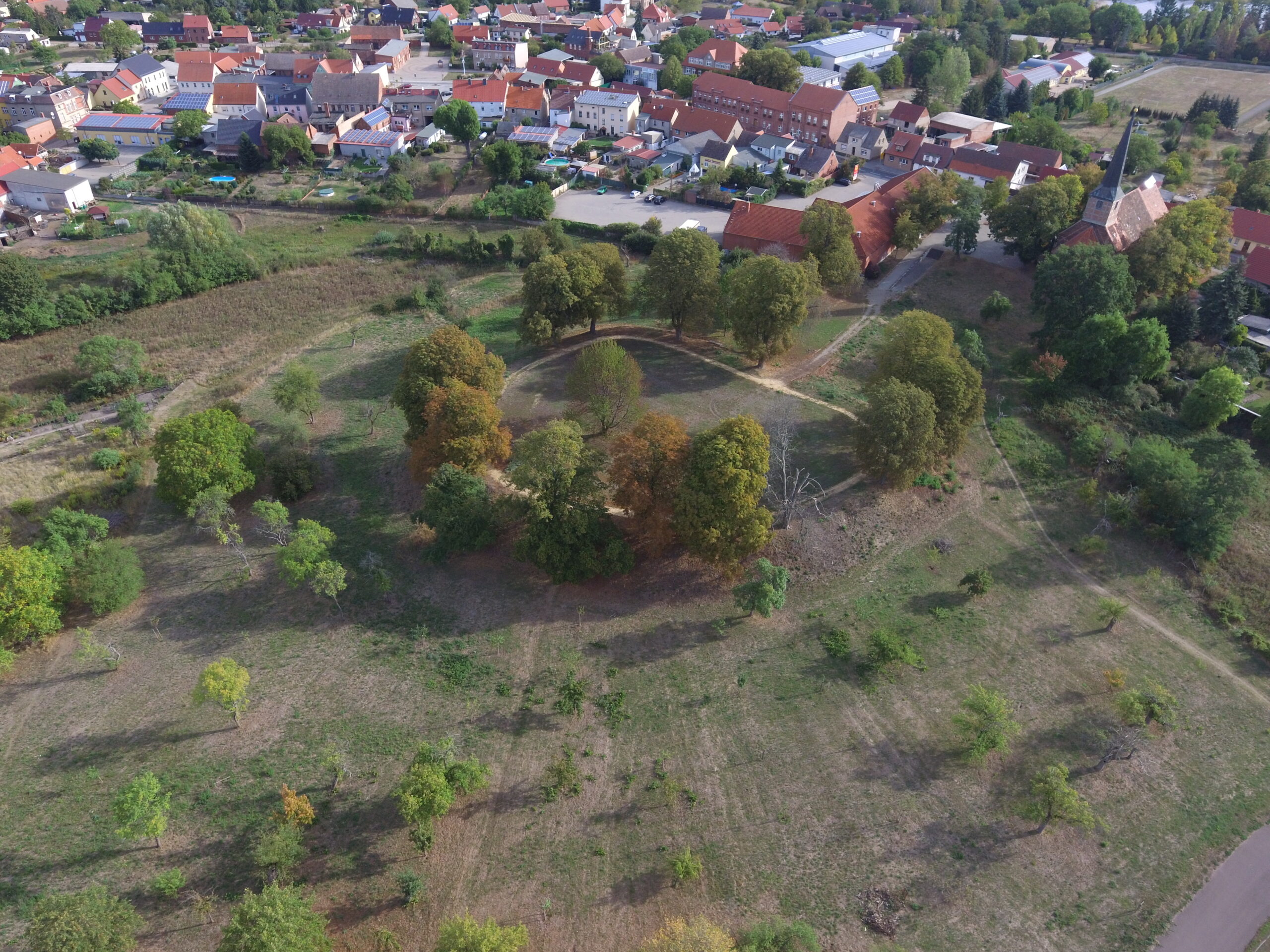
Fig. 3: Aerial view of the so-called Burgstall (Castle Stables) in Jerichow. At the beginning of the 18th century, the buildings and fortifications of Jerichow Castle were demolished.
The town of Jerichow itself was not fortified, although the privilege of Margrave Ludwig in 1336 expressly authorized this. It is also not known where Jerichow’s councilors and aldermen, first mentioned in 1320, met in the Middle Ages[12],, because nothing can be deduced from the sources about an early town hall building or aldermen’s chair as centers of municipal politics and jurisdiction. The town hall still in use today was not built until the 19th century, after an older town hall burned down in 1877.[13] Economically, Jerichow remained primarily a farming town with a strong emphasis on agriculture. In addition, beer brewers, tobacco manufacturers and distillers of brandy are documented in the course of the early modern period. Jerichow also achieved national fame due to the numerous shoemakers working here, who consolidated the town’s reputation as “Schusterjerichow” (“Shoemakers’ Jerichow”).[14]
Author: Sascha Bütow
Citation:
Sascha Bütow: Jerichow. A Market Hamlet with an Impressive Legal History, 30.06.2021, https://magdeburg-law.com/historic-city/jerichow/
Footnotes:
[1] Bruns, Friedrich/Weczerka, Hugo, Hansische Handelsstraßen. Textband (= Quellen und Darstellungen zur Hansischen Geschichte N.F. 12/2). Weimar 1967, p. 210.
[2] Winter, Franz, Die Prämonstratenser des zwölften Jahrhunderts und ihre Bedeutung für das nordöstliche Deutschland. Ein Beitrag zur Geschichte der Christianisierung und Germanisierung des Wendenlandes. Berlin 1865, p. 150.
[3] Fey, Hans-Joachim, Reise und Herrschaft der Markgrafen von Brandenburg (1134–1319) (= Mitteldeutsche Forschungen 84). Cologne/Vienna 1981, p. 211.
[4] Küster, Hansjörg, Die Elbe. Landschaft und Geschichte. Munich 2007, p. 181.
[5] Römer, Christof/Schwieneköper, Berent, Art. >Jerichow<, in Handbuch der historischen Stätten Deutschlands. Vol. 11: Provinz Sachsen-Anhalt, edited by Berent Schwineköper. 2nd edition Stuttgart 1987, pp. 228–230, here p. 229.
[6] Neumeister, Peter, Johann von Buch. Ein altmärkischer Rechtsgelehrter im Dienste der Wittelsbacher, in Die Altmark von 1300 bis 1600. Eine Kulturregion im Spannungsfeld von Magdeburg, Lübeck und Berlin, edited by Jiří Fajz, Wilfried Franzen and Peter Knüvener. Berlin 2011, pp. 150–155, here p. 152.
[7] Adolf Friedrich Riedel (ed.), Codex Diplomaticus Brandenburgensis, series B, vol. 2, Berlin 1845, no. 732, pp. 104-105, here p. 104.
[8] Ibid., p. 105.
[9] Kannowski, Bernd, Die Umgestaltung des Sachsenspiegelrechts durch die Buch’sche Glosse (= MGH Schriften 56). Hannover 2007, p. 87.
[10] Adolf Friedrich Riedel (ed.), Codex Diplomaticus Brandenburgensis (same as note 7), no. 980, pp. 357-358.
[11] Römer, Christof/Schwieneköper, Berent, Art. >Jerichow< (same as note 5), p. 229.
[12] Adolf Friedrich Riedel (ed.), Codex Diplomaticus Brandenburgensis, series B, vol. 1, Berlin 1845, no. 557, p. 463.
[13] Schmidt, Hanns H.F., Zwischen Elbe und Havel. Wanderungen vom Fiener Bruch bis in die Prignitz. Leipzig 1990, p. 82. An illustration of the older town hall can be found at Naumann, Rolf, Historische Zeitdokumente in Kirchturmkugeln, in, Lapidarium Jerichowense 4/2002, pp. 46–63, here p. 55.
[14] Hoffmann, Andreas, Berlin wird morgen abgebrannt. Die Geschichte eines Brandstifter-Pärchens samt ihres angerichteten Schadens. Berlin 1998, p. 25.
Images:
Fig. 1: photo: Kulturstiftung Sachsen-Anhalt, Kloster Jerichow
Fig. 2: Wikimedia Commons (CC BY-SA 4.0), photo: Olaf Meister
Fig. 3: photo: Gregor Rom