Municipal Legal Development in Close Relationship to Town Rule
In the case of Lübbenau, from a large village in the Middle Ages, a market settlement emerged, which is mentioned for the first time in 1315 as oppidum (fortified settlement).[1] This reference is due to an extensive property transaction, which Bodo the Elder of Ileburg, as a seller of the castle Lübbenau to the knight Christian Lange the Elder, undertook.[2] The development of the settlement of Lübbenau, which was included in this divestment, was strongly dependent on the respective landlords and town lords who resided at the castle.[3] These changed quite frequently from the 14th to the 16th century and belonged to well-known noble families in Lower Lusatia such as the Köckeritz, Kracht, Polenz and von der Schulenburg.
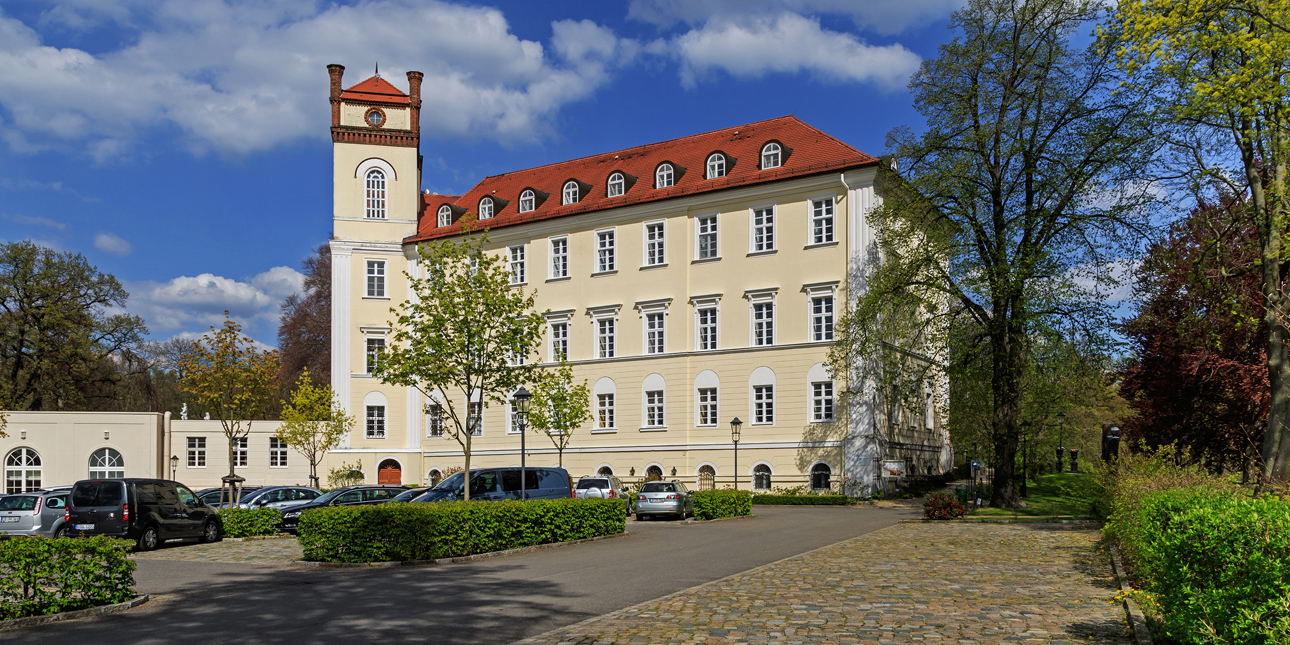
Fig. 1: In the Middle Ages, a moated castle was located on the site of today’s Lübbenau Palace, which was rebuilt into a palace around 1600. The building received its present appearance between 1817 and 1820. The town lord of Lübbenau resided in the castle or palace.
Not least in legal terms, these landlords exerted an influence on the town’s constitution, as can be seen particularly clearly in an entry in the Lübben Schöffenbuch (Book of Aldermen). For the year 1490, it is stated here that judges and aldermen had to provide information about “was wir vor gerechtigkeit in dem stetchin L.[übben] hetten und das durch den gestrengen unßern lieben erbhern von Palenck und Peter von Polenck irwirben haben” (“what we had in justice in the small town of L.[üben] and that we had to obtain through the strictness of our dear patrons von Palenck and Peter von Polenck”).[4] Hereby, it becomes evident that the two Polenz had previously granted Lübben an extension of the town’s rights. It is unlikely that it was they from whom Lübben received the town charter per se. The granting of the town rights may rather have already been done by the family of Ileburg, which is indicated by three stars used in the oldest Lübben seal, which are also included in the coat of arms of this noble family. [5]
From a legal point of view, the citizenry of Lübbenau was far less able to make its mark than the towns directly subordinate to the sovereign, such as Luckau or Guben. Nevertheless, the Lübbenau council also strove to preserve its acquired rights and, if possible, to expand them. This could only be done in close coordination with the town authorities, as the above-mentioned negotiations about the Lübbenau city rights held in 1490 between the judge, the aldermen and the city government illustrate. As the Schöppenbuch states, in addition to the judge and aldermen, representatives from the citizenry, “poor and rich”, appeared before Hans von Drauschwitz as captain and deputy of the town lord to testify to the traditional rights of Lübbenau. This included the herding of pigs and cows granted by the lordship. Furthermore, the town owned a Rain, which probably meant a firmly defined area of land. The aldermen of the town were also allowed to judge minor offenses such as drawing knives, stealing or using wrong measurements without involving the lordship. In these cases, however, proportional amounts of the fines to be paid by the convicted persons had to be paid to the town lord.[6] With this, Lübbenau had the competence of the lower jurisdiction. The high jurisdiction, which also decided on life and limb, was reserved for the town lord.
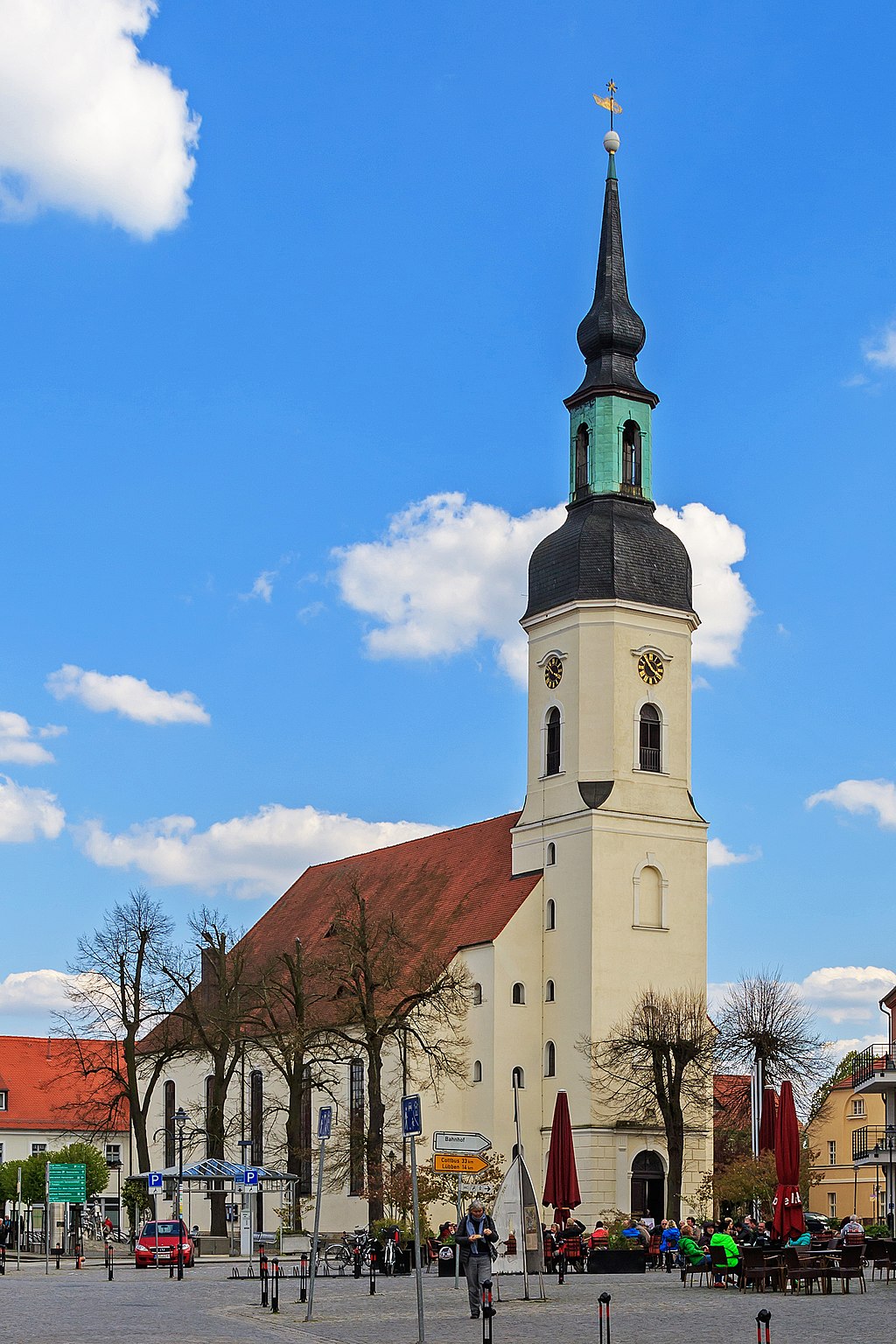
Fig. 2: Church of St. Nicholas in Lübbenau. The present building dates back to the 18th century.
A mayor is first mentioned in the year 1483.[7] Only gradually was it possible to increase the importance of this office, so that in the course of the 16th century, the sequence “mayor, judge and aldermen” began to prevail in notarizations.[8] However, even this representative office was not spared the influence of the town lord, as can be observed in the case of Adam Bagge, who was appointed mayor of Lübbenau in 1660, after originally being the trumpeter of the town lord Johann Siegmund Graf von Lynar.[9] The aldermen were also usually appointed to their office by the town lord. There were usually close relations between the councilors and the aldermen so that sometimes the same persons were represented in both municipal institutions.[10] This mixing of offices was not infrequently viewed critically in other towns under Magdeburg law, so that, as in Jüterbog, councilors were forbidden to be aldermen or town officials at the same time.[11] Nevertheless, it is undisputed that Lübbenau followed the customs of Magdeburg, since entries in the Book of Aldermen prove that legal information was obtained from the aldermen of Magdeburg.[12] In addition, the Aldermen’s Court in Luckau, which was closer to Lübbenau, was called upon, as the Book of Aldermen preserved there illustrates with two entries from the 15th century.[13] In these cases, the customs adopted from Magdeburg were implemented in their adjusted form of the “Lugkowsche recht[s]” (“Luckau law”).
The economy of Lübbenau was characterized by trades such as linen weavers, shoemakers, bakers and blacksmiths. In addition, the citizens and other inhabitants were obliged to perform court services for the town lord and had to accompany him on military campaigns, which clearly shows Lübbenau’s status as a mediate town. This also included an effort of the town lord to observe and enforce the rights of Lübbenau against third parties. Particularly with the town of Lübben, there were sometimes fierce disputes in the 15th and 16th centuries about various rights of use in the Spree Forest, in the negotiation of which the town lord of Lübbenau acted as mediator. In this process, the inhabitants of the town of Lübbenau sometimes developed claims that went far beyond their municipal rights. For example, in February 1550, the Lübben council complained to the bailiff of Lower Lusatia that residents of Lübbenau, together with people from the villages of Ragow, Krimnitz, Zerkwitz, Radensdorf and Zauche in the Spree Forest, had cut wood in an area belonging to Lübben Castle and rafted it away from there. In return, the delinquents accused of robbery invoked the Spree Forest rights of Georg von der Schulenburg of Lübbenau, the exercise of which they also claimed for themselves as his subjects.[14]
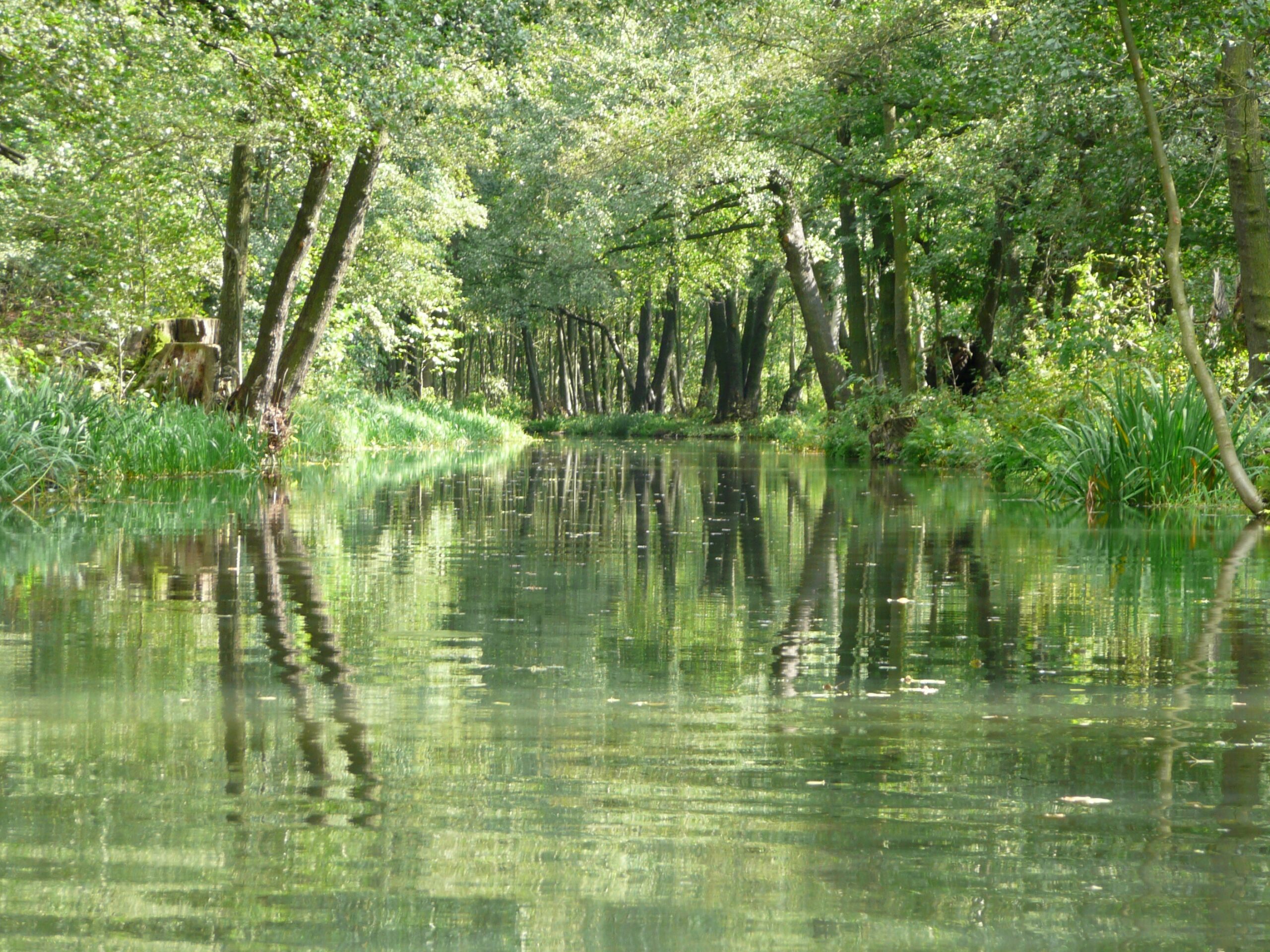
Fig. 3: The Spreewald (Spree Forest) between Leipe and Lehde. Since the Middle Ages, there have always been legal disputes between Lübben and Lübbenau about the use of this important area.
Compromises brokered by the bailiff Albrecht Graf von Schlick did not endure so that further legal disputes followed. Under Joachim II von der Schulenburg, the situation escalated to such an extent that Lübben residents were seized in the Spree Forest by Lübbenau. In addition, the Lübben council complained that its inhabitants were beaten, captured and taken to Lübbenau Castle while working in the Spree Forest.[15] During these conflicts, which were often violently carried out, the citizens of Lübbenau were closely connected with their town lords and supported their position. Neither the Bohemian kings as rulers of Lower Lusatia nor their deputies were able to resolve this legal dispute over the Spree Forest permanently. The quarrels that grew in the late Middle Ages thus continued well into the 16th century.
Author: Sascha Bütow
Citation:
Sascha Bütow: Lübbenau. Municipal Legal Development in Close Relationship to Town Rule, 01.07.2022, https://magdeburg-law.com/historic-city/lubbenau/
Footnotes:
[1] Lehmann, Rudolf, Art. >Lübbenau<, in Handbuch der Historischen Stätten Deutschlands. Vol. 10: Berlin und Brandenburg, edited by Gerd Heinrich. Stuttgart. 3rd edition 1995, pp. 274-275, here p. 275.
[2] The document is printed in the Destinata Literaria et Fragmenta Lusatica. Vol. II. part. I, Lübben 1747, pp. 17–19.
[3] Czech, Vinzenz, Die Herrschaft Lübbenau, in Marksteine. Eine Entdeckungsreise durch Brandenburg-Preußen. Edited by Haus der Brandenburgisch-Preußischen Geschichte beim Museumsverband des Landes Brandenburg e.V., Berlin 2001, pp. 263-264.
[4] Cited after Lehmann, Rudolf, Das älteste Stadtbuch (Schöppenbuch) der Spreewaldstadt Lübbenau, in FS für Walter Schlesinger. Vol. 1, edited by Helmut Beumann. Cologne/Vienna 1973, pp. 382–405, here p. 385.
[5] Fahlisch, Paul, Geschichte der Spreewaldstadt Lübbenau, Berlin 1877, p. 42.
[6] The rights are published in translated form in ibid., p. 53.
[7] Lehmann, Rudolf, Das älteste Stadtbuch (same as note 4), p. 388.
[8] Fahlisch, Paul, Geschichte der Spreewaldstadt Lübbenau (same as note 5), p. 128.
[9] Bagge had saved his lord’s life at the Battle of Leipzig in 1642. Cf. Czech, Vinzenz, Die Herrschaft Lübbenau (same as note 2), p. 263.
[10] Lehmann, Rudolf, Das älteste Stadtbuch (same as note 4), p. 392.
[11] Rohrlach, Peter P., Historisches Ortslexikon für Brandenburg. Part X: Jüterbog-Luckenwalde (= Veröffentlichungen des brandenburgischen Landeshauptarchivs 26). Weimar 1997, p. 226.
[12] Lehmann, Rudolf, Das älteste Stadtbuch (same as note 4), p. 393.
[13] Lehmann, Rudolf (reviser), Quellen zur Geschichte der Niederlausitz. Part II (= Mitteldeutsche Forschungen 68/II). Cologne/Weimar 1976, no. 38a, p. 64, and no. 43b, p. 71.
[14] Potsdam, Brandenburgisches Landeshauptarchiv Rep. 8 Lübben 12/1, fol. 156r.
[15] Ibid., fol. 232r.
Images:
Fig. 1-2: Wikimedia Commons, photo: A. Savin
Fig. 3: Wikimedia Commons (Creative-Commons-Lizenz 3.0), photo: Rentner55