A Hanseatic Town, which Exchanged the Magdeburg Law for the Law of Lübeck
Stargard in Trans-Pomerania, located about 30 km southeast of Szczecin, was one of the important trading centers of the Duchy of Pomerania in the late Middle Ages. The history of the town dates back to the first half of the 9th century, when the Slavic tribe of the Wends, who migrated to these lands in the course of the migration of the peoples, built a fortress on an island on the Ihna River, on an old trade route from Szczecin via Belgard to Kolberg. At the foot of this castle, which was first mentioned in a bull of Pope Innocent II in 1140, an artisan settlement developed, which was soon followed by other outer settlements. These were initially built on the island. However, when the settlement area there became sparse in the course of the 12th century, another suburb grew up on the western bank of the Ihna, which – located directly on the trade route – functioned as a marketplace. At that time, Stargard, as a castellany, was a center of sovereign power. In the course of the 12th century, it developed into the center of its own territorial unit (provincia Stargardensis, first mentioned in documents in 1185).
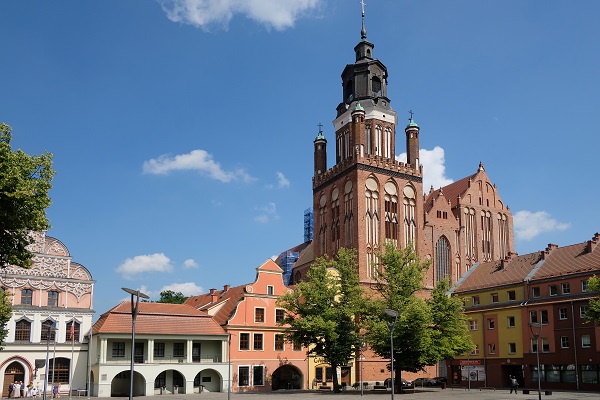
Fig. 1: The Old Market in Stargard with the view of St. Mary’s Church and the Town Hall, cut left in the picture
Since the late 12th century, the presence of the Order of St. John in Stargard is also documented. The Order received a house in Stargard and numerous villages in its vicinity from the dukes Bogislaw I and Bogislaw II in the 1180s. The new settlement of the Order, one of the oldest in Pomerania, was located on a hill on the western side of the bank of the Ihna, in the neighborhood of the marketplace and the castle rampart. When Duke Barnim I granted the Order of Saint John the privilege of settling strangers (hospites) on their estates in 1229, the Order quickly made use of it. The immigrating German settlers established themselves not far from the Order’s house and founded a settlement next to the Slavic market town, which developed dynamically due to its favorable location on the trade route.
In 1240, Duke Barnim I surprisingly concluded an exchange agreement with Bishop Konrad III of Cammin, by which he gave the bishop the land of Stargard in exchange for a tithe of 1800 hectares.[1] Soon after, however, the bishop died, and it is disputed whether this planned exchange was actually implemented. It is documented that Barnim I received the land of Stargard back from Bishop Wilhelm as a fief in 1248, in return for which the duke ceded him his share of the land of Kolberg.[2]
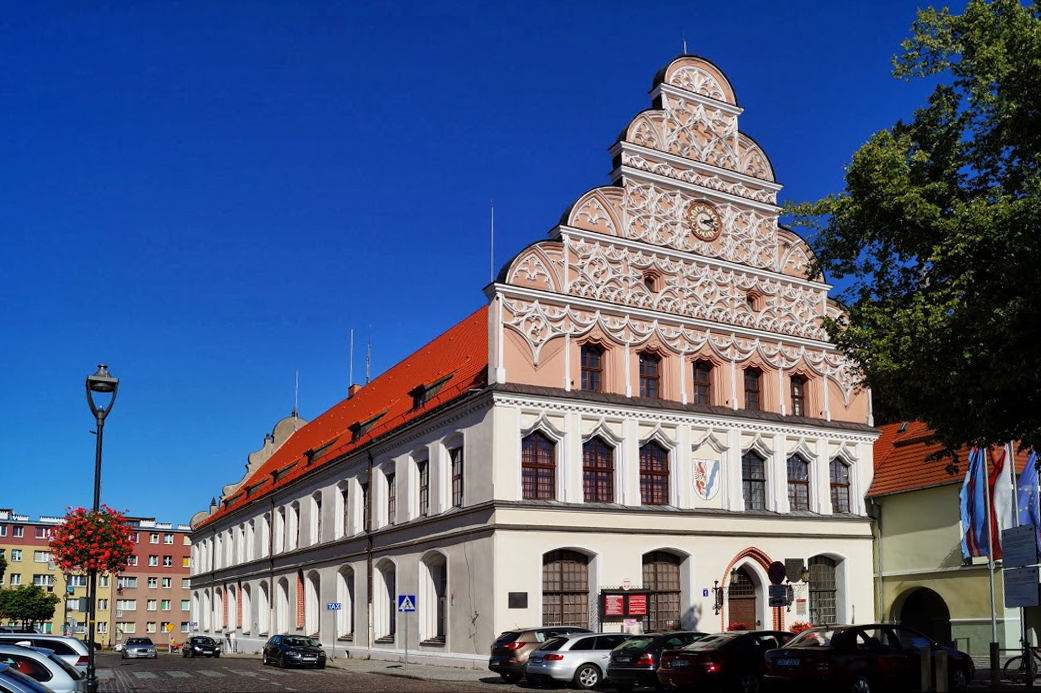
Fig. 2: The Stargard Town Hall
It was during this period that Stargard was granted Magdeburg city law, as documented on June 24, 1243.[3] The original of the document was destroyed in the great fire of 1635; its content is known only from copies, and there is disagreement about whether the year 1243 is correct since the duke was obviously not in possession of the Stargard land at that time, and whether the granting of the town charter was not executed in 1253.[4]
However, the content of the location document does not raise any doubts. Barnim I donated 150 hectares to the town, of which 30 he designated for pasture, while the rest were to be taken possession of by the townspeople. From each hide, the respective owner had to pay three lot of silver annually to the town lord.[5] In addition, the citizens had to keep the town open to the duke for defense purposes. The town was also granted forestry and fishing rights within its borders, as well as permission to cut wood up and down the Ihna River (also in the fiefs of the ducal vassals). Furthermore, Barnim I granted Stargard free navigation on the entire Ihna upstream and downstream of the town as far as the sea, freedom from customs duties in all towns of his country and the Magdeburg town law.[6]
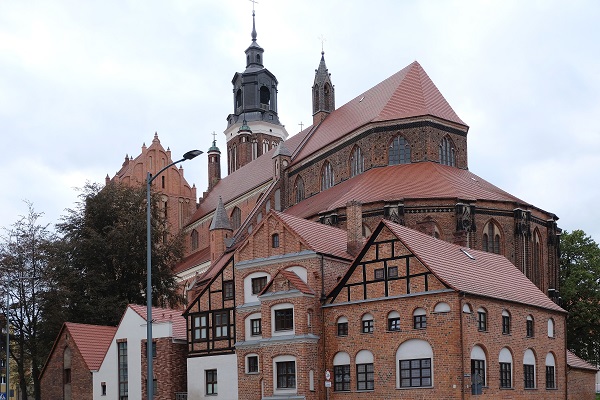
Fig. 3: Stargard, view of St. Mary’s Church from the Ihna
With this, an important foundation for the further economic development of the town had been laid. The favorable location near the coast, on the Ihna River, which is a tributary of the Oder River and thus offered direct access to the sea, was to be of utmost importance for the future history of the city. Older trans-Pomeranian trading centers such as Szczecin and Kolberg, which already had extensive trade contacts since Slavic times, were already oriented towards maritime trade at that time and established ever closer contacts with the large coastal cities of Lübeck, Stralsund, Wismar, Rostock and Greifswald further to the west, concluded protective alliances with them and negotiated common privileges and freedoms for their merchants with the rulers of the countries with which they traded. Like many princes, the Pomeranian dukes also supported this development, issued letters of protection for merchants and supported the towns engaged in maritime trade with corresponding customs freedoms. Thus, the second half of the 13th century in Pomerania was a time of intensive promotion of merchants engaged in overseas trade and the dynamic development of the Wendish League of Towns, which became a closely cooperating group of the so-called sea towns and eventually the driving force of the German Hanseatic League.

Fig. 4: Stargard, St. Mary’s Church, view of the choir
The regulations about the free use of the Ihna up to “the salt sea” reveal that at the time of the foundation, there must have already been merchants in Stargard who were interested in profitable sea trade. Although there is no documentary evidence of closer trade contacts between the town and the Wendish seaside towns from the time after the granting of the town charter, there is evidence of personal connections: Among the Stargard councilors in the 1270s and 1280s, there are several representatives of families who were also resident in Hamburg, Lübeck, Stralsund and Anklam, respectively. Whether these were also from merchant families remains an open question.
After the granting of the town charter, there was obviously a shift in the focus of settlement in Stargard: the legal town was laid out systematically on a regular ground plan in the southwestern forecourt of the old castle, on the left bank of the Ihna River, directly adjacent to the old Mark settlement.[7] A first town hall and probably the predecessor of the later brick-built parish church of St. Mary were built on the market square of the young town. In the 1260s/70s, Augustinian hermit monks settled in the town, and their monastery is first mentioned in documents in 1289-1291.[8]
Written sources handed down from the second half of the 13th century testify that at that time, Stargard was headed by twelve aldermen, a sheriff and seven aldermen.[9] The town developed into an urban center of regional importance. For example, Stargard’s court of aldermen was designated as the court of appeal for the neighboring town of Massow when it was granted the Magdeburg town law in 1278.[10]
The armed disputes of Barnim I with the Margraviate of Brandenburg repeatedly brought cuts in the otherwise favorable development of Stargard. In 1278, shortly before his death, the duke concluded a feudal treaty with Margrave Konrad of Brandenburg, which had far-reaching consequences for Stargard, and for the fulfillment of which four towns, including Stargard, took over the guaranty under oath of the councilors.[11] If the duke did not fulfill the obligations of the contract, the towns were to submit to the margrave. When Barnim I died shortly after, his eldest son Bogislaw IV took over the rule of Pomerania, who initially complied with the treaty obligations, but after a few months began to rebel against the fulfillment of the service obligation. As a result, there was a military conflict with Brandenburg. Obliged by the oath, Stargard submitted to the margraves in 1280 and thus lost not only the ducal favor for several years but also the possibility of a connection to the maritime towns unitedly positioning themselves against the Margraviate of Brandenburg. In June 1283, the latter concluded an alliance with numerous North German sovereigns for the maintenance of land and sea peace – the so-called Rostock land peace – which was particularly directed against the margraves of Brandenburg and was intended to contribute to the protection of the municipal, especially the Lübeck, customs freedoms and other privileges.[12] The alliance became an important basis for the further economic rise of the maritime towns; Stargard initially remained excluded from it.
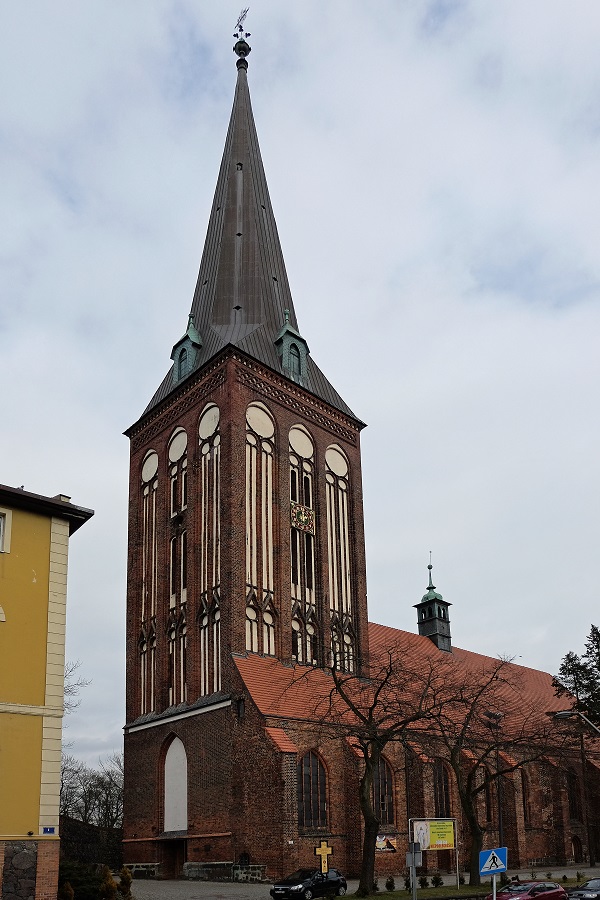
Fig. 5: The former Stargard St. John’s Church of the Order of St. John
A radical change, which was to be of the greatest importance for the further economic development of the town, was finally achieved by the reconciliation with Duke Bogislaw IV in September 1283, who confirmed to “his town of Stargard” all its previous freedoms and rights but also the rights that the towns of the Rostock land peace had recently acquired.[13] In addition, the duke gave the city a farmstead and a hide of land at the outflow of the Ihna, where the town’s harbor was later built. It seems that this constituted an important turning point in the history of Stargard. The town now enjoyed the privileges of the Rostock Protective Alliance and joined the ranks of the other civitas confoederatae on an equal footing. As a result, in the near future, it was also to benefit from other advantages of this alliance, including the protection of the King of Denmark and trade freedoms in his realm. The year 1283 can thus be seen as the time of Stargard’s entry into the circle of the Wendish community of towns, which was to become the foundation of the German Hanseatic League in the following decades. With the construction of a harbor on the Ihna River, Stargard was now recognizably oriented towards maritime trade. Bogislaw IV continued to promote the city: in 1285, he granted it his local customs with the privilege that anyone who paid customs in Stargard should have free passage to the sea at all other customs posts. In addition, the town received other land grants and privileges; for example, in 1289, it was awarded a customs jug on the Ihna.[14]
This orientation towards long-distance trade and contacts with merchants from other northern German trading towns certainly brought with it the desire to form closer ties with the Wendish maritime towns. These constituted a closely cooperating group representing common political and economic interests. However, almost all of these towns, unlike Stargard, had been granted Lübeck law at their founding and met regularly for legal sessions. As Carsten Jahnke convincingly demonstrated, this equality of law brought the coastal towns numerous economic advantages: “Merchants from a town under Lübeck law could trade freely and under the same conditions in all other towns under this law. Thus, towns of the same law also developed into economic areas of their own.”[15] Therefore, it is not surprising that the people of Stargard also recognized these advantages and wanted to join the economic community. Supposedly at the instigation of the town council, but according to the document “on the advice of our faithful vassals”, the dukes Bogislaw IV, Barnim II and Otto I granted the town of Stargard on October 21, 1292, the Lübeck law “in full extent”[16] instead of the previous Magdeburg town law, which meant that Stargard now also joined the circle of the sea towns with equal rights and could profit from the associated trade facilitations. It is interesting to note that, as is specifically emphasized in the ducal document, this implementation of the law took place in recognition of the many good services rendered by the town to the sovereigns and was thus understood as a kind of thanks and reward. The right of guild and all previously granted privileges were confirmed to the town. Anklam was designated as the court of appeal in difficult legal cases. Thus, in 1292, the chapter of Magdeburg town law ended in the history of Stargard, which was now to be “completely abandoned”.
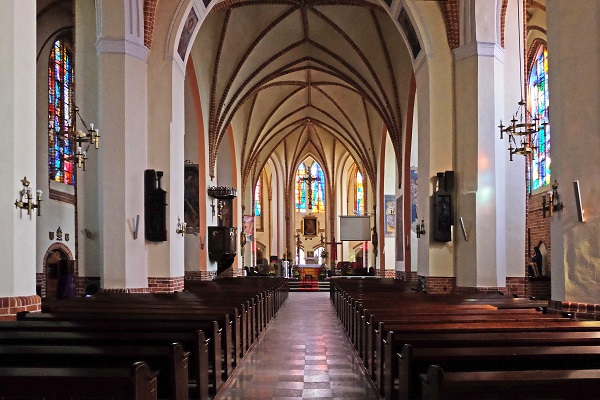
Fig. 6: The interior of the Stargard St. John’s Church to the east
Interestingly, Stargard was not the only trans-Pomeranian town that chose this path at this time. Already in the 1280s, several smaller towns in the region, which had also been granted Magdeburg law at the time of location, had requested a change in law, including Damm, Greifenhagen and Massow.[17] However, it is evident that it was exclusively the smaller trading towns that decided in favor of the Lübeck law in the hope that this step would create more favorable conditions for their merchants and thus bring about an economic boom. The large, economically strong town of Szczecin, which was firmly anchored in the Wendish League of Towns, on the other hand, remained loyal to Magdeburg law.
As the future would prove, this legal implementation was indeed a very good decision in the case of Stargard. The handed down written sources from the first decades of the 14th century testify that, as a result, there was a closer cooperation of Stargard with the large Pomeranian maritime towns, and an economic upswing developed. This change from a town of regional importance to a medium-sized seaside town engaged in long-distance trade and anchored in the network of Wendish merchants was also noticeable in Stargard’s townscape.
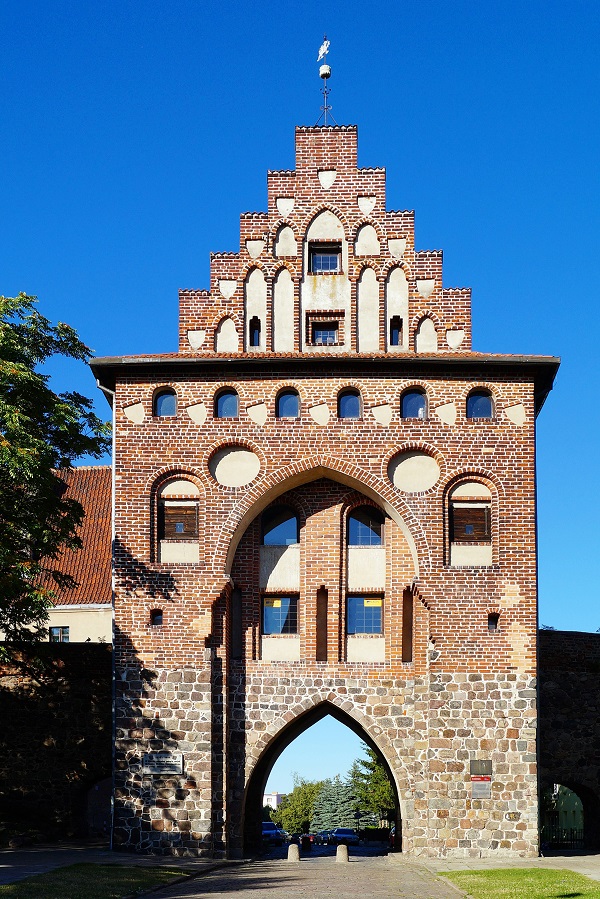
Fig. 7: One of the numerous Stargard town gates: the Pyritz Gate
In 1295, Duke Bogislaw IV allowed the townspeople to demolish the ducal castle and left its grounds to the town. He also allowed the construction of fortifications. The town area was now surrounded by a ring of fortified walls. The town now set accents that manifested its economic rise. The construction of the new St. Mary’s Church – a stately brick hall with a monumental double tower front – was started on the market square. The Augustinian hermit monks also began building their monastery church probably at the end of the 13th century – a three-nave, towerless brick building whose choir was consecrated in 1311. In the first half of the 14th century, three hospitals with associated hospital chapels were also founded in the city: St. George’s Hospital, first mentioned in a document in 1356, which, unlike the usual practice here, served to care for the poor instead of admitting the sick; the Elendspital, first mentioned in 1357, for foreign invalids, mainly plague patients; and the Heilig-Geist-Spital (first mentioned in a document in 1360).
In May 1354, Stargard concluded a protection and land peace alliance against highwaymen, murderers and pirates with the towns of Greifenberg and Treptow on the Rega as well as numerous nobles for six years.[18] This illustrates Stargard’s position among the Pomeranian trading towns at that time. In contrast to Szczecin, whose merchants engaged in wholesale trade and traded together with their colleagues from the large Wendish towns in distant markets of the Baltic and North Sea regions, Stargard at that time belonged to the “middle class” of trading towns, which traded within a manageable radius – for example, as far as Lübeck and at the Schonian fairs in Denmark. Accordingly, the town joined forces with trading centers on par with it. At that time, Stargard did not appear by name in the protective alliances of the large maritime towns and at their meetings. This can be explained by the fact that the town did not belong to the so-called quarter or front towns, i.e. the large and strong maritime towns, but – like Greifenberg and Treptow – was one of the so-called back towns, which also profited from the Hanseatic network, but had their interests represented by the front towns at the meetings of the Hanseatic council delegates, the Hanseatic days. In the case of Stargard, these were Szczecin and Anklam.
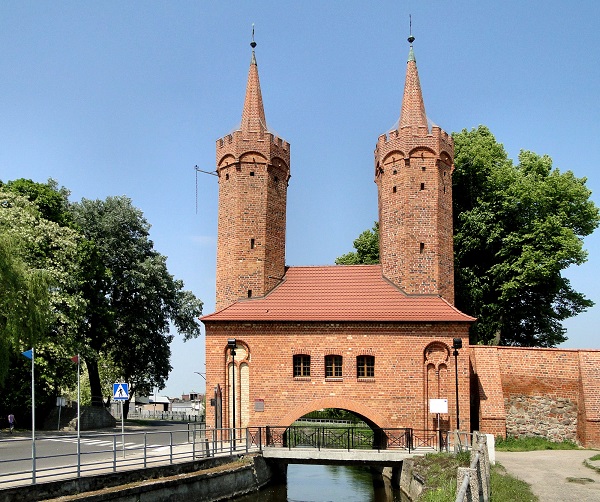
Fig. 8: A Stargard curiosity: the Mill Gate over the Ihna River
It was only in the wake of the two wars waged by the Hanseatic towns in the years 1361-1370 against the Danish King Waldemar IV. Atterdag, in which Stargard, as the only hinterland town in Trans-Pomerania, actively participated both financially and militarily, the town emerged from the shadow of Szczecin and since then regularly participated in the Hanseatic Days with its own representatives. With the victory over Denmark, which was sealed with the peace treaty of Stralsund in May 1370, a time of economic prosperity began for Stargard, which left visible traces in the townscape with the new construction of the imposing choir with ambulatory of St. Mary’s Church and the reconstruction of the town hall.
This unexpected economic rise of Stargard displeased nearby Szczecin, which had previously held the trade monopoly in the region as the most important Hanseatic town in Trans-Pomerania and controlled the grain trade in particular. The growing competition between the two towns finally culminated in a military-economic war in the years 1454-1464, which finally ended after mediation by the Wendish Hanseatic towns with a peace agreement in November 1464, in which Stargard had to make a number of economic concessions.[19] In the period that followed, Stargard never managed to regain its former economic position. The changed political situation in the reunited Duchy of Pomerania after 1464, Boguslaw X’s economic policy aimed at consolidating the ducal power, the devastation of the Thirty Years’ War, the advancing decline of the Hanseatic League, and finally, the year 1945, which inflicted the heaviest material and human losses on the city, brought deep cuts and caused Stargard to slide down to the rank of a second-rate provincial town.
Author: Agnieszka Lindenhayn-Fiedorowicz
Citation:
Agnieszka Lindenhayn-Fiedorowicz: Stargard/Ihna. A Hanseatic Town, which Exchanged the Magdeburg Law for the Law of Lübeck, 28.01.2021, https://magdeburg-law.com/historic-city/stargard-szczecinski/
Abbreviations:
HUB 1 = Hansisches Urkundenbuch, vol. 1: 975–1300, edited by Konstantin Höhlbaum, Halle 1876.
HUB 3 = Hansisches Urkundenbuch, vol. 3: 1343–1360, edited by Konstantin Höhlbaum, Halle/Saale 1882–1886.
PUB 1,1 = Pommersches Urkundenbuch, vol. 1, section 1, revised and edited by Robert Klempin, Szczecin 1868.
PUB 2,1 = Pommersches Urkundenbuch, vol. 2, section 1, revised and edited by Rodgero Prümers, Szczecin 1881.
PUB 3,1 = Pommersches Urkundenbuch, vol., section 1, revised and edited by Rodgero Prümers, Szczecin 1888.
Further Reading:
Ryszard Rogosz, Początki Stargardu w świetle dotychczasowych wyników badań archeologicznych, in Materiały Zachodniopomorskie, vol. 19, Szczecin 1973, pp. 215–270. (In detail on the earliest settlement history of Stargard in the light of archaeological sources).
Agnieszka Lindenhayn-Fiedorowicz, Johannitisches Patronat und städtische Architektur. Die Marienkirche zu Stargard (Stargard Szczeciński) in Pommern, in Christian Gahlbeck, Heinz-Dieter Heinemann and Dirk Schumann (ed.), Regionalität und Transfergeschichte. Ritterordenskommenden der Templer und Johanniter im nordöstlichen Deutschland und in Polen, Berlin 2014, pp. 248–270. (On the history of the Stargard branch of the Order of St. John).
Footnotes:
[1] Document of April, 24, 1240, in PUB 1,1, no. 377, p. 304.
[2] Document of October 7, 1248, in PUB 1,1, no. 475, p. 367.
[3] Codex Pomeraniae vicinarumque terrarum diplomaticus, part 1 (until 1269), edited by Friedrich von Dreger, Berlin 1768, no. CLVII, pp. 240–242.
[4] On the erroneous date, see, among others: Codex Pomeraniae diplomaticus oder Sammlung der die Geschichte Pommerns und Rügens betreffenden Urkunden, edited by Karl Friedrich Wilhelm Hasselbach, Johann Gottfried Ludwig and Friedrich Ludwig von Medem, Greifswald 1862, vol. 1, p. 1014; PUB 1,1, no. 572, p. 448. – Recently, Edward Rymar commented in detail on the dating of the Stargard town law, ultimately arguing for the year 1243. Cf. Edward Rymar Fragmenty dziejów Stargardu nad Iną do 1253 roku, in Stargardia. Rocznik Muzeum Archeologiczno-Historycznego w Stargardzie, vol. 7, Stargard 2013, pp. 97–111, here pp. 101–109.
[5] This tax could be increased to 40 Marks Brandenburg silver in total after two free years if the prosperity of the town was growing. Cf. Gustav Kratz and Robert Klempin, Die Städte der Provinz Pommern. Abriss ihrer Geschichte, zumeist nach Urkunden, Berlin 1865, p. 357.
[6] Possidebitur etiam civitas memorata secundum eam jurisdictionem, que in Magdeborgh est. Same as note 3, no. CLVII, p. 240.
[7] The oldest archaeological settlement finds in the area of the market square and its immediate surroundings can be dated to the middle of the 13th century, from which it can be concluded that the location town was obviously laid out in a previously unused area. Cf. Karol Kwiatkowski: Źródła archeologiczne, in Karol Kwiatkowski (ed.), Archeologia Stargardu, vol. 1: Badania zachodniej części kwartału V, Stargard 2012, pp. 33–40 as well as Marcin Majewski and Monika Ogiewa-Sejnota, Rynek Staromiejski w świetle źródeł archeologicznych i historycznych, in Marcin Majewski and Karolina Stań (ed.), Archeologia Stargardu, vol. 3: Badania na Rynku Staromiejskim, Stargard 2017, pp. 311–347, here p. 312.
[8] PUB 3,1, no. 1522, pp. 87–88.
[9] Felix Boehmer, Geschichte der Stadt Stargard in Pommern. vol. 1: Geschichte der Stadt im Mittelalter. Stargard i. P. 1903, pp. 37–38.
[10] PUB 2,1, no. 1093, p. 369,
[11] Document of June 1, 1278, in PUB 2,1, no. 1096, p. 371.
[12] Document of June 13, 1283, in HUB I, no. 917.
[13] Document of September 1, 1283, in HUB 1, no. 927.
[14] Kratz/Klempin same as note 5, p. 359.
[15] Carsten Jahnke, Die Hanse, Stuttgart 2014, p. 47.
[16] Christian Schöttgen and Georg Christoph Kreysig, Diplomataria Et Scriptores Historiae Germanicae Medii Aevi, T.3, Altenburg 1760, p. 15, no. 24. See also HUB 1, no. 1104.
[17] Cf. Boehmer, among others, same as note 9, pp. 53–53.
[18] Document of May 9, 1354, in HUB 3, no. 293.
[19] Radosław Gaziński, Wojna Szczecina ze Stargardem o handel morski (1454–1464), in Materiały Zachodniopomorskie, 39 (1993), pp. 199–216, here p. 211.
Images:
Fig. 1,3-6: photo: Marek Fiedorowicz
Fig. 2 and 7: Wikimedia Commons (CC BY-SA 3.0 pl), photo: Wiesław Wieczorek
Fig. 8: Wikimedia Commons (CCo 1.0), photo: Wiesław Wieczorek