Town Law and Constitutional Development between Town Fire and Beer War
Gardelegen, which was founded in the west of the Altmark east of the Milde River, had an important position within the medieval trade traffic. Brunswick, Lüneburg, Magdeburg, Salzwedel and Stendal were the nearest major trading partners, through which further connections led to the Hanseatic, Central and East German regions. The crossroads formed in this way in Gardelegen allowed the local market traffic to flourish and favored the emergence of an urban community. It remains unclear when exactly this community was constituted and at what point in time it received its town law However, the manorial circumstances suggest that the Ascanians played an important role as promoters since Gardelegen belonged to them after 1160.[1]
More meaningful sources on the town’s legal history are only available from the time of the 13th century. As can be traced back to the year 1241, Gardelegen had been ravaged by a town fire, which had led to severe destruction. Thus, among other things, the town hall, which was also used as a trading store, had to be rebuilt with shacks and sales stalls. The margraves Johann and Otto, known in the history of Brandenburg as founders and sponsors of towns, then granted Gardelegen various privileges such as exemption from customs duties and free logging. As part of their privilege, they also addressed legal concerns by having suing citizens bring their concerns before the town bailiff, who then had to decide according to Gardelegen’s town customs (consuetudines ciuitatis).[2] With this, a reference is made to the town law valid in Gardelegen, the character of which, however, is not elaborated at this point. However, another document, with which the margraves Johann, Otto and Konrad confirmed the Magdeburg law to the town of Prenzlau in 1278, brings clarity regarding the customs applicable in Gardelegen. Thus, in the Prenzlau document, it is emphasized that the local citizens may use the same rights as the citizens of Stendal and Gardelegen had. As it is added, the latter were guided by the customary legal practices in Magdeburg.[3] This explicit description regarding the two Altmark towns of the transfer of the town law to Prenzlau is only understandable if one assumes that settlers from Stendal and Gardelegen participated in this in a decisive manner.[4]
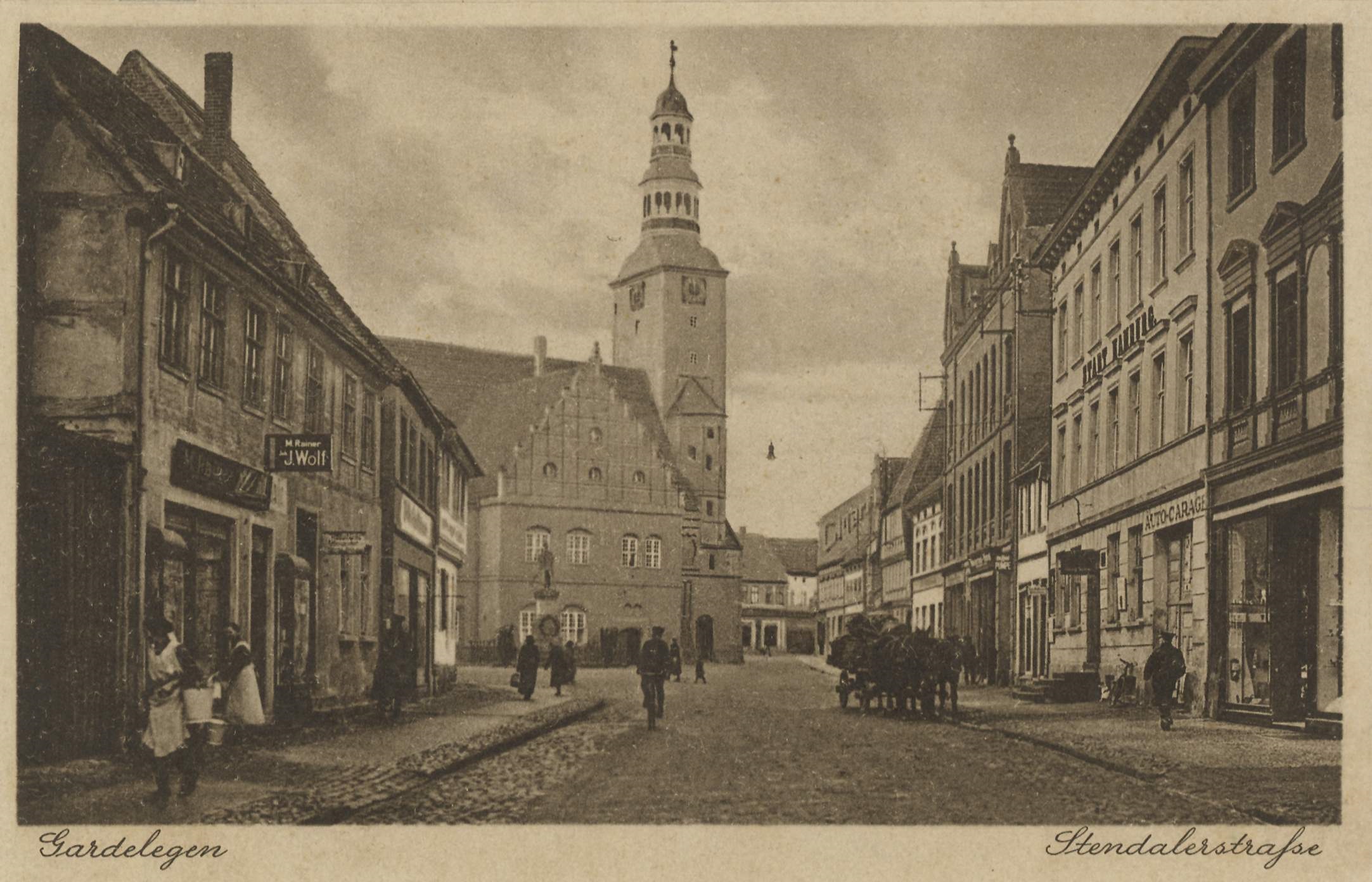
Fig. 1: Stendaler Straße in Gardelegen. In the Middle Ages, numerous legal ties existed between Stendal and Gardelegen (postcard from the 1930s).
The town law of Gardelegen, which is called “jus Ciuitatis Gardelege”[5] in another document from 1290, may have had a close relation to the law of the town of Stendal. This is supported not only by the Prenzlau document mentioned above but also by the fact that the Gardelegen council used a template from Stendal in 1327 when drafting legal statutes for the guild of furriers.[6] This was probably preceded by an agreement between the two towns. There was also a reference to Stendal in 1316 when Margrave Woldemar transferred the sovereign Schulzengericht (sheriff court) to the Gardelegen council.[7] The fundamental principles associated with this were to be determined by the modalities prevailing in Stendal: “eo modo, quo in Ciuitate stendal tenetur et regitur.”[8]
In addition to Stendal, the other larger towns of the Altmark remained important allies for the Gardelegen council throughout the late Middle Ages. This was particularly apparent in 1321, when uncertain times dawned with the extinction of the Brandenburg Ascanians. For this reason, the town of Gardelegen, together with surrounding nobles, margravial vassals, the town’s aldermen and the entire citizenry, participated in an alliance with the towns of Stendal, Salzwedel, Tangermünde, Osterburg, Seehausen, Werben and all other estates of the Altmark. The aim of the agreement was to protect the legal security of all partners involved – a task originally belonging to the sovereign. This alliance was followed by other alliances, such as an agreement concluded in 1392 between Stendal, Gardelegen, Tangermünde, Osterburg and Werben, which opposed the influence and power of ecclesiastical courts. This was intended to bring justice to every citizen of the above-mentioned towns who had been unjustly accused, which in the case of an appeal could even go so far as to have a delegated councilor of each town ride to Stendal to advocate a settlement of the legal dispute there.[9]
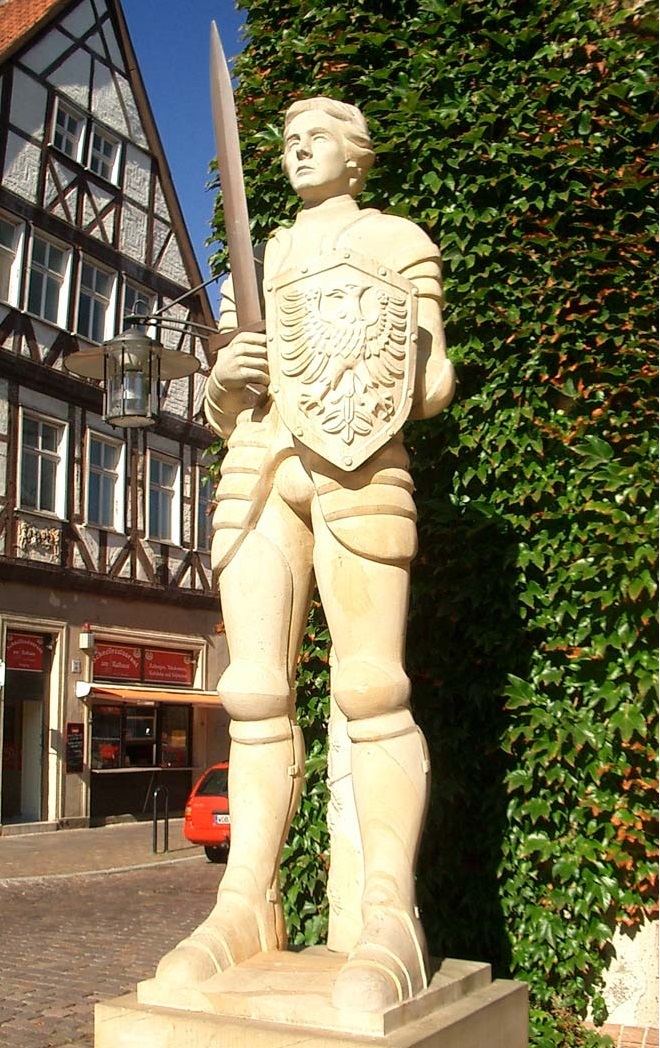
Fig. 2: A Roland figure in Gardelegen is first mentioned in 1450. A wooden version may have existed as early as the 14th century. A Roland figure made in Königslutter am Elm was destroyed in 1526 and re-erected in 1564. This figure was also destroyed in a town fire in 1727. The present statue was unveiled in 2002.
In order to protect its civic and municipal rights, Gardelegen thus integrated itself into a mutual network of Altmark towns characterized by declarations of loyalty and support. However, the raids and robberies on the trade routes, which had been increasing since the end of the 14th century, posed a great challenge to these urban alliances. For example, a report sent to the Lüneburg council in 1394 by the knight Heinrich von Veltheim as the legally appointed escort lord of Bodenteich states that two noblemen had attacked a convoy of wagons from Gardelegen, shot several horses and finally stolen significant quantities of merchandise.[10] Furthermore, a report made in 1436 testifies to the fact that in the whole Altmark there were raids, robberies and pillages on the roads, which caused especially merchants and pilgrims to suffer. In the same year, Gardelegen renewed its alliance with the towns of the Altmark. They swore to each other that they would not harbor the peace-breakers but that they would use all their forces to get them. Since this mutual assurance “vp des rikes vnd vser hern strate” was to apply to merchants, pilgrims and pious people[11], it becomes evident that the community of towns herewith clearly claimed for itself sovereign and royal duties to secure the peace of the land. Without a doubt, this is clear evidence of the demand for autonomy of Gardelegen and the other Altmark towns, which was typical for the time. The lack of power of the king and the Brandenburg sovereign allowed such a civic evolvement.
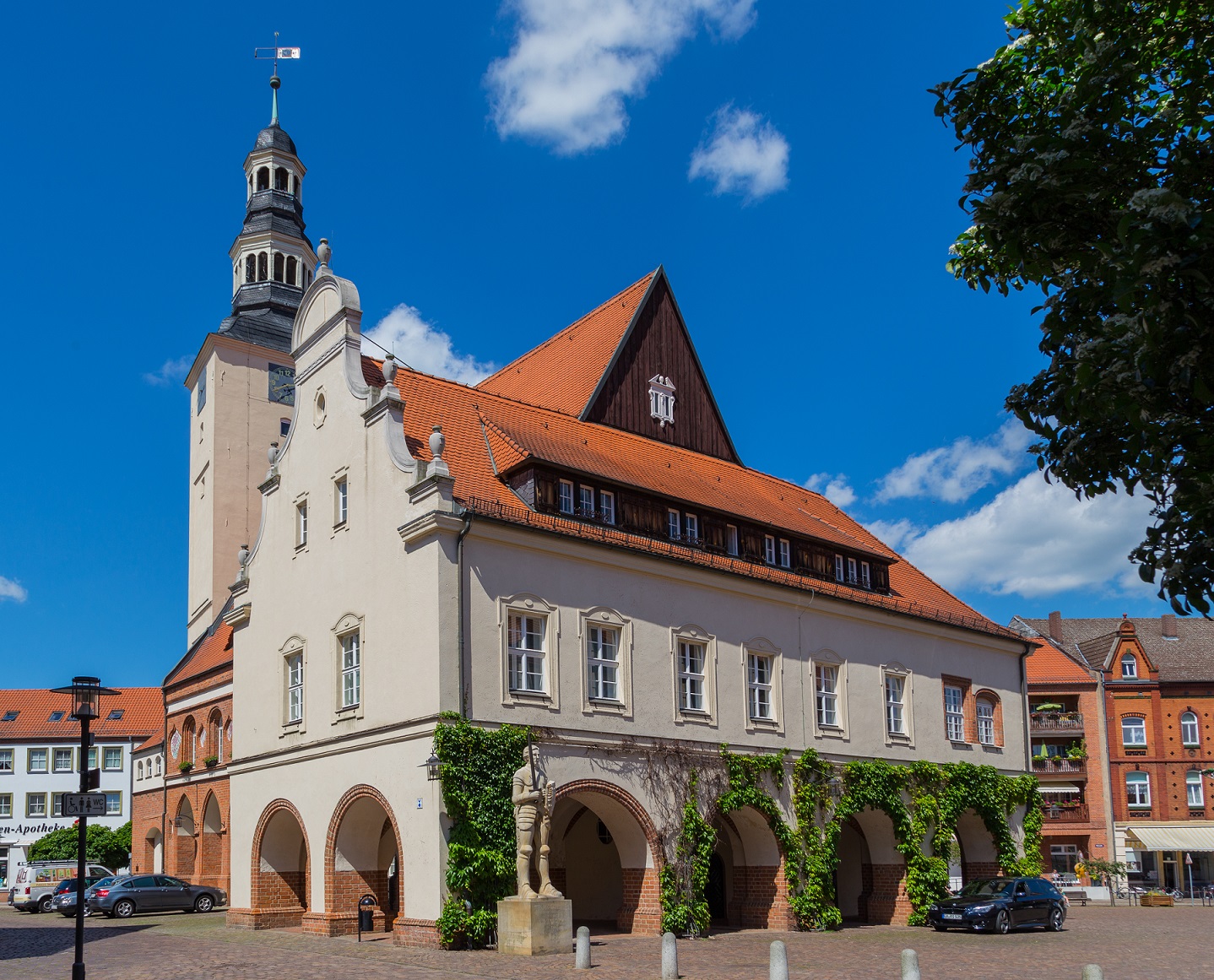
Fig. 3: Town Hall of Gardelegen.
On the other hand, the councilors of the town of Gardelegen were also made aware of the limits of their manorial aspirations. Like all urban municipalities in the Middle Ages, Gardelegen also sought to expand its possessions outside of its own town precincts. This succeeded, for example, with the acquisition of a grove near the village of Berge in 1337, which Hein von Rochow, as a vassal of Duke Otto von Braunschweig, ceded to the town.[12] However, this property was contested by a vassal of the von Alvensleben family named Harneyd Melk in the middle of the 15th century, since he owned the village of Berge as a fief and claimed the right to have grass mowed on the grove of the town of Gardelegen. After lengthy disputes with the vassal, the councilors of Gardelegen turned to the Magdeburg aldermen with the request for a legal ruling. They thought that they had a very good chance of winning the case by presenting the deed of sale issued in 1337 to the magistrates. The Magdeburg verdict confirmed the possession of the grove to the town of Gardelegen but, at the same time, emphasized that the citizens had not forbidden the feudal lord of the village of Berge to mow the property for more than thirty years and therefore had a right to use it. As long as Harneyd Melk did not break the law, he was allowed to continue mowing the grass. The Magdeburg aldermen, however, prohibited him from using the wood, which was to remain unrestrictedly with the town of Gardelegen.
The aldermen’s verdict received from Magdeburg also yielded no success in other respects. It did not succeed in bringing about an agreement between the parties to the dispute. On the contrary, the conflicts with Harneyd Melk continued under his son Werner and could only be legally settled in 1488 with the involvement of the von Alvensleben family.[13] This also reveals a characteristic of the Magdeburg aldermen’s verdicts. Their implementation was anything but self-evident. The question whether they were actually complied with depended much more on the willingness of the parties to the dispute to reach a consensus and to cooperate.
Towards the end of the 15th century, Gardelegen’s citizens also came into conflict with the Brandenburg sovereign, which was not without constitutional consequences. The background to this was the so-called Beer War, a dispute over the excise tax (Bierziese) levied on beer by Elector Johann and the Landtag (state parliament). Especially the towns in the Altmark region, including Gardelegen, feared heavy economic losses and unlawful paternalism and therefore put up armed resistance against the sovereign.[14] However, the rebellion was unsuccessful so that in Gardelegen, too, tempers calmed down, and the local citizens, including the mayor and council, agreed to a consensus with Elector John. The compromise that was reached, however, gave the Brandenburg sovereign the permanent right to “einen Newen Rat alhie zu Gardelege szu setzenn” (“appoint a new council in Gardelegen”) in case he did not agree with the town’s own choice of candidates.[15] Thus, the citizens of Gardelegen had to accept a severe restriction of their self-government rights. Nevertheless, this reflects a typical tendency of the elector’s urban policy in late medieval Brandenburg, which strove to integrate the civic communities more closely into the emerging sovereignty of the state.
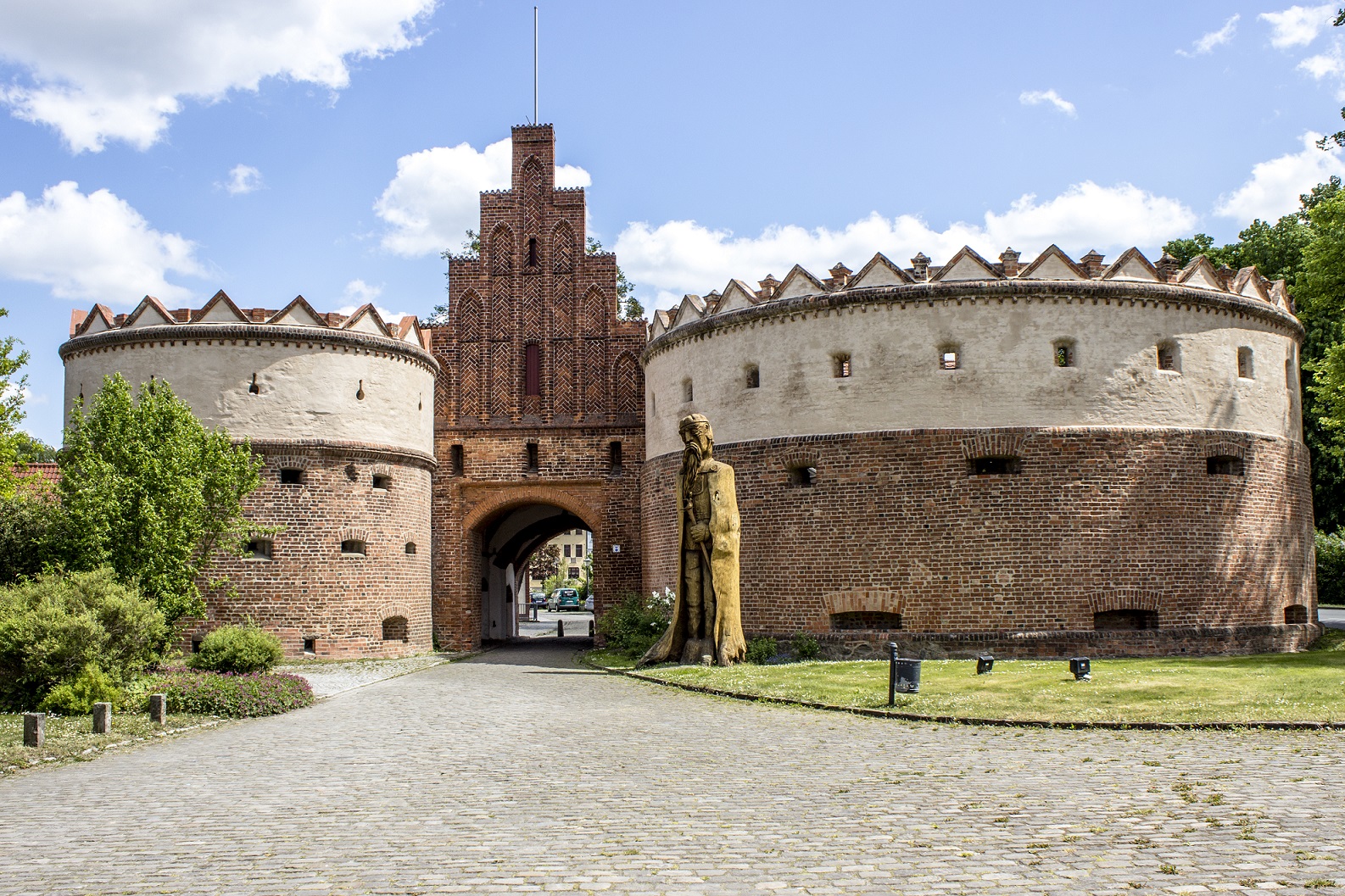
Fig. 4: Salzwedel Gate in Gardelegen, part of the town’s historic fortification ring.
In this way, the reference of the local legal history also remained closely connected with the Brandenburg elector. This is also illustrated by an interesting document from 1505, according to which there was displeasure in Gardelegen about the filling of the municipal council seat. The council was keen to recruit reliable people for this position. However, when the selection was made, it often turned out that the candidates in question refused and withdrew, “dadurch die gericht geschwecht vnnd dem gemeynen Nutz nachteyll vnnd schad entsteht” (“thereby harming the court and the common good”).[16] Apparently, the Gardelegen council itself did not have sufficient means of power to prevent this, so that it only had a request for help to Elector Joachim and his brother Albrecht. The latter, by virtue of their power as margraves of Brandenburg, determined that the aldermen elected in Gardelegen had to exercise their office and were not allowed to resist. In case of a refusal, both princes threatened them with the loss of their civil right.
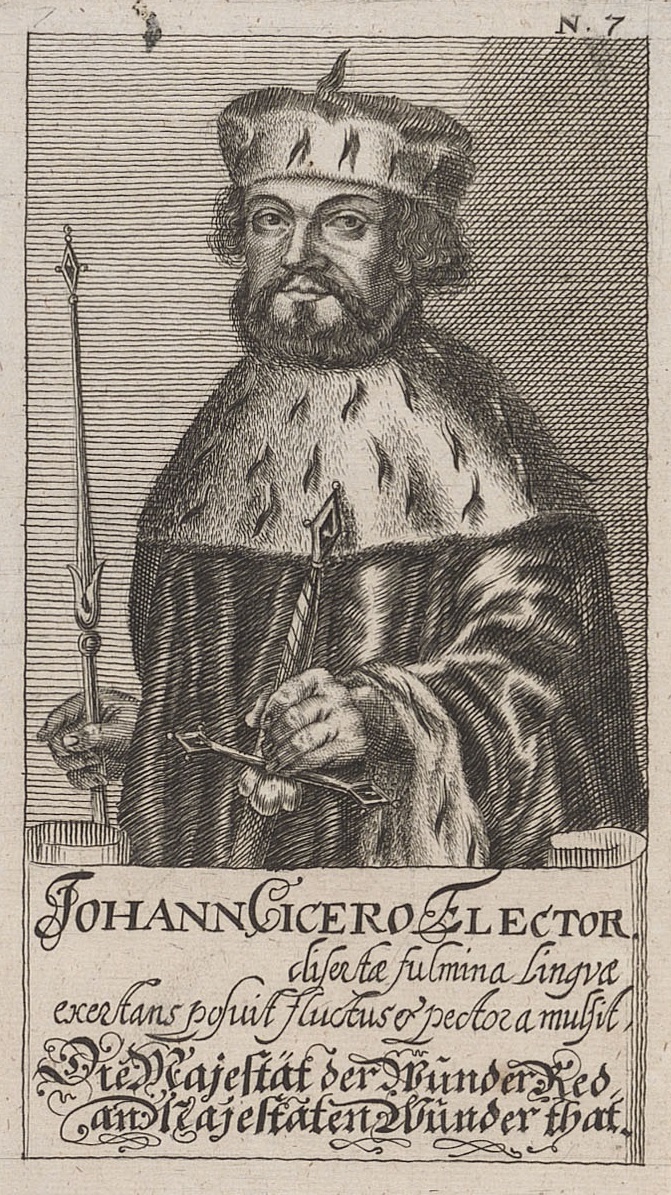
Fig. 5: Elector John of Brandenburg, engraving from Brandenburgischer Ceder-Hein (1682) by Johann Wolfgang Rentsch.
Between the early town fire in the 13th century and the civic revolt against the Brandenburg elector displayed towards the end of the 15th century in the context of the Beer War, many exciting legal-historical facets can be observed in Gardelegen, which should be given more attention in future research.
Author: Sascha Bütow
Citation:
Sascha Bütow: Gardelegen. Town Law and Constitutional Development between Town Fire and Beer War, 11.12.2020, https://magdeburg-law.com/historic-city/gardelegen/
Footnotes:
[1] Cf. Lutz Partenheimer, Albrecht der Bär. Gründer der Mark Brandenburg und des Fürstentums Anhalt. 2nd edition Potsdam 2016, p. 193.
[2] Adolf Friedrich Riedel (ed.), Codex Diplomaticus Brandenburgensis, series A, vol. 6, no. CXV, Berlin 1846, p. 87.
[3] Ibid., vol. 21, no. VIII, Berlin 1861, pp. 93–94.
[4] On the foundation of Prenzlau with the participation of possible settlers from the Altmark cf. Schich, Winfried, Prenzlau von der Stadtwerdung bis zum Ende der Askanierherrschaft (von der zweiten Hälfte des 12. Jahrhunderts bis 1320), in Geschichte der Stadt Prenzlau, edited by Klaus Neitmann and Winfried Schich, Horb am Neckar 2009, pp. 27–62.
[5] Adolf Friedrich Riedel (ed.), Codex Diplomaticus Brandenburgensis, series A, vol. 6, no. CXVII, Berlin 1846, p. 89.
[6] Ibid., no. CXXVIV, pp. 96–97.
[7] Heiner Lück, Stadtrechte in der Altmark – ein Überblick, in Sachsen und Anhalt 32 (2020), pp. 41–77, here p. 71.
[8] Adolf Friedrich Riedel (ed.), Codex Diplomaticus Brandenburgensis, series A, vol. 6, no. CXXV, p. 94.
[9] Cf. ibid., no. CXLVII, pp. 105–106.
[10] Hans Friedrich Georg Julius Sudendorf (ed.), Urkundenbuch zur Geschichte der Herzöge von Braunschweig und Lüneburg und ihrer Lande. Vol. VII: Vom Jahre 1390 bis zum Jahre 1394. Hannover 1871, p. 317.
[11] Adolf Friedrich Riedel (ed.), Codex Diplomaticus Brandenburgensis, series A, vol. 6, no. CLXVIII, pp. 120–121, here p. 120.
[12] Adolf Parisius, 4 Urkunden aus dem Ratsarchiv der Stadt Gardelegen, in Jahresbericht des Altmärkischen Vereins 20 (1884), pp. 11-22, here no. 3, pp. 17–18.
[13] Adolf Friedrich Riedel (ed.), Codex Diplomaticus Brandenburgensis, series A, vol. 6, no. CCXIV, pp. 152–153.
[14] Felix Escher, Die Mark Brandenburg unter den frühen Askaniern. Eine historische Einführung, in: Die Mark Brandenburg unter den frühen Hohenzollern. Beiträge zu Geschichte, Kunst und Architektur im 15. Jahrhundert. Edited by Peter Knüvener and Dirk Schuhmann. Berlin 2015, pp. 17–34, especially p. 33.
[15] Riedel, Adolf Friedrich (ed.), Codex Diplomaticus Brandenburgensis, series A, vol. 6, no. CCXII, pp. 149–151, here p. 149.
[16] Ibid., no. CCXX, pp. 157–158, here p. 157.
Images:
Fig. 1: zeno.org (gemeinfrei)
Fig. 2: Wikimedia Commons (Attribution-Share Alike 3.0), photo: Dr. Minx
Fig. 3: Wikimedia Commons (Attribution-Share Alike 4.0), photo: J.-H. Janßen
Fig. 4: Wikimedia Commons (Attribution-Share Alike 4.0), photo: Spreepaula
Fig. 5: Magdeburg, Kulturhistorisches Museum, Bibliothek, Sig. G 0254