A Market Hamlet with an Impressive Legal History
At the beginning of the 12th century, Jerichow and the land surrounding the town belonged to the property of the Counts of Stade. A few years apart, the two brothers Udo and Rudolf were murdered, leaving only their brother Hartwig as the youngest scion of the family and male heir alongside his mother Richardis. Hartwig, however, was destined for a clerical career and held the office of canon in Magdeburg. In a comprehensive endowment act in 1144, he and his mother decided to dedicate part of the family property to the foundation of the Premonstratensian monastery of Jerichow, which would henceforth belong to the diocese of Havelberg. The by far larger part of the property, including Jerichow Castle and the extensive area to the right and left of the Elbe, however, was assigned to the Archbishopric of Magdeburg. [Fig. 1]
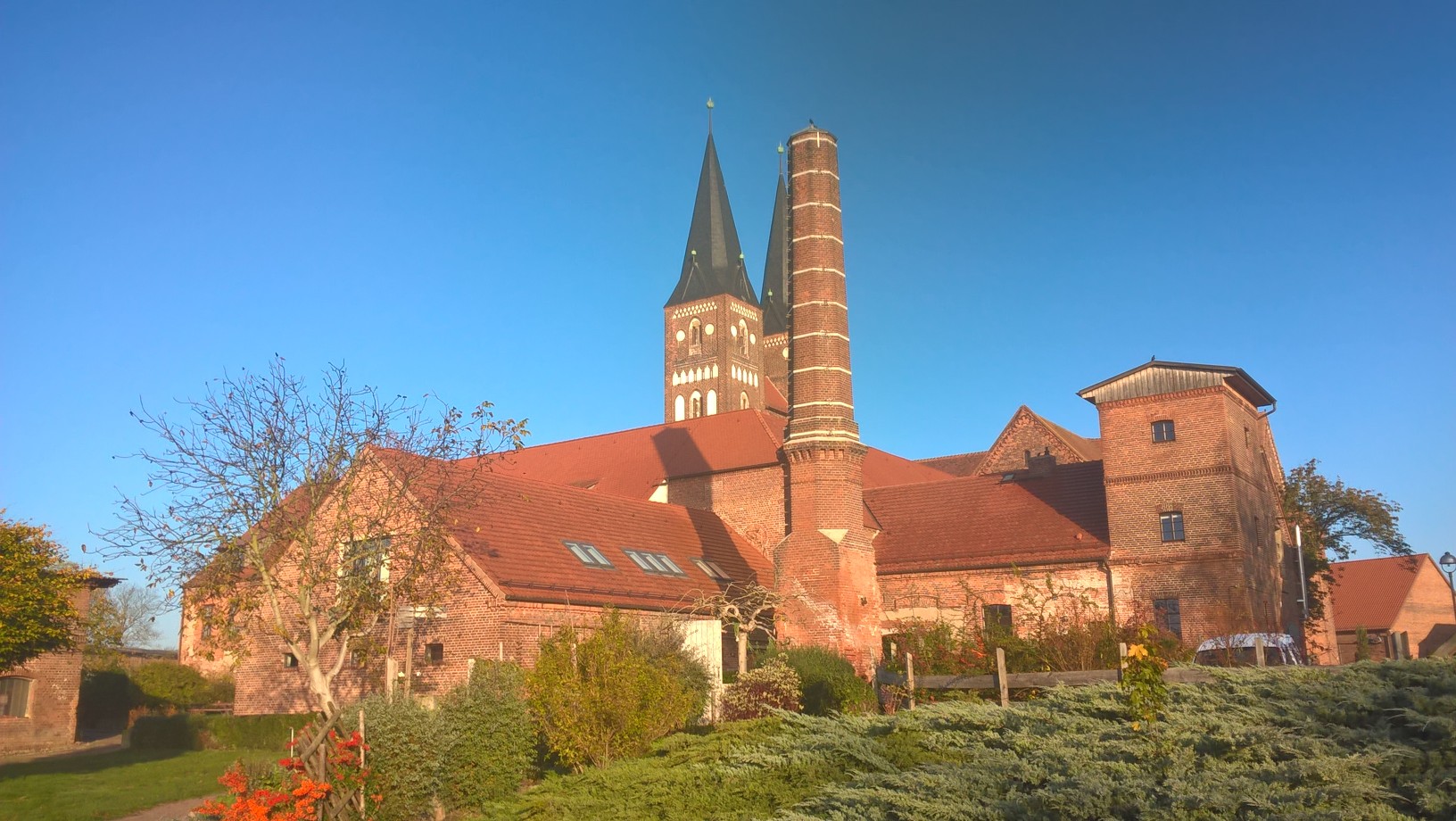
Fig. 1: Jerichow Monastery was moved to its present location in 1148 because of the disturbance of the peace in the nearby settlement.
The manorial center of this land was Jerichow Castle, which was the seat of the noble family of the same name and in the vicinity of which a settlement with lively market traffic developed in the 12th century. Jerichow was located on a Hanseatic trade route frequented in the Middle Ages, which connected Stralsund with Magdeburg and was called the “rechte herstraße” (“right military road”).[1] The hustle and bustle and noise that developed from the market traffic apparently affected the Premonstratensians to such an extent that they rebuilt their monastery at some distance from the settlement in a quieter location in 1148.[2] The settlement of Jerichow developed into what was first called an “oppidum” (market hamlet) in 1259, which in that year, together with the castle and the Jerichow land, became the property of Margrave Otto III of Brandenburg.[3] The economic prosperity of the town is indicated by the fact that in connection with this transfer of ownership between Magdeburg and Brandenburg, a customs office and mint are also mentioned in Jerichow.
Jerichow’s close vicinity to the Elbe always held dangers, such as in 1336 when the river overflowed its banks and the flood destroyed large parts of the town.[4] This was followed by a reconstruction of the town, in the wake of which the longitudinal market[5] probably came into being, which can still be seen in the townscape today. During this period of urban reconstruction, a significant change in the ownership of the town took place. In 1334, the well-known glossator of the Sachsenspiegel newspaper and later captain of the Mark of Brandenburg, Johann von Buch, came into possession of the House (castle), Weichbild (market settlement) and the Land of Jerichow, which he redeemed from Duke Otto of Brunswick for 2,000 Marks of Brandenburg silver.[6] Against the background of the flood disaster, Johann von Buch, together with the inhabitants of Jerichow, also placed the town on a new legal foundation. Thus, on the instructions of the Brandenburg Margrave Ludwig, in the case of disputed and unresolvable legal cases within the Jerichow citizenry, the town of Burg was not to be asked for legal decisions but only the citizens of the new town of Brandenburg (“civibus ciuitatis nostre Noue Brandenburg”)[7]. This order, formulated with princely insistence, was intended to support the position of the Brandenburg Schöffenstuhl (Aldermen’s Court), which intended to assert its role as Supreme Court in the territory of the Margraves of Brandenburg. [Fig. 2]
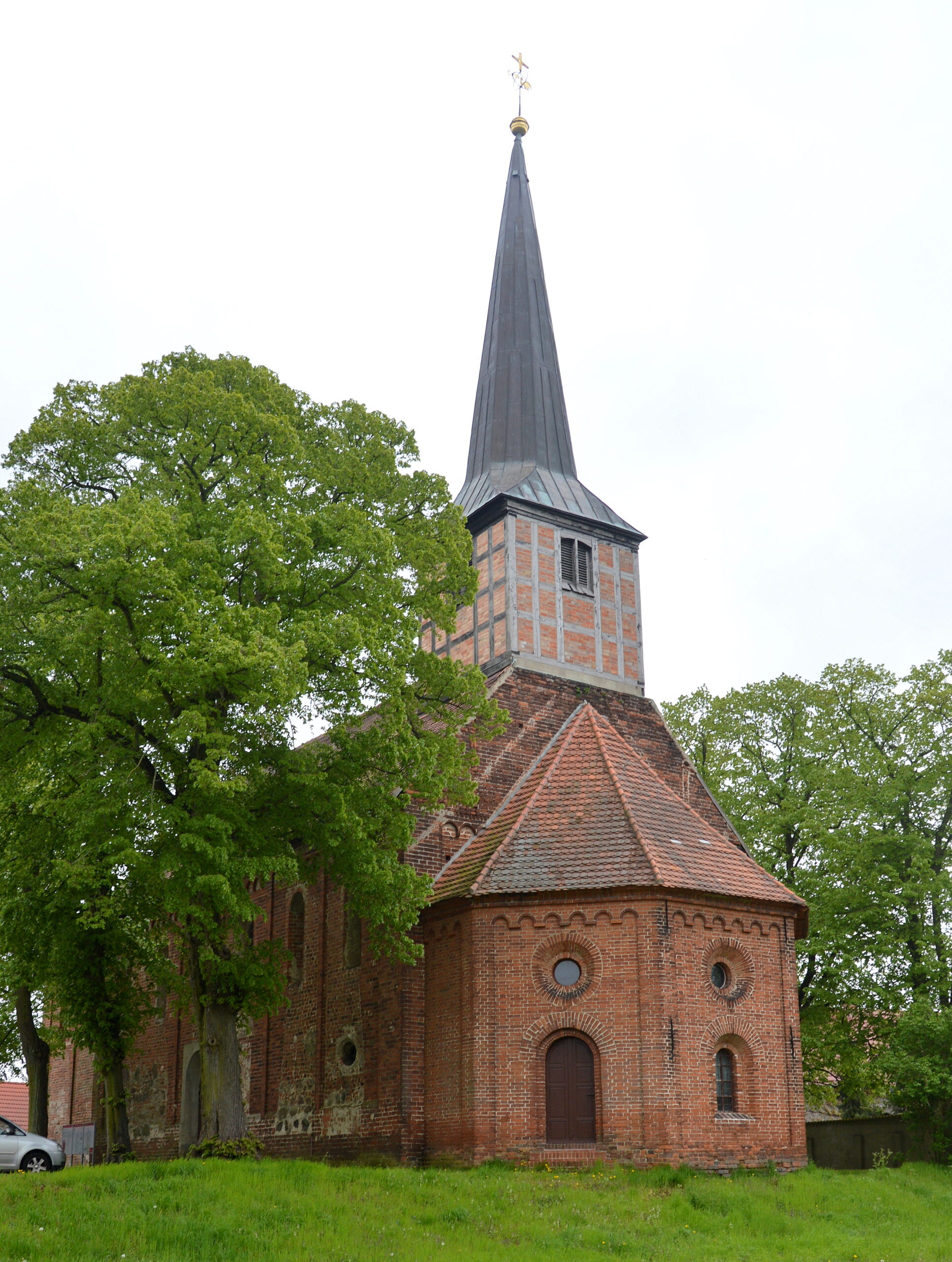
Fig. 2: Town Church in Jerichow
In addition to the municipal court, Jerichow also had a Land court, which met under the presidency of the Lord of Jerichow and was responsible for the nobility and peasants of the Jerichow region. As the owner of Jerichow, Johann von Buch himself, therefore, presided over this court and helped to implement some important formal regulations with regard to the jurisdiction applied here. Consequently, Margrave Ludwig ordered that old legal customs of the land that were considered forbidden (“antiquam et reprobatam terre conswetudinem”) should be abolished and not practiced in the Jerichow Land Court.[8] Instead, Imperial law (“ius imperial”) and Saxon law, mainly expressed in the Sachsenspiegel (“privilegium Saxonicum”), had to be observed. According to Bernd Kannowski, the Jerichow document of the year 1336 is thus a vivid proof of Johann von Buch’s effort to harmonize both rights, as he tried to do with his gloss on the Sachsenspiegel.[9] This principle was to be put into practice in the Jerichow Land court. Whether this developed into a continuity is not known and, in view of the further history of the possession of Jerichow, rather unlikely.
In 1351, after a war lasting several years against the Margrave of Brandenburg, Jerichow was transferred as a pledge to the Archbishopric of Magdeburg. With the reconciliation of both parties three years later, Archbishop Otto subsequently took full possession of Jerichow.[10] However, the often high monetary debts of the Magdeburg archbishops meant that Jerichow Castle, an archbishop’s office since 1367, together with the town, was repeatedly lent or mortgaged to various servants and lords.[11] [Fig. 3]
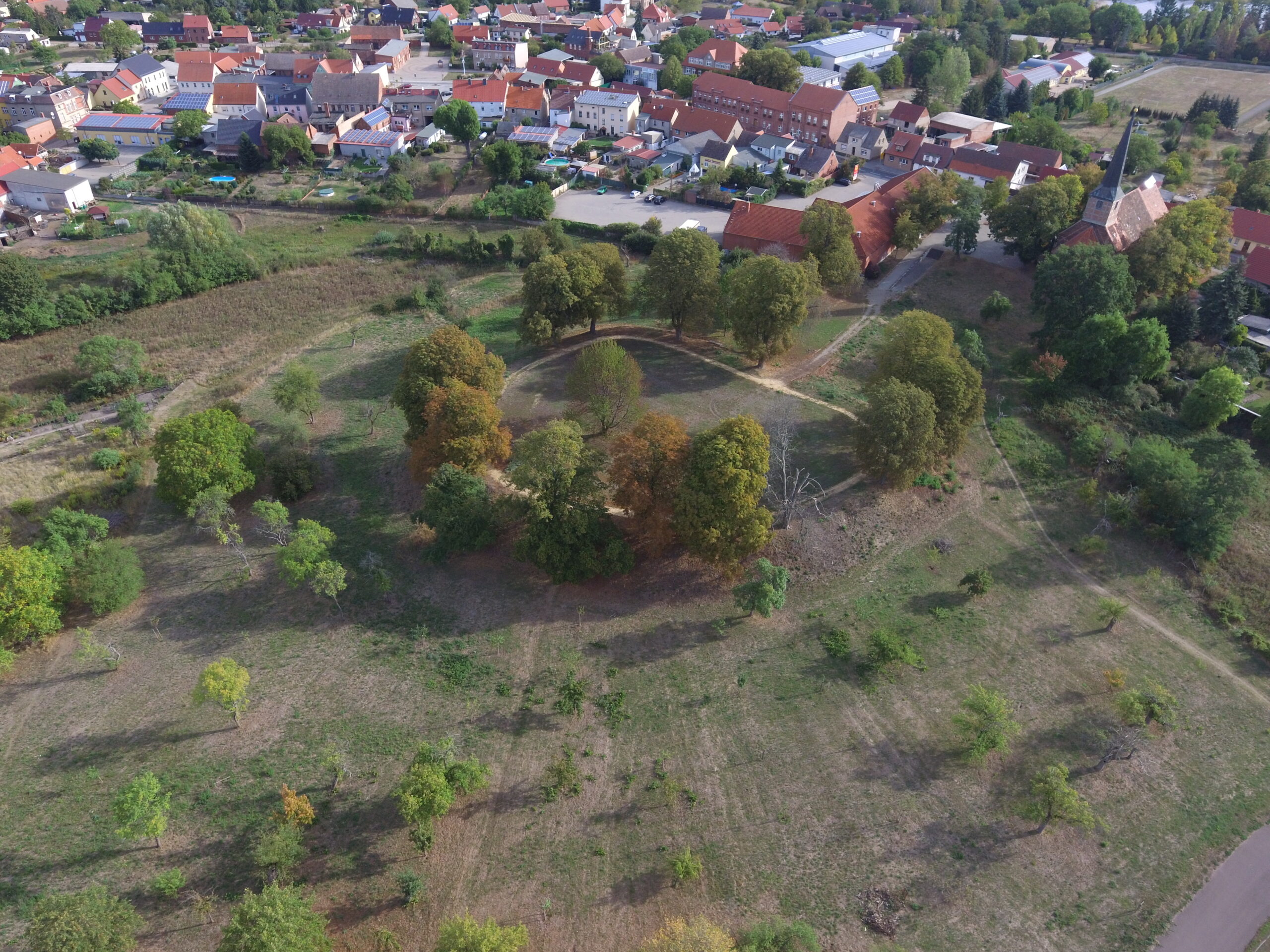
Fig. 3: Aerial view of the so-called Burgstall (Castle Stables) in Jerichow. At the beginning of the 18th century, the buildings and fortifications of Jerichow Castle were demolished.
The town of Jerichow itself was not fortified, although the privilege of Margrave Ludwig in 1336 expressly authorized this. It is also not known where Jerichow’s councilors and aldermen, first mentioned in 1320, met in the Middle Ages[12],, because nothing can be deduced from the sources about an early town hall building or aldermen’s chair as centers of municipal politics and jurisdiction. The town hall still in use today was not built until the 19th century, after an older town hall burned down in 1877.[13] Economically, Jerichow remained primarily a farming town with a strong emphasis on agriculture. In addition, beer brewers, tobacco manufacturers and distillers of brandy are documented in the course of the early modern period. Jerichow also achieved national fame due to the numerous shoemakers working here, who consolidated the town’s reputation as “Schusterjerichow” (“Shoemakers’ Jerichow”).[14]
Author: Sascha Bütow
Citation:
Sascha Bütow: Jerichow. A Market Hamlet with an Impressive Legal History, 30.06.2021, https://magdeburg-law.com/historic-city/jerichow/
Footnotes:
[1] Bruns, Friedrich/Weczerka, Hugo, Hansische Handelsstraßen. Textband (= Quellen und Darstellungen zur Hansischen Geschichte N.F. 12/2). Weimar 1967, p. 210.
[2] Winter, Franz, Die Prämonstratenser des zwölften Jahrhunderts und ihre Bedeutung für das nordöstliche Deutschland. Ein Beitrag zur Geschichte der Christianisierung und Germanisierung des Wendenlandes. Berlin 1865, p. 150.
[3] Fey, Hans-Joachim, Reise und Herrschaft der Markgrafen von Brandenburg (1134–1319) (= Mitteldeutsche Forschungen 84). Cologne/Vienna 1981, p. 211.
[4] Küster, Hansjörg, Die Elbe. Landschaft und Geschichte. Munich 2007, p. 181.
[5] Römer, Christof/Schwieneköper, Berent, Art. >Jerichow<, in Handbuch der historischen Stätten Deutschlands. Vol. 11: Provinz Sachsen-Anhalt, edited by Berent Schwineköper. 2nd edition Stuttgart 1987, pp. 228–230, here p. 229.
[6] Neumeister, Peter, Johann von Buch. Ein altmärkischer Rechtsgelehrter im Dienste der Wittelsbacher, in Die Altmark von 1300 bis 1600. Eine Kulturregion im Spannungsfeld von Magdeburg, Lübeck und Berlin, edited by Jiří Fajz, Wilfried Franzen and Peter Knüvener. Berlin 2011, pp. 150–155, here p. 152.
[7] Adolf Friedrich Riedel (ed.), Codex Diplomaticus Brandenburgensis, series B, vol. 2, Berlin 1845, no. 732, pp. 104-105, here p. 104.
[8] Ibid., p. 105.
[9] Kannowski, Bernd, Die Umgestaltung des Sachsenspiegelrechts durch die Buch’sche Glosse (= MGH Schriften 56). Hannover 2007, p. 87.
[10] Adolf Friedrich Riedel (ed.), Codex Diplomaticus Brandenburgensis (same as note 7), no. 980, pp. 357-358.
[11] Römer, Christof/Schwieneköper, Berent, Art. >Jerichow< (same as note 5), p. 229.
[12] Adolf Friedrich Riedel (ed.), Codex Diplomaticus Brandenburgensis, series B, vol. 1, Berlin 1845, no. 557, p. 463.
[13] Schmidt, Hanns H.F., Zwischen Elbe und Havel. Wanderungen vom Fiener Bruch bis in die Prignitz. Leipzig 1990, p. 82. An illustration of the older town hall can be found at Naumann, Rolf, Historische Zeitdokumente in Kirchturmkugeln, in, Lapidarium Jerichowense 4/2002, pp. 46–63, here p. 55.
[14] Hoffmann, Andreas, Berlin wird morgen abgebrannt. Die Geschichte eines Brandstifter-Pärchens samt ihres angerichteten Schadens. Berlin 1998, p. 25.
Images:
Fig. 1: photo: Kulturstiftung Sachsen-Anhalt, Kloster Jerichow
Fig. 2: Wikimedia Commons (CC BY-SA 4.0), photo: Olaf Meister
Fig. 3: photo: Gregor Rom