Of Miracle Blood and Town Fires – Beelitz in the Middle Ages
Even though the asparagus town of Beelitz may rank among the oldest cities in the Mark Brandenburg, much about its medieval history remains obscure. Many important sources on the town’s history fell victim to fires that ravaged the town, especially in the 15th and 16th centuries. The development of the settlement can thus only be traced in outline. And yet it becomes evident that there is more to Beelitz than the famous asparagus and the infamous sanatoriums.
The first recorded mention of Beelitz is a document issued by Emperor Otto III in 997, in which the Burgward Belizi was transferred to the Archbishopric of Magdeburg. For a long time, it was disputed whether this was Beelitz or Belzig, which is about 30 kilometers away. Both communities still claim this mention on their websites. Researchers have long held the view that the document refers to Beelitz, and recent archaeological excavations have provided evidence of a castle – previously only assumed – within the Slavic settlement of the early Middle Ages directly on the banks of the Nieplitz. With this material proof, the identification of Belizi with Beelitz can be considered certain. The location of the Burgward in the immediate vicinity of the river also fits the place name, which comes from the Slavic and means something like “settlement in a swampy area”.
The fate of the castle and the settlement remains unknown for the next 200 years after the first reference. Beelitz is mentioned a second time only in a document of the year 1216, which, however, does not concern the Slavic settlement and the castle but a newly developed settlement north of it. The ground plan of this new settlement under the old name can still be seen today in the townscape. The old town, located in the south of the present municipality, has the shape of an irregular rectangle, which is frequently observed in founding towns of the late 12th and early 13th centuries. It is also completely enclosed by the “Mauerstraße” (“Wall Street”), whose name refers to the former existence of a town wall on this site. Neither this nor the gates mentioned in various documents have survived to the present day.
Fig. 1: Town layout with Mauerstraße. The medieval structures are still recognizable today (Map: Arbeitsgemeinschaft Städte mit historischen Stadtkernen des Landes Brandenburg, Working Group of Towns with Historic Town Centers of the State of Brandenburg).
Which political actors were behind the emergence of the “new” Beelitz cannot be said with certainty. It is assumed that initially, the Counts of Belzig exercised rule over the town and were responsible for the establishment of the new settlement. It is claimed that around 1200, the archbishopric of Magdeburg came into possession of Beelitz, and about a hundred years later Beelitz came under the rule of the Ascanians. However, these are assumptions of the research. It is attested that there were connections between Beelitz and Magdeburg, and that at the end of the 13th century, the town was in the ownership of the Brandenburg Ascanians, who were also margraves at that time.
With the extinction of this Ascanian line in 1320, a turbulent period of changing rulership began for Beelitz, as for the entire Mark. An interregnum was followed by margraves from the houses of the Wittelsbach, Luxembourg and Hohenzollern; conflicts arose in which Beelitz was naturally also involved. Thereby, the town and its citizens acted self-confidently, indeed, for example, in the episode about the false Woldemar. In the middle of the 14th century, this charlatan claimed to be the Margrave of Ascan, who had supposedly died 50 years earlier and claimed the rule over the Mark Brandenburg for himself. Many towns and even the Emperor believed him or at least pretended to believe him and recognized his claims – but not Beelitz, which remained as one of a few towns on the side of the incumbent Margrave Ludwig!
How the town would have developed if it had not fallen victim to frequent conflagrations can hardly be guessed. It was first set on fire in 1478 by Brandenburg troops, who wanted to liberate the town conquered by armies of John II of Sagan, and then, especially in the 16th century, there were repeated major fire catastrophes. These left their mark on the urban topography and destroyed a large part of the written, recorded documentation – another reason why little can be said about the history of the town of Beelitz in the Middle Ages, and why this epoch has hardly been preserved in the townscape.
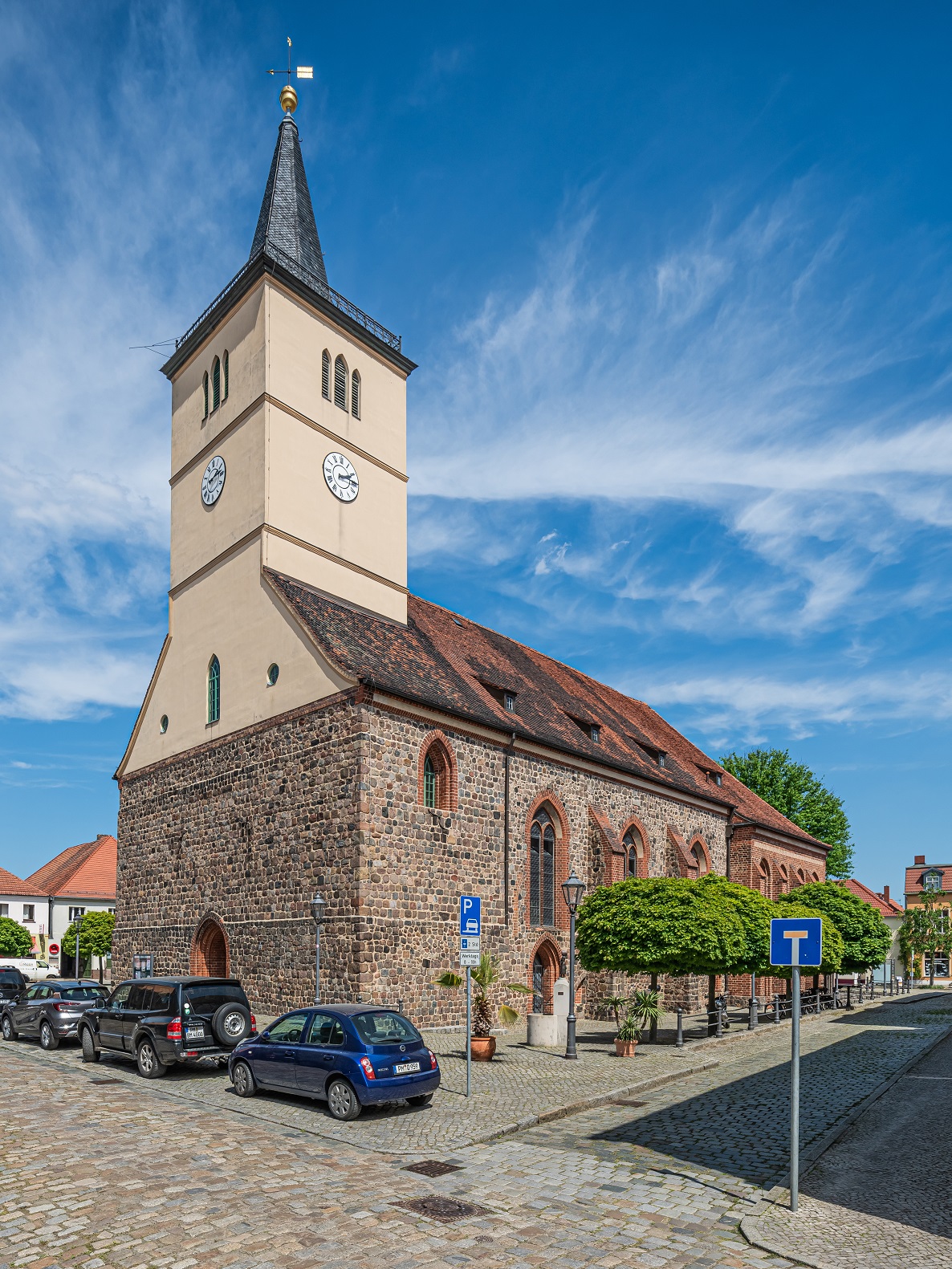
Fig. 1: Town layout with Mauerstraße. The medieval structures are still recognizable today.
Only the town church of St. Mary and St. Nicholas, the core of which dates back to a 13th-century building, is an exception here. At the same time, it is closely connected with the probably most famous episode of medieval history in Beelitz, the so-called Miracle Blood. According to a document dated 1247, there had been a host desecration followed by a miracle caused by God. Blood leaked from the desecrated host, and this divine sign became the starting point of a regionally significant pilgrimage. Every pilgrim who would visit the town on the feast day of the Assumption was promised an indulgence of 40 days. A building was specially erected at the scene of the event, the so-called Miracle Blood Chapel. Although it was located in the immediate vicinity of the town church, it was initially structurally separate from it, but today, after various building conversions, it forms the northwest corner of St. Mary and St. Nicholas. The pilgrimage to the Miracle Blood in Beelitz existed until the Reformation. According to research, the beginnings of the pilgrimage are not to be placed in the middle of the 13th century, as the document, which is a later forgery, but they must be dated probably about 100 years later.
At the same time, the Miracle Blood episode directs the attention to the internal conditions of the town of Beelitz in the Middle Ages. Since, for later historians, it was certain that only Jews could have committed the host desecration, more recent research deduced that there must have been a Jewish community in Beelitz in the middle of the 13th century. This, in turn, led to the conclusion that the town must have had some economic importance because otherwise no Jews would have settled here. This thesis cannot be sustained, and a Jewish community is only reliably documented in the 18th century.
But what can be said at all about the economy and trade in the town of Beelitz in the Middle Ages? Surprisingly little, one will find out. Guilds of craftsmen, for example, are not testified for the Middle Ages, even though there were certainly various trades in the town. The town’s citizens seemed to have lived primarily from agriculture, and there were many feudal citizens who may have belonged to the town’s upper class. Beelitz seems to have been important as a trading town only in a regional context, although it had a lot of potential from the point of view of traffic topography. Its location on essential traffic routes may even have been the reason for the advancement of the town in the 12th and 13th centuries: A west-east route, which led from Belzig via Beelitz to Trebbin and possibly influenced the establishment of the new settlement. A little later, however, Beelitz became important as a staging post on a travelway connecting Berlin and Leipzig. The citizens of the town were not only responsible for the maintenance of the roads and the safety of the travelers, but there were also stipulations that travelers had to stop in Beelitz. Despite this exposed location, Beelitz did not develop into a place of trade of supra-regional importance, and there remained just a street market that fulfilled local needs. The holding of a large and small fair in the town is recorded in documents.
Similarly, little can be said about the internal urban conditions. The preserved documents – many testimonies that would have provided deeper insight have probably fallen victim to the various destructions of the city – indeed reveal the constitution but not concrete processes. Councilors, attested since the early 14th century, and mayors, first mentioned in 1373, only appear as representatives of the town in major political situations, such as town confirmations, on the occasion of tributes, and in alliance, legal and financial matters. More details, for example about the persons or their activities in the town, are not to be found. The same applies to the law in force and spoken in Beelitz. In the documents, the old rights and customs of the town are confirmed more often, but what exactly they consisted of is not clear. The existence of a Schulz (sheriff), who was responsible for the town’s jurisdiction, is attested, but no example of his work has been handed down. It is known that in 1463 the town court was transferred to the bailiff of Trebbin – certainly a bitter loss for Beelitz – but this does not allow any insight into the legal reality. The validity of Magdeburg law in Beelitz is also not explicitly testified, but general observations, such as the change of councilors, and the relations that existed between Beelitz and Magdeburg in the Middle Ages, indicate this.
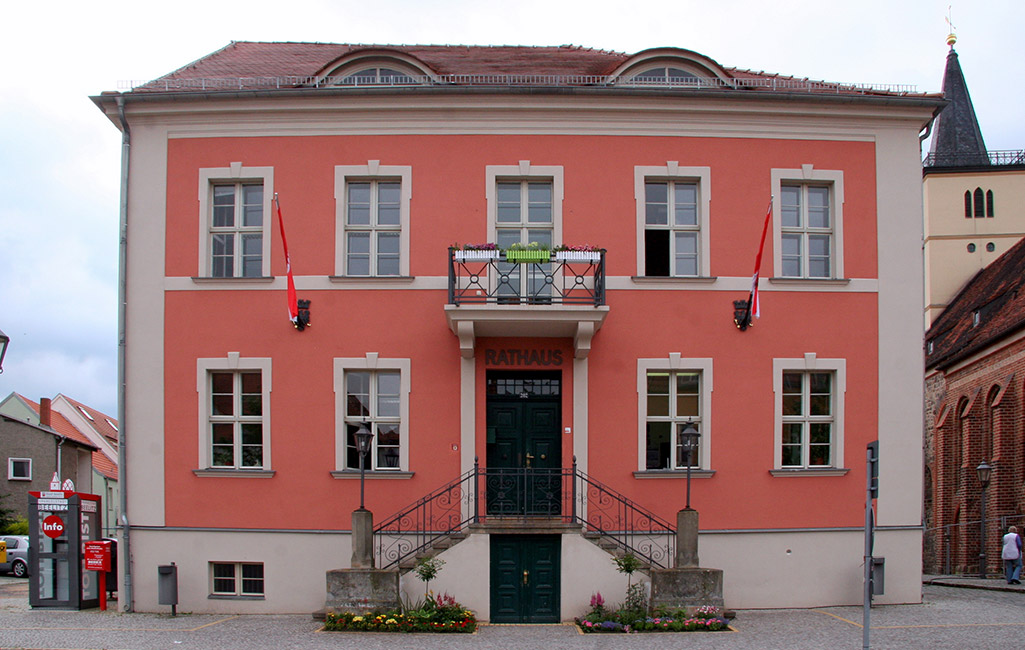
Fig. 2: Protestant town church of St. Mary and St. Nicholas in Beelitz
Thus, the medieval history of the town of Beelitz becomes evident in many areas only in outlines. The picture that emerges testifies to a settlement that was concerned about the preservation of its rights and its privileges and in which a citizen community developed that positioned itself independently and self-confidently. What life was like in the town itself during this period, on the other hand, is hard to discern, and most of the information about it has probably fallen victim to the flames that too often ravaged the town.
Author: Michael Belitz
Citation:
Michael Belitz, Beelitz. Of Miracle Blood and Town Fires – Beelitz in the Middle Ages, 09.12.2021, https://magdeburg-law.com/historic-city/beelitz/
Further Reading:
Helmut Assing, Beelitz im Mittelalter, in 1000 Jahre Beelitz – 750 Jahre Stadt Beelitz, edited by Stadtverwaltung Beelitz, Mering 1997, pp. 26-47.
Sascha Bütow, Verkehrsraum Fläming in überlandschaftlichen Konturen. Spätmittelalterliche Wegelenkung, Straßenbaumaßnahmen und historische Kartographie, in Blätter für deutsche Landesgeschichte 151 (2015), pp. 275–290.
Dieter Hoffmann-Axthelm, Das Wunderblut von Beelitz, in Die Wilsnackfahrt. Ein Wallfahrts- und Kommunikationszentrum Nord- und Mitteleuropas im Spätmittelalter, edited by Felix Escher and Hartmut Kühne (= Europäische Wallfahrtsstudien 2), Frankfurt on the Main 2006, pp. 199–233.
Tilo Köhn and Lutz Partenheimer, Beelitz und Belzig im Streit um eine Tausendjahrfeier. Ein Beitrag zur Ostpolitik Kaiser Ottos III. im Jahre 997, Potsdam, Fichtenwalde 1996.
Lutz Partenheimer, Beelitz, in Städtebuch Brandenburg und Berlin, edited by Evamaria Engel et al. (= Deutsches Städtebuch, new edition, vol. 2), Stuttgart, Cologne, Berlin 200, pp. 26–30.
Images:
Fig. 2: Wikimedia Commons, photo: A. Savin