A Brandenburg Immediate Town with Extensive Rights
“The history of Osterburg is admittedly only a monotonous one, like those of all small Altmark towns; however, the noteworthy is at least not completely missing.”[1] What Hermann Dietrichs and Ludolf Parisius noted in their “Bilder[n] aus der Altmark” (“Picture[s] from the Altmark”) in 1883 is viewed critically today, since it is left to the perspective cast on the town’s history in each case as to what is noteworthy about it. From the point of view of legal history, Osterburg has some interesting facets that had a lasting influence on its municipal development.
Osterburg is already mentioned among the places for which the market settlement of Stendal was granted duty-free status by Albrecht the Bear in the middle of the 12th century. Still called “urbs” in this context, Osterburg is described as an “oppidum” in 1208.[2] The settlement benefited from a convenient location and, therefore, also functioned as a customs point. In addition, the inhabitants could use the adjacent river Biese to power mills, for fishing and for shipping [3] After the extinction of the Count of Osterburg-Veltheim in 1242, the Margrave of Brandenburg was able to take full possession of Osterburg. The town then remained sovereign and expanded its autonomy in the course of the 14th century.
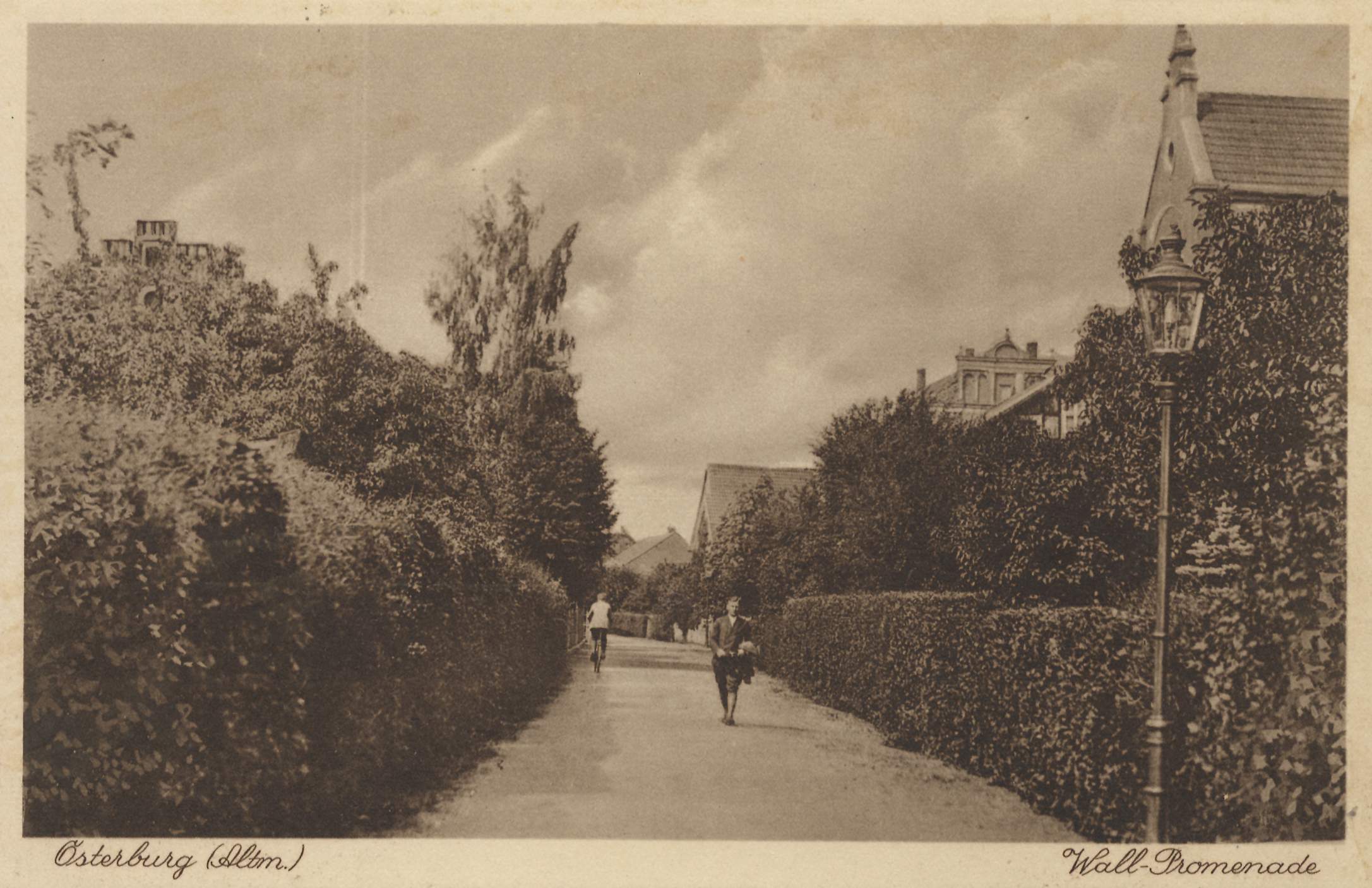
Fig. 1: The ramparts around Osterburg protected the town in the Middle Ages and were an important symbol of the citizenry’s will to defend themselves. Postcard from the 1930s.
With regard to their town law, the councilors of Osterburg, who were mentioned for the first time in 1345, oriented themselves on Magdeburg law, whereby very likely a transfer of law via Stendal had taken place.[4] In the same year, a judge and aldermen (Judex et Schabini in Osterborch) are also mentioned in a document, who together issued a certificate regarding the property of the still underage Dietrich von Krusemark.[5] Thus a separation between council and aldermen within the communal constitution of Osterburg, which is typical according to the Magdeburg model, can be proven. In addition, a Vogt (praefectus, bailiff) is documented for the year 1344, who acted as a representative of the sovereign within the town and was an important political mediator.[6] This office was not necessarily in competition with the citizenry. Thus it becomes evident that Hennig von Hohenhausen, a citizen of Osterburg, had taken over the feudal guardianship for the children of the deceased Vogt Paris in 1344. The latter was apparently well integrated into the citizenry and had a ready network of partners and friends here.
A self-confident attitude of the Osterburg citizenry is encountered in a privilege issued by the false margrave Woldemar in 1348, according to which the town was allowed, among other things, to judge offenders “na der stat rechte” (“compliant with the town laws”). In addition, the margrave was forbidden to build new fortifications as long as the towns did not agree. Thus, he was required to promise not to divide the land. In addition, Osterburg was allowed to enter into alliances with other towns to protect its rights. Although the false Woldemar could not hold on politically, Osterburg continued to expand its rights, taking advantage of the general weakness of the Brandenburg sovereignty. Thus, in 1390, Osterburg succeeded in acquiring the town court from Margrave Jobst of Moravia, which included high jurisdiction, i.e. decisions on life and limb.[7] Osterburg also made extensive use of its right to ally itself with other towns. In 1392, for example, Osterburg joined forces with Stendal, Gardelegen, Tangermünde and Werben against attacks by ecclesiastical courts. The towns promised each other mutual assistance if their citizens were accused. Stendal had an important position in this, as its councilors were to be informed without being asked. If a legal dispute finally arose, each town council was to send an emissary to Stendal for consultation. All costs resulting from a lawsuit were divided among the towns according to individual rates, with Osterburg having to pay one mark.[8] The belief that Stendal acted as a high court for Osterburg is based on this basic decree.[9]
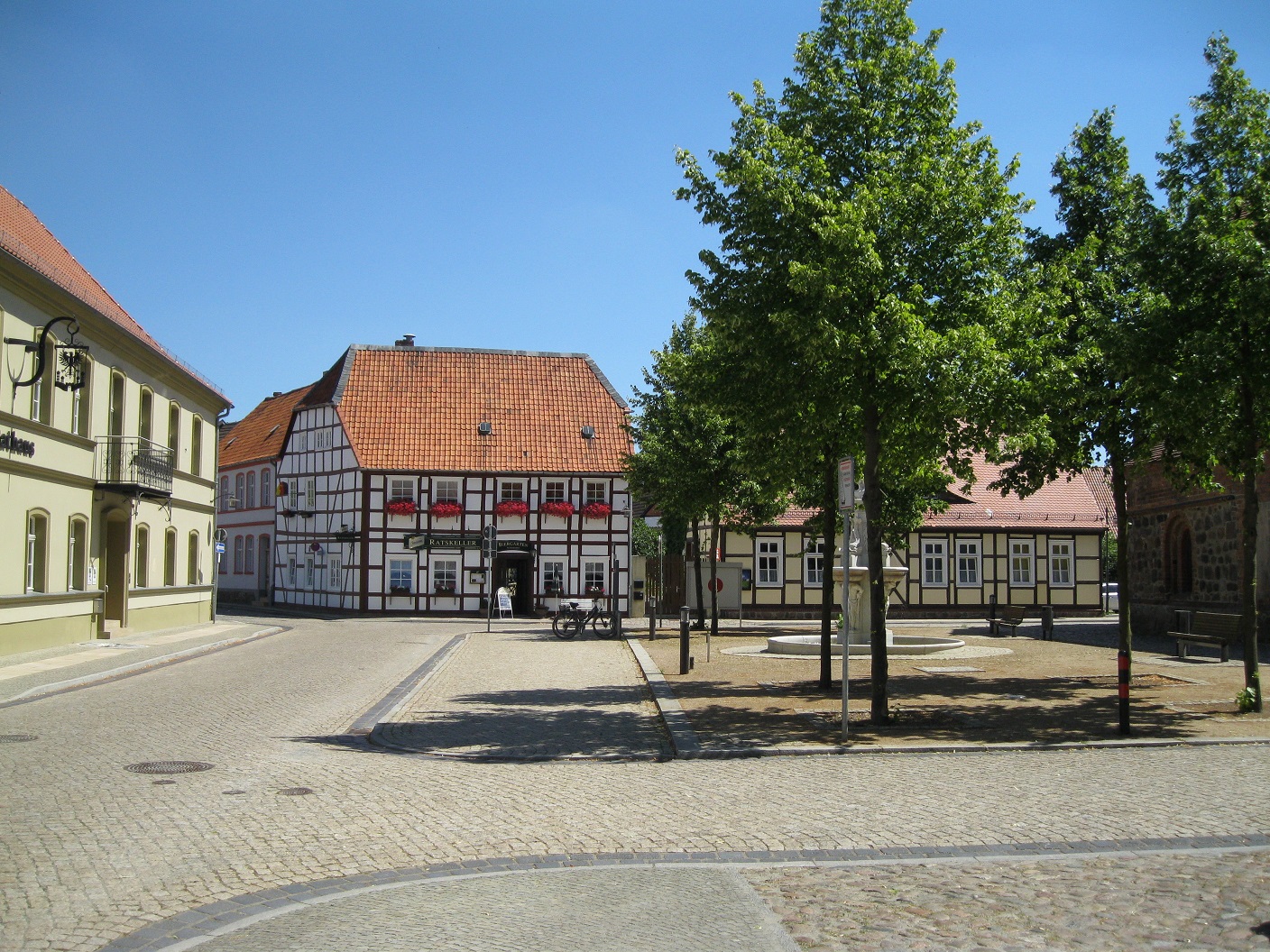
Fig. 2: The Old Town of Osterburg. It is characterized by historic half-timbered buildings.
A close orientation to the legal customs of the town of Stendal is also indicated by a contract concluded by the councilors of both towns in 1442:[10] if a citizen of Stendal received an inheritance in Osterburg, he was to pay the Osterburg council six shillings and the scribe’s fee. In the opposite case, a citizen of Osterburg had to pay fifteen shillings and the scribe’s fee for an inheritance in Stendal. This schedule of fees was legitimized by municipal customs, which both parties promised to uphold “ewichliken” (“for ever and ever”).
In the 15th century, Osterburg was able to assert its extensive rights. Margrave Friedrich II confirmed jurisdiction, customs rights and ownership of the castle rampart to the local councilors in 1449.[11] At that time, about 1,500 inhabitants may have lived in Osterburg.[12] Farming, brewing and long-distance trade to the Hanseatic area revived the town’s economy. In the transition to the 16th century, several fires devastated the town. The municipal documents were lost in this way. This circumstance made it necessary to redraft important regulations in writing. Thus, in 1536, Elector Joachim II renewed an old order of aldermen, which, among other things, fixed the number of aldermen at seven, confirmed them an altar with an ecclesiastical fief in the parish church and the ownership of several gardens. At the same time, the aldermen were granted a separate alderman’s seat known as a “garden”. Also significant was the definition of who was allowed to become a lay assessor. According to the rules of the aldermen, only honest, righteous, prudent and pious men from the ranks of former or active aldermen were to be elected.[13]
From the 16th century, a council order has also been preserved, which regulated the coexistence within Osterburg according to the medieval model. The statutes published in 1580 deal, among other things, with the prevention of fires, and they prohibit loud shouting in the streets, set times for brewing beer, determine modalities of animal husbandry and make selling outside the town gates a punishable offense. The fact that the Brandenburg sovereign is mentioned first before the council as a punitive authority in the event of violations of the town’s customs speaks for the reestablished rule of the Brandenburg sovereign at that time.[14]
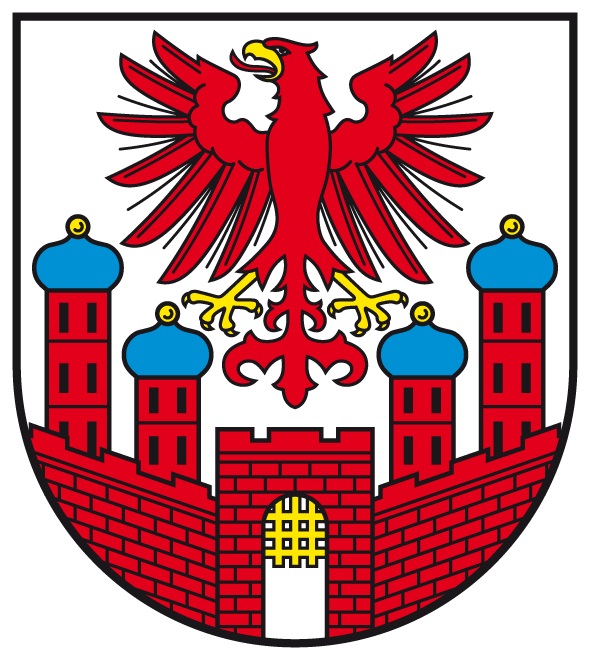
Fig. 3: The coat of arms of Osterburg with a red eagle above the town wall, gates and towers. The image refers to medieval models and the former affiliation of Osterburg to the Mark Brandenburg.
Author: Sascha Bütow
Citation:
Sascha Bütow, Osterburg. Eine brandenburgische Immediatstadt mit umfänglichen Rechten, in Das Magdeburger Recht. Baustein des modernen Europa, 17.11.2021, https://magdeburg-law.com/historic-city/osterburg/
Footnotes:
[1] Hermann Dietrichs and Ludolf Parisius, Bilder aus der Altmark, vol. 1, Hamburg 1883, p. 172.
[2] Berent Schwineköper, Osterburg, in Handbuch der Historischen Stätten Deutschlands, vol. 11, Stuttgart 1987, pp. 356-357, here p. 357.
[3] Sascha Bütow, Jeetzel – Aland – Stepenitz. Gedanken zur wirtschaftlichen Nutzung kleiner Flüsse im sogenannten hansischen Hinterland während des Spätmittelalters, in Biuletyn Polskiej Misji Historycznej, Bulletin der Polnischen Historischen Mission 14 (2019), pp. 387–409, here p. 397.
[4] Heiner Lück, Stadtrechte in der Altmark, in Sachsen und Anhalt 32 (2020), pp. 41–78, here p. 73.
[5] Adolf Friedrich Riedel (ed.), Codex Diplomaticus Brandenburgensis, series A, vol. 16, Berlin 1859, no. 24, p. 326.
[6] Ibid., no. 23, pp. 325-326.
[7] Ibid., no. 35, p. 335.
[8] Ibid., vol. 6, Berlin 1846, no. 147, pp. 105-106.
[9] Peter P. Rohlach (reviser), Historisches Ortslexikon für die Altmark (= Historisches Ortslexikon für Brandenburg 12), Berlin 2018, p. 1602.
[10] Same as note 5, no. 60, p. 352.
[11] Ibid., no. 72, p. 361.
[12] Same as note 2, p. 357.
[13] Same as note 5, no. 100, pp. 380–382.
[14] Ibid., no. 107, pp. 389–391.
Images:
Fig. 1: zeno.org
Fig. 2: Wikimedia Commons (CC BY-SA 3.0), photo: Nephantz!
Fig. 3: Wikimedia Commons