A small town in rigorous noble hands
In the first half of the 13th century, the two margraves Johann I and Otto III, known within Brandenburg’s regional history as founders of towns, intensified their rule in Barnim, located northeast and east of Berlin. In particular, this included the patronage of towns, as the so-called Margrave’s Chronicle (Chronica Marchionum Brandenburgensium) from the end of the 13th century states: “[…] Berlin, Strausberg, Frankfurt, Neu Tangermünde (Angermünde), Stolpe, Liebenwalde, Stargard, Neubrandenburg and many other places were built by them. Among the latter was Altlandsberg, which was originally in Margravial hands and is first mentioned indirectly in 1257 by the naming of Landsberg at the Warthe (Landisberch Nova) as the older of the two towns of the same name.”[1] With the Margravial city rule, Altlandsberg had very likely adopted the Brandenburg law related to the Magdeburg law, which provided a basis for establishing connections with other cities.
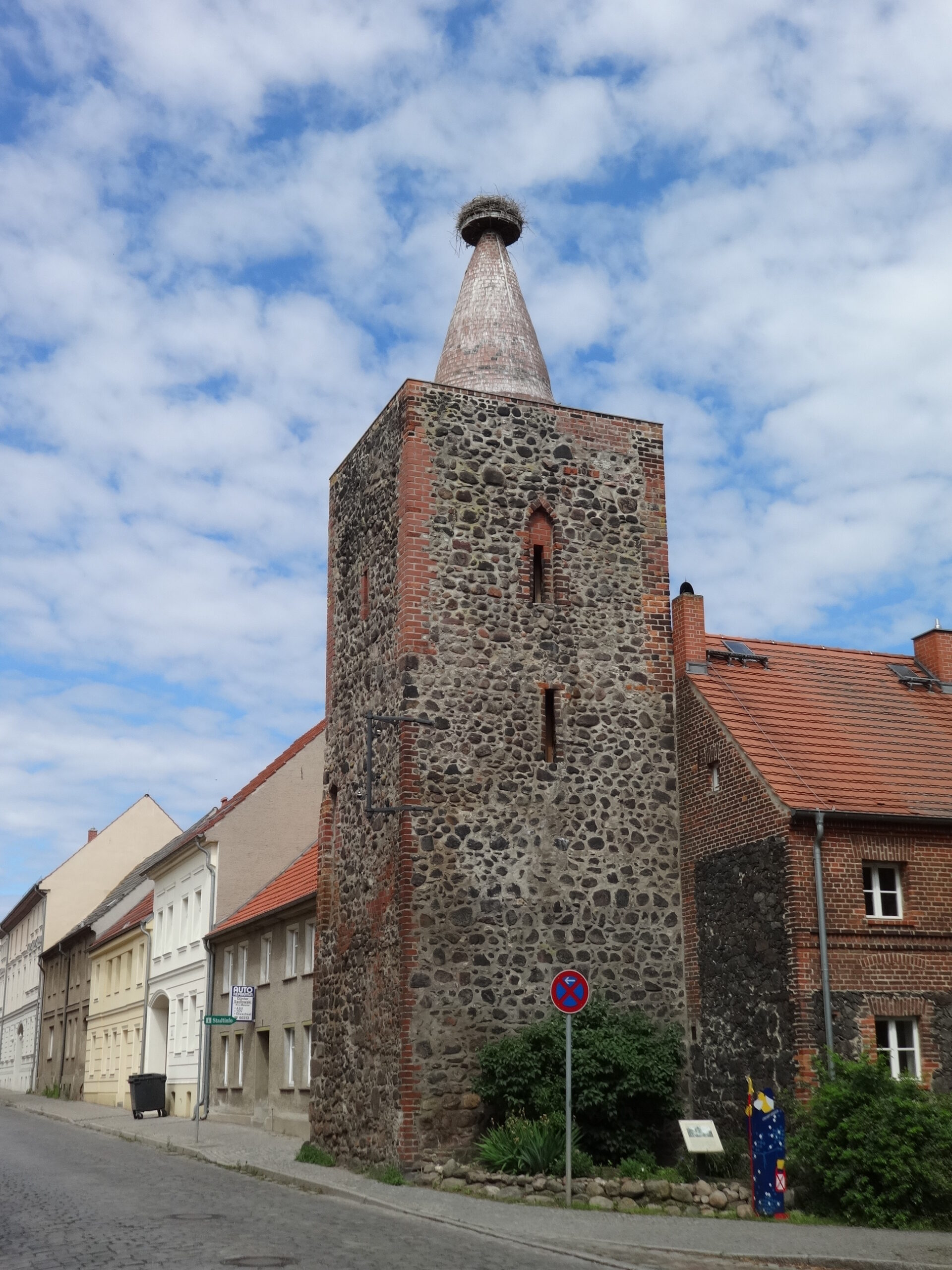
Fig. 1: Well-fortified tower of the medieval Strausberger Gate in Altlandsberg
In this way, the Altlandsberg council participated in alliances of towns that concerned mutual protection, the preservation of municipal rights, and the safety of the roads. The coalition of 23 towns in Brandenburg and Lower Lusatia, which was founded in Berlin by delegates from Altlandsberg, became important after the Ascanian Margraves died out in 1321.[2] With this alliance, the towns took responsibility for the cohesion of Brandenburg against the weakening Margravial power and swore to protect it and each other. This is a clear indication of the urban autonomy of Brandenburg towns in the 14th century, which also applied to Altlandsberg.[3] Another right that the council and citizens received from Margrave Ludwig the Roman belongs in this context. He ordered that the citizens of Altlandsberg could no longer be accused before foreign courts, as had often happened before in uncertain times but only before the municipal court.[4] This privilege supported the self-confident attitude of the Altlandsberg council, which, however, it had to forfeit again at the beginning of the 15th century.
The reason for this was the sale of the town by Margrave Jost to the von Krummensee family in 1409. Thus, the latter also came into possession of the nearby Margravial castle, so that the von Krummensee family was henceforth considered to be castle-owning, which gave them an important position within Brandenburg’s noble society. For the town of Altlandsberg, on the other hand, the change of rulership signified a mediatization, in that it was no longer directly subject to the Margrave but to a noble family that was strongly branched out in the Barnim region and beyond. The members of this family often appropriated civic and communal properties with no regard to municipal rights. Several representatives of the von Krummensee family also lived in the town, accessing its woodlands and agricultural land, but without sharing in municipal expenses and duties. In addition, numerous conflicts developed between the members of the family living in and around Altlandsberg, which also caused significant damage to the citizenry and its rights.
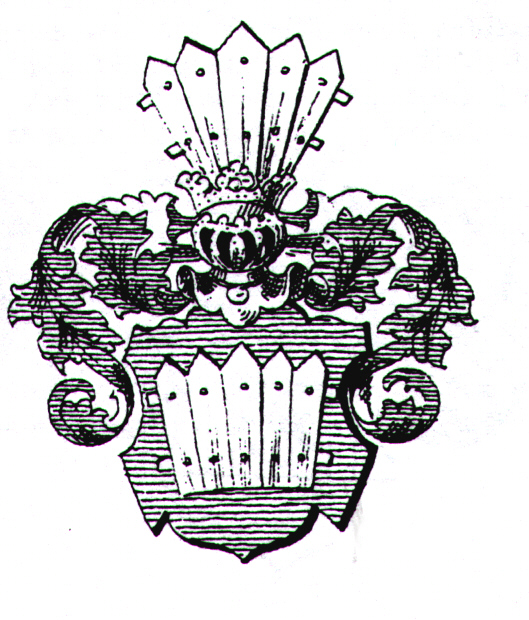
Fig. 2: Coat of arms of the von Krummensee family, used in the 16th and 17th centuries (redrawing: Alexander Giertz)
Around 1500, the conflicts culminated in a legal dispute that could only be settled with the help of the Brandenburg sovereign. The town of Altlandsberg had been deprived of important municipal buildings such as the bathhouse and the oven. They were to be returned to the citizenry. In addition, it was agreed that members of the von Krummensee family could no longer acquire municipal goods and houses without the consent of the citizenry so that “dat Stedichen nicht geschwecht werde” (“The small town should not be weakened”).[5] Furthermore, Altlandsberg was to be protected in its rights and privileges. No violence was to be done to its inhabitants. Rather, the nobility was ordered to behave in a friendly and conducive manner towards the citizenry.
However, the relationship between the town and the noble family remained tense. In the wake of the Reformation, the von Krummensee intensified their rule, which now became apparent primarily in ecclesiastical matters. They concluded a contract with the provost of the Premonstratensian monastery of Gramzow, who was the patron of the Altlandsberg church, which allowed them to access the church revenues as well as the church land. On the basis of this contract, individual family members illegally extended their access to church lands and dues. As a result, a farm of the parish in the extent of four hectares came into the possession of the von Krummensee. They also occupied the rectory.[6] Nicolaus Leutinger, who was called to Altlandsberg by the electoral councilor Hans von Krummensee in the course of the Reformation, found out as the new Lutheran pastor that the church received “hardly the fifth part of the income”. His son, Nicolaus Leutinger the Younger, reported that “the Krummensees had illegally appropriated the remaining parts”, and it was only at the risk of his life that he [Nicolaus Leutinger the Elder, S.B.] had “regained” them.[7]
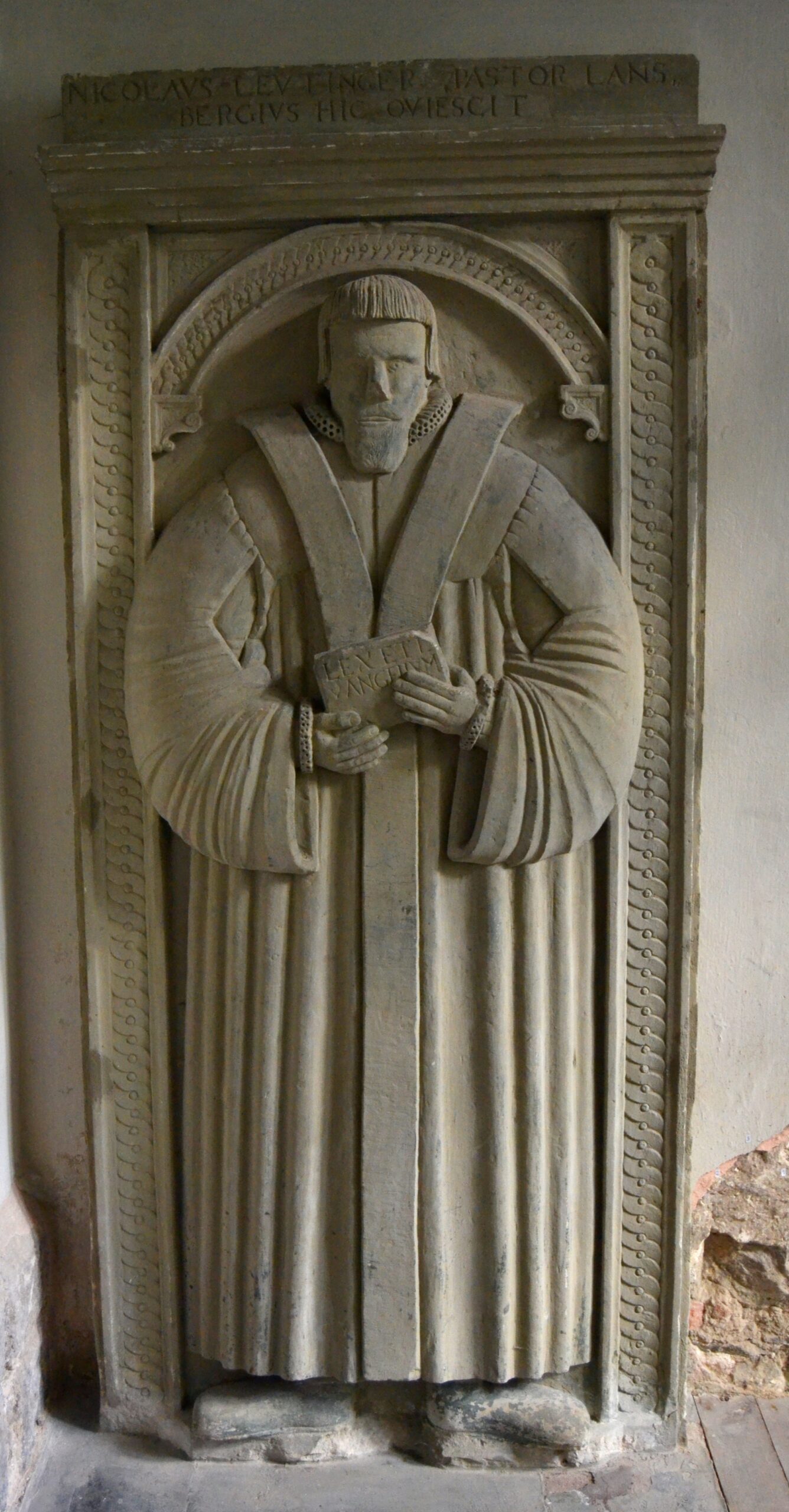
Fig. 3: Epitaph of Nikolaus Leutinger the Elder
Nevertheless, the council and citizens of Altlandsberg still had opportunities to articulate and enforce their legal claims. One way was through the Brandenburg sovereigns, who granted the town essential privileges. These included the right, granted in 1421 and confirmed again in 1481, to hold two large fairs, one 14 days before St. John’s Day (June 24) and the other 14 days before St. Martin’s Day (November 11).[8] In addition to this market right, the town of Altlandsberg was allowed to collect the so-called Damm- und Deichselpfennig (dam and drawbar penny) from transients, confirmed in a document in 1545 by Elector Joachim II. It was also he who, four years later, confirmed all rights and privileges to the council, the documentary evidence of which had been lost in a devastating town fire.
The cause of constant conflicts between the council and the city authorities continued to be public buildings in Altlandsberg, to which the von Krummensee laid claim. The council itself was partly to blame for this. For example, with the secularization of the Servite monastery located in the city in 1545, the council had made direct efforts to purchase the associated real estate, but had not acquired the monastery building itself.[9] Therefore, it was possible for Elector Joachim II to enfeoff Hans von Krummensee with the old monastery building. He also allowed him to purchase the property that had once belonged to the monastery, which led to a new legal dispute with the city. As a result, Arnd von Krummensee came into possession of the monastery site in 1570 and, having nowhere to live in Altlandsberg, converted it into a residential property.
In this way, Altlandsberg’s rights were further restricted in the 16th century. Disputes existed between the von Krummensee and the town council, especially regarding jurisdiction, the election of council persons and the use of wood. Since both parties were again unable to come to an agreement, the von Krummensee family tried to impose their interests by force. Under the pretext that the town was on the verge of open revolt, they attacked Altlandsberg in 1556 “together with 100 horsemen and a number of lansquenets”.[10] The disputes continued in the following period, so that Elector Joachim II issued a recess in 1568. In this, the council was granted the free election of the mayor or the councilmen “without a special request by the Junker [the von Krummensee family]”.[11] Independently of this, the von Krummensee family claimed upper and lower jurisdiction in the town. As far as access to the use of wood was concerned, the Elector ruled that the von Krummensee “should not need the wood of the town any differently than another citizen of Landsberg.” This put a stop to the unrestricted use of wood by the nobles. The family did not accept the provisions of the recess and again acted wantonly against the town by cutting down trees in the Landsberg heath. Thus, the von Krummensee repeatedly set narrow limits to the council’s policy, increasingly curtailing the city’s freedom.
Author: Sascha Bütow
Citation:
Sascha Bütow: Altlandsberg. A small town in rigorous noble hands, 30.06.2021, https://magdeburg-law.com/historic-city/altlandsberg/
Footnotes:
[1] On this Lutz Partenheimer, Die Entstehung der Mark Brandenburg, Cologne / Weimar / Vienna 2007, p. 11.
[2] Adolf Friedrich Riedel (ed.), Codex Diplomaticus Brandenburgensis, series B, vol. 1, no. 562, pp. 467-468.
[3] Cf. Jan Winkelmann, Die Mark Brandenburg des 14. Jahrhunderts. Markgräfliche Herrschaft zwischen räumlicher »Ferne« und politischer »Krise« (= Studien zur Brandenburgischen und vergleichenden Landesgeschichte 5), Berlin 2011, p. 171.
[4] Adolf Friedrich Riedel (ed.), Codex Diplomaticus Brandenburgensis, series A, vol. 12, Berlin 1857, no. 22, p. 498.
[5] Ibid., no. 15, pp. 60–63, here p. 62.
[6] Liselott Enders (editor), Historisches Ortslexikon für Brandenburg, vol. 6: Barnim, Weimar 1980, p. 301.
[7] Cited after J. Karl Fr. W. F. Gähde, Geschichte der Stadt Altlandsberg, Halle 1857, p. 288.
[8] Same as note 4, no. 4, pp. 50-51.
[9] Matthias Friske, Altlandsberg. Serviten, in, Brandenburgisches Klosterbuch. Handbuch der Klöster, Stifte und Kommenden bis zur Mitte des 16. Jahrhunderts, vol. 1, edited by Heinz-Dieter Heimann, Klaus Neitmann and Winfried Schich, Berlin 2010, pp. 89–95, here p. 90.
[10] Alexander Giertz, Bausteine zu einer Geschichte des Barnim. Sowie seiner Dörfer Petershagen und Eggersdorf, Chronik nach Quellen, vol. 3: Nachbarorte, Petershagen 1903–1905, p. 8.
[11] Hansjoachim Alberts, Altlandsberg, in Zwischen Schorfheide und Spree. Heimatbuch des Kreises Niederbarnim, edited by Max Weiß and Max Rehberg, Berlin 1940, p. 315.
Images:
Fig. 1: Wikimedia Commons (Creative Commons License 3.0)
Fig. 2: Alexander Giertz, Alt-Landsbergs Werdegang, der Servitenorden und sein einstiges märkisches Kloster in Alt-Landsberg, in Archiv der Brandenburgia 13 (1911), p. 332.
Fig. 3: Wikimedia Commons (Creative Commons License 3.0), photo: Marcus Cyron