Magdeburg Law in a Fläming City
For Dahme, located on an important traffic route between Magdeburg, Lower Lusatia and the Spree Forest, as for many other cities, no city charter from the Middle Ages has been handed down. In addition, the archives of the city council were destroyed “durch feuersnoth” (“by conflagration”) in 1503 and all “privileges, freyheite[n] und gerechtigkeiten” (“privileges, freedoms and justices”) were lost.[1] Which legal customs prevailed in Dahme can therefore not be answered unambiguously. The older local history research assumed, for example, with regard to Werner Reinhold, that “the famous Luckau city law and the trade and guild institutions that existed there were also valid here in Dahme.”[2] In fact, the Luckau law, which was closely related to the Magdeburg law, had spread in the course of the Middle Ages within Lower Lusatia to other municipalities such as Beeskow.[3] This ensured that the Luckau aldermen served this circle of legally related cities as a high court and provided information in the case of disputed legal issues. The spatial proximity of Dahme to Luckau and the trade between the two cities[4] suggest that Reinhold’s opinion could well be true, although there is no immediate evidence for this. On the other hand, the direct relation to Magdeburg should by no means be disregarded, which was noticeable again and again within the medieval city history of Dahme and will be discussed in the following in few stages. [Fig. 1]
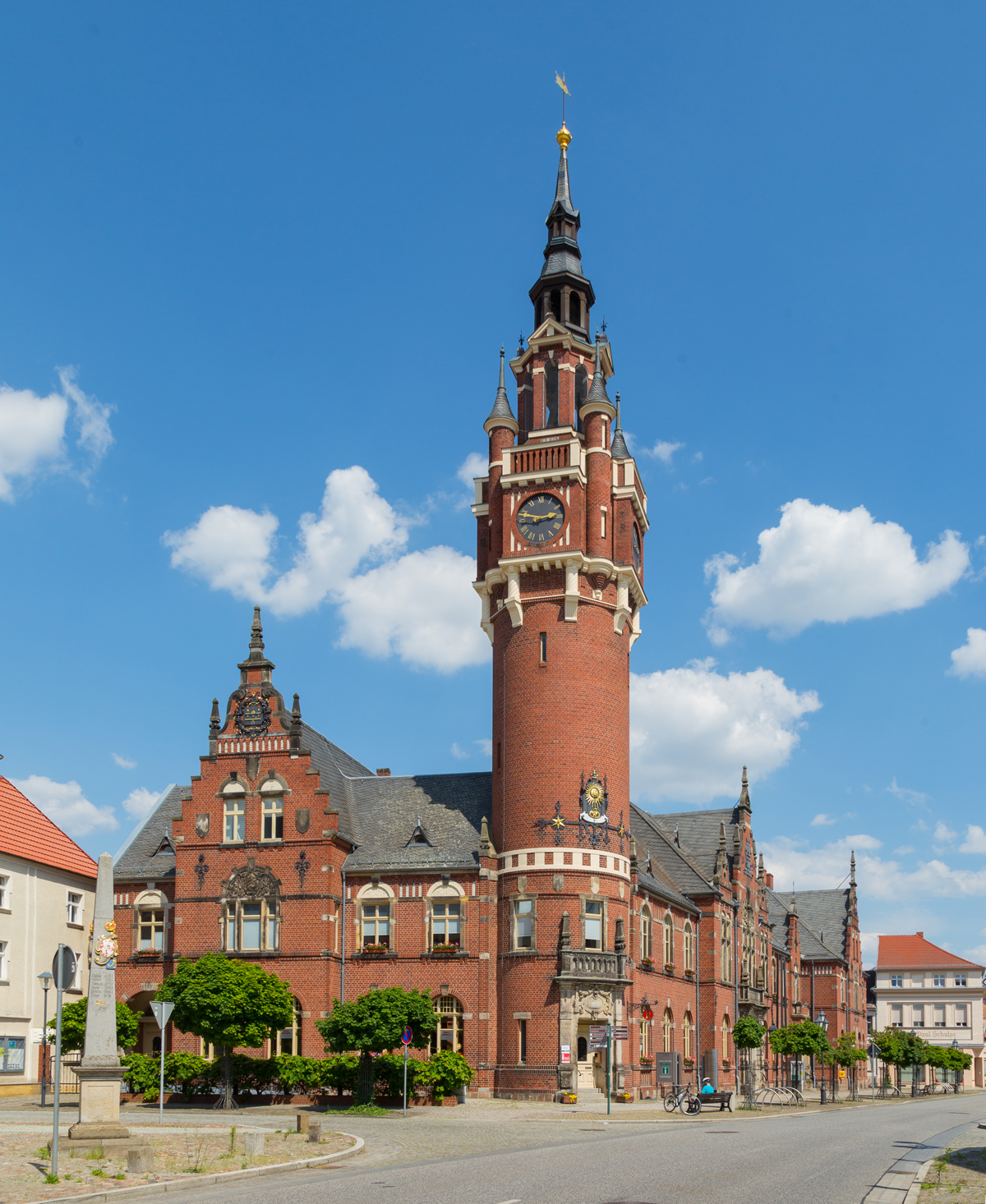
Fig. 1: The Dahme City Hall was built in the neo-Renaissance style in 1893/94. It emphasizes the self-image of the citizenry.
Dahme was first mentioned as a city (civitas) in 1265 in a document of its Lords, Richard the Elder and Richard the Younger of Dahme. Both had exempted the municipality as well as surrounding villages from customs payments and, at the same time, complied with a request of the Cistercians in Doberlug to include the village of Kemnitz, which belonged to them, in this privilege.[1] The Lords of the Dahme, for their part, were feudatories of the Archbishop of Magdeburg. Originally, Archbishop Wichmann had succeeded in 1185 in extending the land (terra) of Jüterbog belonging to him and had added the area around Dahme to it. In this context, it must be pointed out that it was also Wichmann who had endowed Jüterbog with Magdeburg law in 1174 and, in doing so, had decreed that all further municipalities arising in the land of Jüterbog should adhere to the legal customs prevailing in Jüterbog.[2] From this perspective, it seems obvious that the citizens of Dahme also adhered to this provision and turned to Jüterbog and its aldermen with legal questions.
The fact that the citizenry in Dahme organized itself according to the Magdeburg model is evidenced by the division of municipal jurisdiction between the council and the aldermen, which is considered the “basic structure” of Magdeburg law.[3] Both bodies, together with the citizenry, represented the city externally, and this triad concluded contracts and agreements by consensus. A striking example of this dates back to 1309, when the city of Dahme confirmed to the cities of Berlin and Cölln, evidenced by documents, the recognition of a land peace negotiated by Hermann von Barby, Bernhard von Plötzke and Konrad von Redern. At the same time, the promise was made that people who had committed crimes in Brandenburg would also be regarded as outlaws in Dahme and would be arrested.[4] The citizens of Dahme thus self-confidently took over a criminal prosecution that went beyond the borders of various principalities and was directed in particular against highwaymen.[5]
Within the city, the council of Dahme attempted to distance itself from the influence of inhabitants of Wendish origin and, according to a chronicle, obtained a privilege from Archbishop Friedrich of Magdeburg in 1452, according to which it was forbidden for Wends to ascend to the council or to become members of the guilds of shoemakers and cloth manufacturers.[6] Hereby, the city embeds itself in a development that can also be observed in other northeastern German cities, which manifested itself in the form of the so-called Wends Paragraphs.[7] However, the discrimination against the Wends associated with this in no way corresponded to modern racial or national resentment. Rather, they were “economically motivated ambiguous clauses that could be used to exclude unwelcome competition.”[8] The driving forces here were primarily the guilds, which wanted to keep their new admissions constant by regulating the number of entrants. In addition, the cities sought to regulate the influx from the surrounding rural areas, which were mostly inhabited by Wends. In Dahme, the “Wends Paragraph” did not prevail permanently but was largely reversed in favor of a privilege obtained in 1467. According to this, Archbishop Johann von Magdeburg had allowed the Wends living in Dahme to join the town guilds from then on. Interestingly, this was seen as a means of increasing urban prosperity.[9] [Fig. 2]
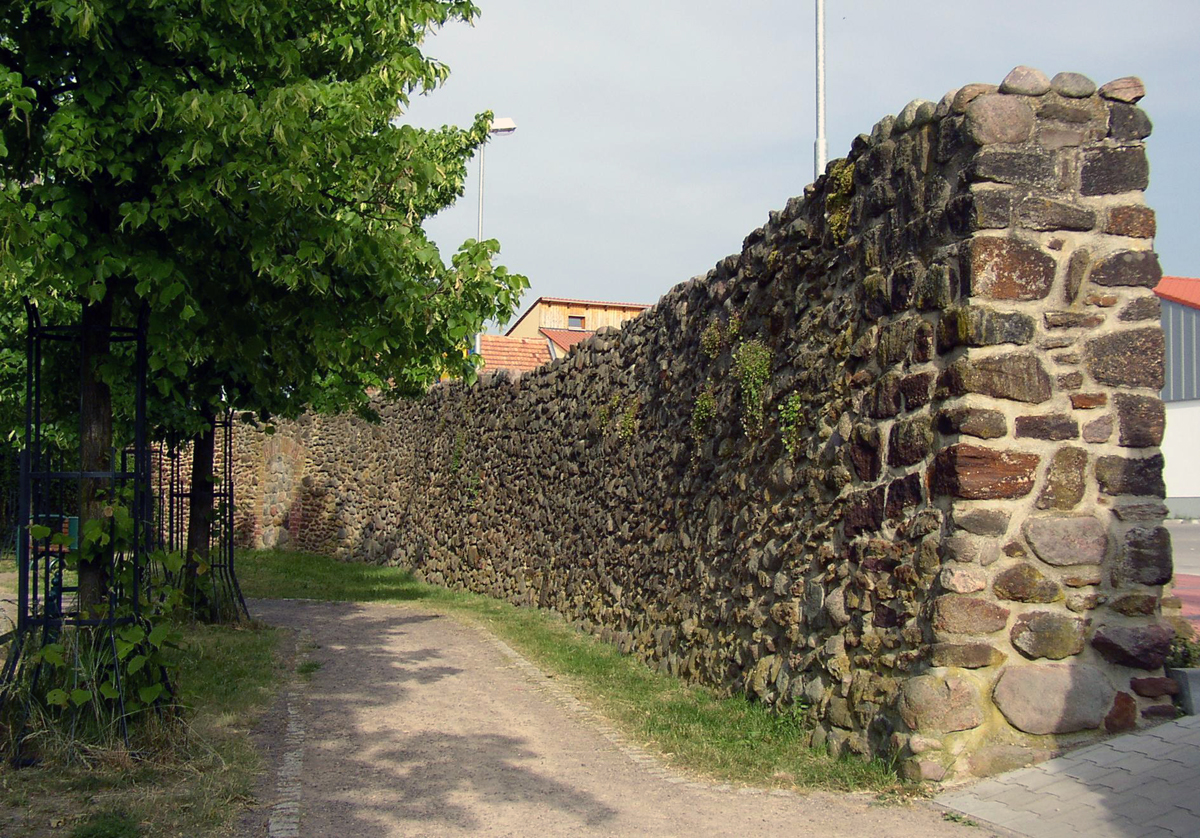
Fig. 2: The city wall of Dahme also structurally marked the spatial separation of city and country law. It has been preserved to 80% and is today one of the sights of the city of Dahme.
The latter depended in a special way on rights that allowed Dahme access to its surrounding land. Here, however, the citizenry sometimes clashed with utilization interests of other communities, so that new legal negotiations became necessary. For example, the citizens of Dahme got into a conflict of interest with the neighboring village communities in Rietdorf and Gebersdorf over a cattle pasture called “mosebruch”. According to a document of Archbishop Günther of Magdeburg from 1417, the “gemeyne viehe trifft” (“shared cattle drive”) was allowed to be exercised on this pasture, which stipulated equal use by the neighboring communities.[1] In this respect, mutual seizures were to be avoided. However, it did not remain with this intended agreement because in 1482, a new legal dispute about the pasture area had erupted. A simple arrangement was no longer sufficient. Instead, at the behest of the still young Duke Ernst of Saxony as the administrator of the Magdeburg church, an investigative commission consisting of three of his councilors was sent to Dahme to mediate an arbitration. Among other things, it envisaged the creation of a measured and firmly defined pasture area for the peasantry from Gebersdorf on the “mosebruch”, on which they were to “hinforder zukünfftiglich ire viehe treiben vnd eine freye viehe trifft haben” (“drive their cattle in the future and have a free cattle drive”).[2] In this respect, the example of the herding areas for the urban cattle in Dahme reveals facets of a “possessory encroachment on the land” that was typical for medieval cities and the establishment of bourgeois landlordships[3] However, this was inconceivable without corresponding privileges on the part of the city lord, and even if they existed, more precise agreements on specific uses of appropriated land with the surrounding rural legal communities proved necessary. Despite the scanty medieval source situation, Dahme nevertheless shows important aspects of the history of city law, which to a large extent were directly connected with Magdeburg and the archbishops there. [Fig. 3]
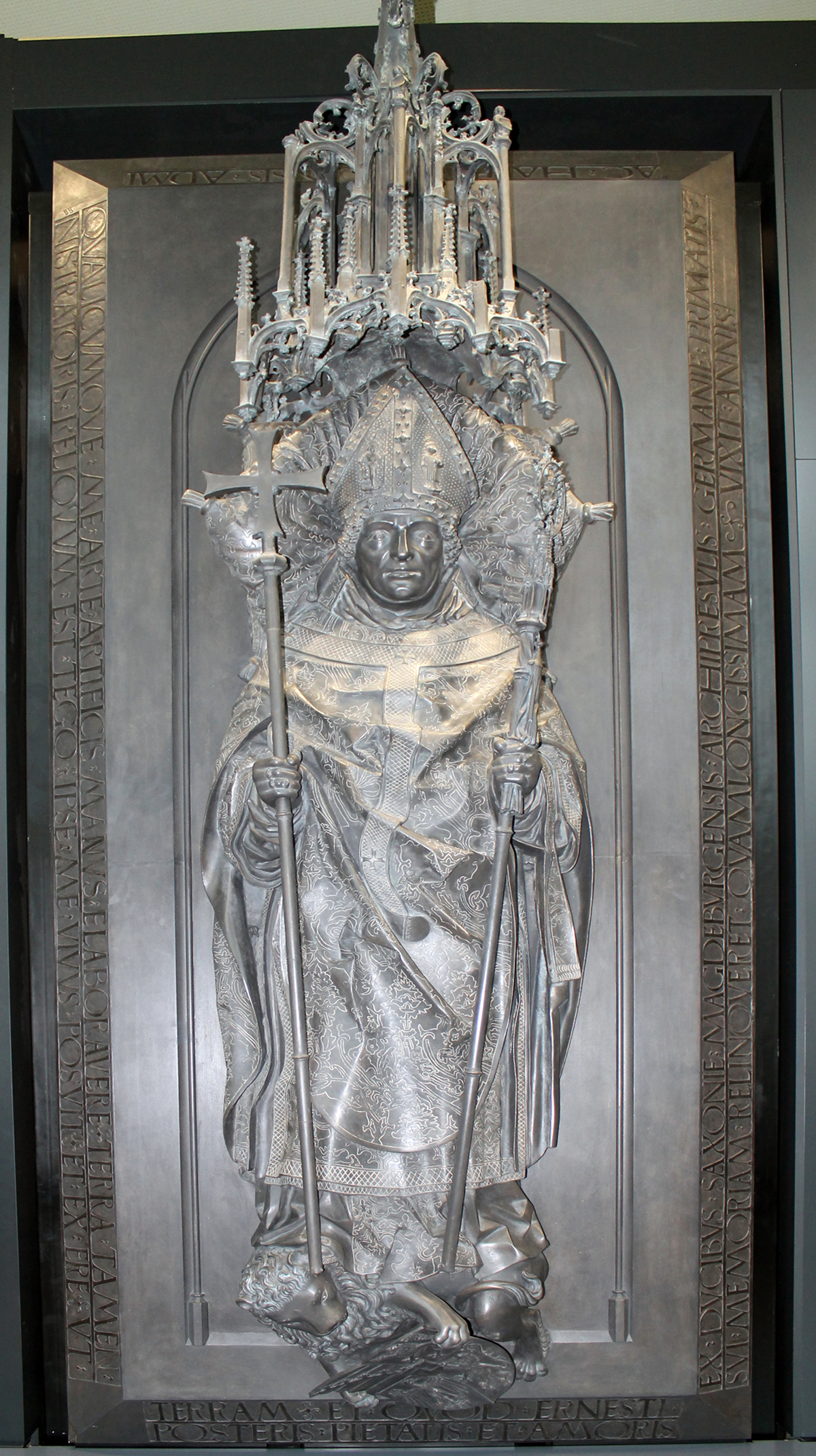
Fig. 3: Grave tumba of Archbishop Ernst of Magdeburg, replica from the Magdeburg Ottonianum Cathedral Museum, original in Magdeburg Cathedral.
Author: Sascha Bütow
Citation:
Sascha Bütow: Dahme/Mark. Magdeburg Law in a Fläming City, 01.07.2022, https://magdeburg-law.com/de/magdeburger-recht/historische-staedte/dahme-mark/
Footnotes:
[1] Ibid., no. 2, p. 693.
[2] Ibid., no. 4, pp. 683-684.
[3] Isenmann, Eberhard, Die deutsche Stadt im Mittelalter. 1150–1550. Stadtgestalt, Recht, Verfassung, Stadtregimen, Kirche, Gesellschaft, Wirtschaft. 2nd edition Cologne/Weimar/Vienna 2014, p. 679.
[1] This document is edited at Gengler, Heinrich Gottfried (ed.), Codex Juris Municipalis Germaniae. Regesten und Urkunden zur Verfassungs- und Rechtsgeschichte der deutschen Städte im Mittelalter. Vol. 1. Erlangen 1863, no. 1, pp. 692-693.
[2] This document is included as a transsumpt in a privilege granted in 1301 by Archbishop Burchard II of Magdeburg. This is edited and translated at Hergemöller, Bernd-Ullrich (ed.): Quellen zur Verfassungsgeschichte der deutschen Stadt im Mittelalter (= Ausgewählte Quellen zur deutschen Geschichte des Mittelalters Bd. 34). Darmstadt 2000, no. 29, pp. 216–221, here p. 219.
[3] Ebel, Friedrich, Magdeburger Recht, in Erzbischof Wichmann (1152–1192) und Magdeburg im hohen Mittelalter. Stadt – Erzbistum – Reich. Ausstellung zum 800. Todestag Erzbischof Wichmanns vom 29. Oktober 1992 bis 21. März 1993, edited by Matthias Puhle. Magdeburg 1992, pp. 42–54, here p. 46.
[4] Huch, Gaby, Ribbe, Wolfgang (reviser), Regesten und Urkunden zur Geschichte von Berlin/Cölln im Mittelalter (1237–1499). Berlin 2008, no. 36, p. 67.
[5] Cf. the edition of the mentioned document of 1309 at Voigt, Ferdinand (ed.), Urkunden-Buch zur Berlinischen Chronik. Berlin 1869, no. 39, pp. 25-26.
[6] Dreyhaupt, Johann Christoph v., Pagus Neletici et Nudzici oder ausführliche diplomatisch-historische Beschreibung des zum ehemaligen Primat und Erz-Stift, nunmehr aber durch den westphälischen Friedens-Schluß secularisirten Herzogthum Magdeburg gehörigen Saal-Kreises. Part 1. Halle 1755, p. 135.
[7] Cf. Schich, Winfried, Zur Diskriminierung der wendischen Minderheit im späten Mittelalter. Die Ausbildung des “Wendenparagraphen” in den Zunftstatuten nordostdeutscher Städte, in Europa regional 10/2 (2002) pp. 57–61.
[8] Glück, Helmut, Deutsch als Fremdsprache in Europa vom Mittelalter bis zur Barockzeit. Berlin/New York 2002, p. 61.
[9] Regest at Gengler, Heinrich Gottfried (ed.), Codex Juris Municipalis Germaniae (same as note 5), no. 3, p. 693.
[1] A general reconfirmation of all rights in 1503 by Archbishop Ernst of Magdeburg is printed at Reinhold, Werner, Chronik der Stadt Dahme und der Umgegend. Vol. 2. Dahme 1846, no. 3, pp. 27–29.
[2] Reinhold, Werner, Chronik der Stadt Dahme und der Umgegend. Vol. 1. Dahme 1845, p. 24.
[3] Schölzel, Joachim (reviser), Historisches Ortslexikon für Brandenburg. Part IX: Beeskow-Storkow. Weimar 1997, p. 14.
[4] On the importance of transport and trade connections in Dahme’s regional environment, cf. Verkehrsraum Fläming in überlandschaftlichen Konturen. Spätmittelalterliche Wegelenkung, Straßenbaumaßnahmen und historische Kartographie, in Blätter für deutsche Landesgeschichte 151 (2015), pp. 275–290.
Images:
Fig. 1: Wikimedia Commons (Creative Commons Attribution-Share Alike 4.0 International), photo: Jan-Herm Janßen
Fig. 2: Wikimedia Commons (Creative Commons Attribution-Share Alike 3.0), photo: Doris Antony
Fig. 3: Magdeburg, Zentrum für Mittelalterausstellungen, photo: Marianne Wenzel.